Meta title: 10×20 Cedar Patio Cover in Denton, TX: Cost, Design, Options
Meta description: Plan a 10×20 cedar patio cover with the right roof style, spacing, and drainage. See 2026 North Texas cost ranges, upkeep tips, and common FAQs.
Primary keyword: cedar patio cover
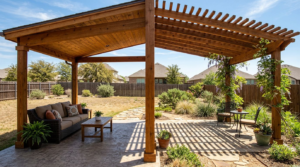
A 10×20 cedar patio cover is like adding a dependable front porch to your backyard. It defines the space, cools it down, and makes your patio feel finished.
If you want real shade (not a tiny awning) but you don’t want a structure that overwhelms the yard, 10×20 often hits the sweet spot. It’s also a practical footprint for many North Texas homes, especially around Denton where lots vary from compact to wide-open.
What a 10×20 cedar patio cover lets you do (and why the size works)
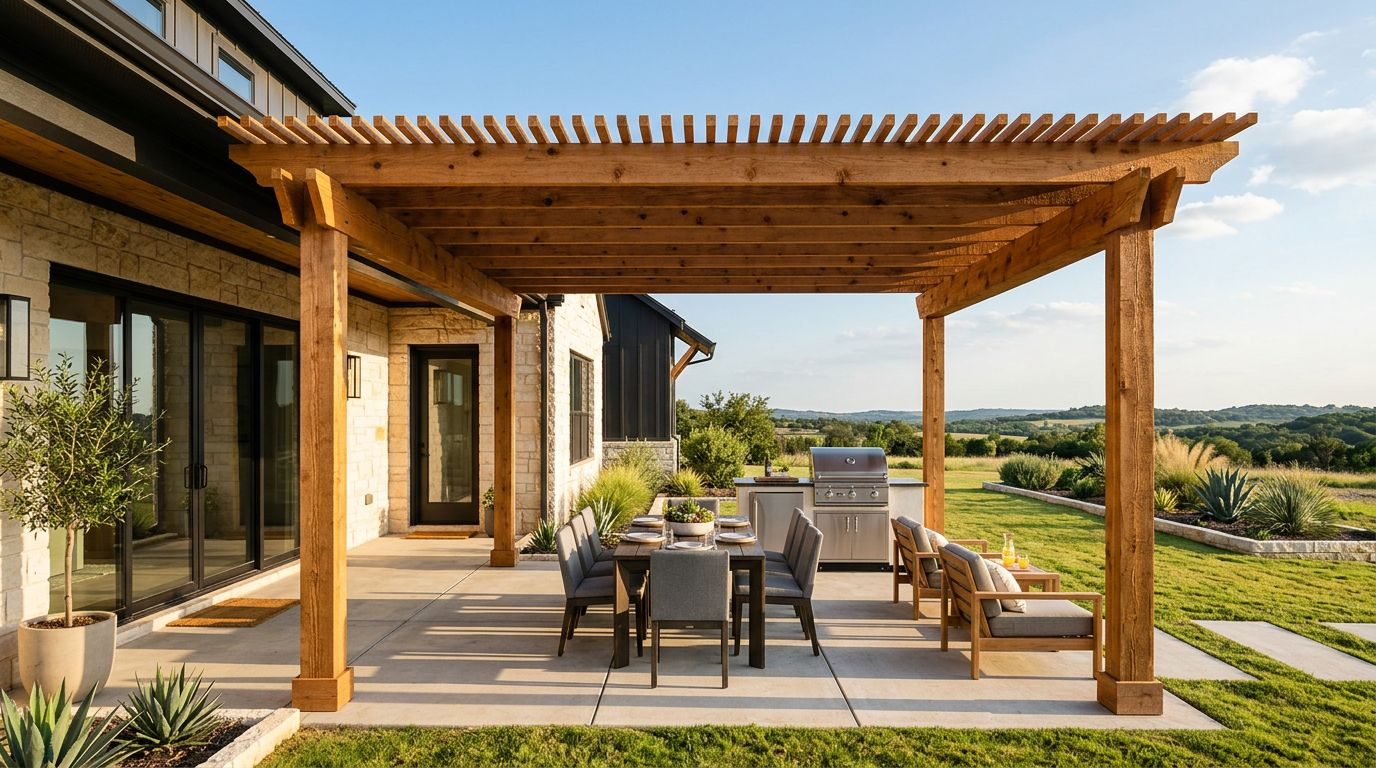
Ten by twenty equals 200 square feet. That’s enough coverage for a full outdoor dining table plus a grill zone, or a lounge setup with a clear walking path. In other words, you stop “finding shade” and start living under it.
This size also fits common patio depths without pushing posts too far into the yard. For many homes in Denton, Argyle, and Flower Mound, a 10-foot projection feels natural off the back door. Meanwhile, the 20-foot run gives you flexibility, you can center it on a set of French doors, extend it across a kitchen window, or cover a long slab.
If you want the space to feel like an outdoor room, plan furniture first, then size the cover around it.
A 10×20 cedar patio cover works as either attached or freestanding. Attached covers usually feel more “built-in” because the roofline ties to the house. Freestanding covers can be perfect if you want shade near a pool or a firepit area.
Before you lock in the layout, pay attention to afternoon sun angles. West sun can hit hard in North Texas, so orientation matters as much as size. A good builder will talk through where the shade falls at 5 pm in July, not only where it falls at noon.
Design choices that keep your cedar cover looking intentional, not tacked on
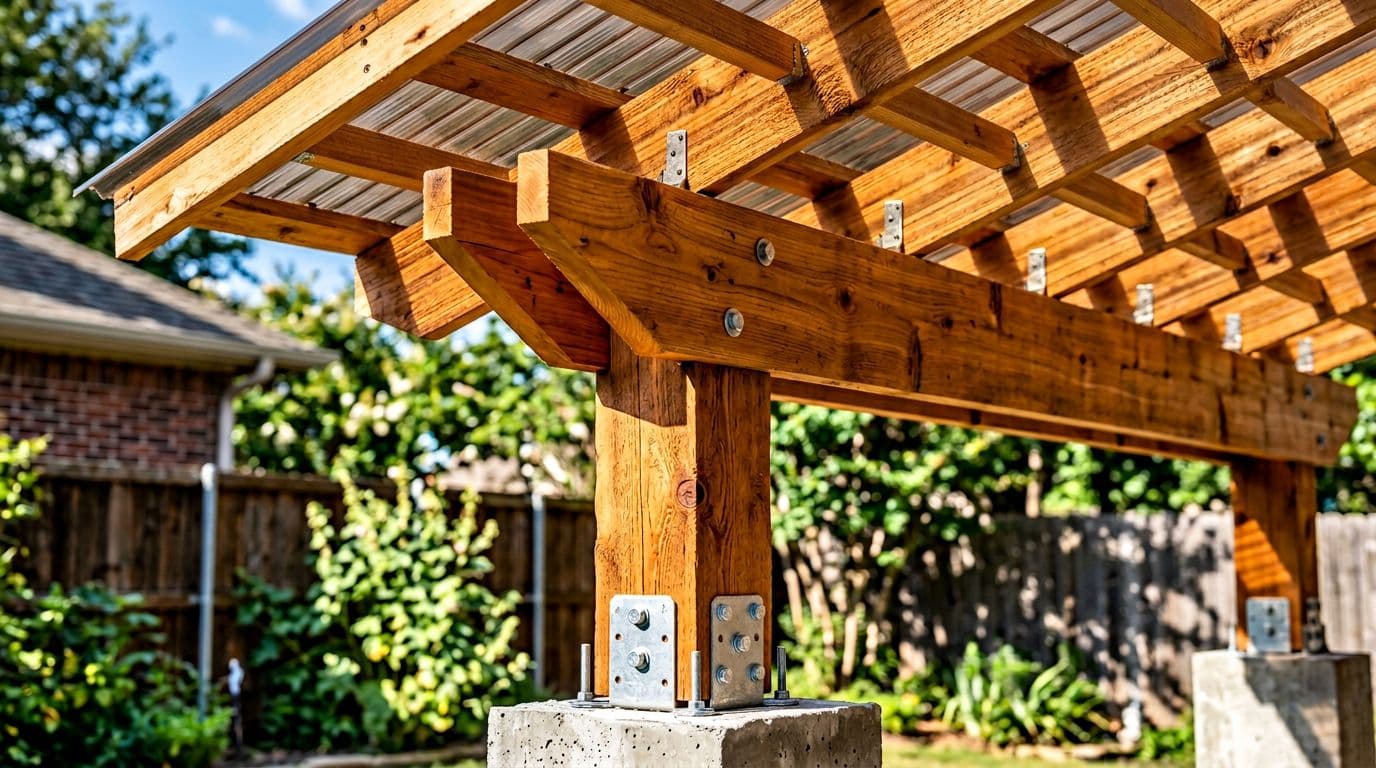
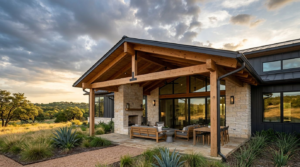
Cedar earns its reputation because it looks warm and high-end even with clean lines. Still, the difference between “nice” and “wow” usually comes down to proportions, connections, and a roof system that fits your goal.
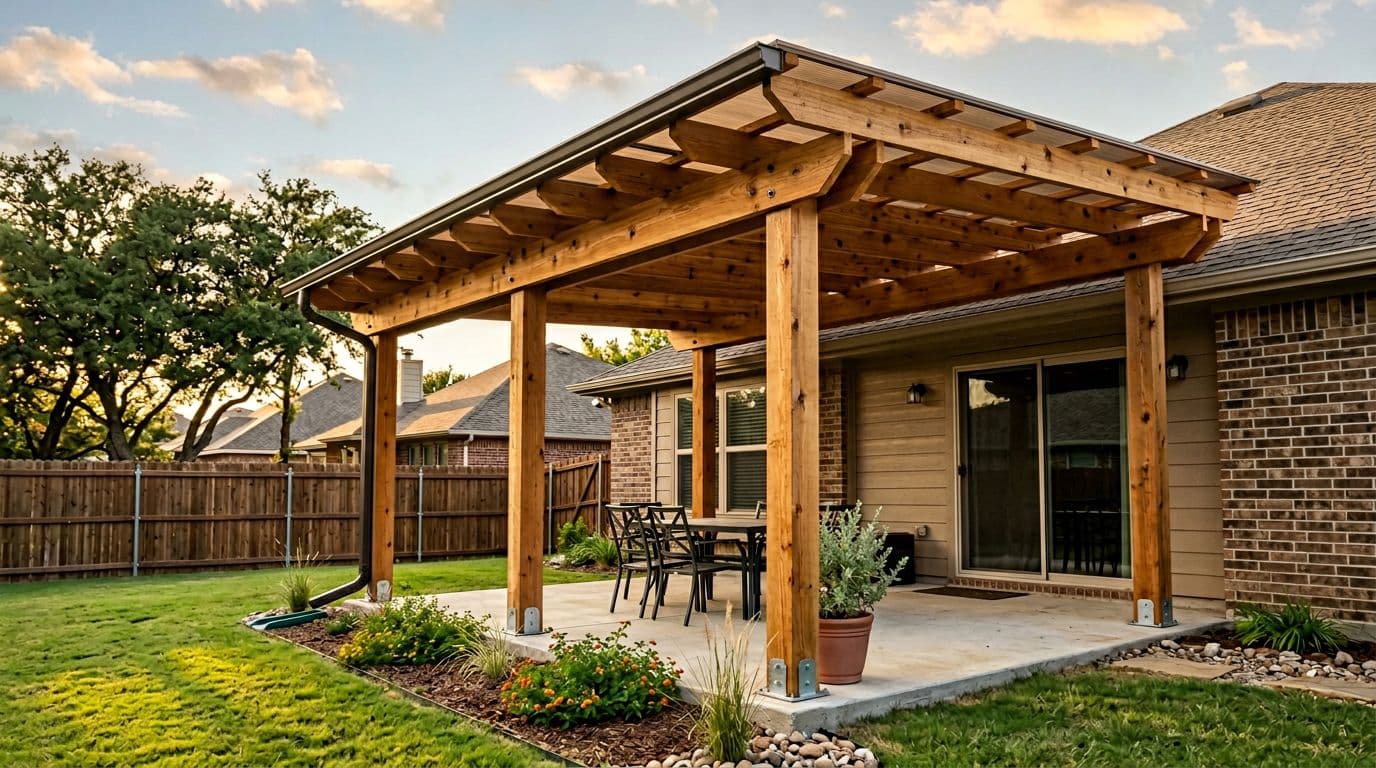
Start with the structure. Many homeowners prefer substantial posts (often 6×6) because they look right at a 10×20 span. A beefier header beam also helps the cover feel solid, not spindly. Clean hardware placement matters too, especially if you’re aiming for a modern look in places like Frisco or Plano.
Next, choose the roof behavior you want:
- If you want bright shade and rain protection without turning the patio dark, translucent polycarbonate panels can be a smart fit.
- If you want maximum rain and heat blocking, a solid roof can feel more like a room, but it needs careful tie-in and drainage planning.
Also think about water early. Gutters, downspouts, and a plan to move runoff away from the slab protect the patio and your foundation.
Finally, decide how you want cedar to age. Left alone, it will weather toward a silvery tone. If you prefer the rich cedar color, plan to stain and seal on a schedule.
If you want a deeper look at design options and attached versus detached layouts, see these custom cedar patio covers built around North Texas homes.
Cost, permitting, and upkeep in Denton and nearby cities (Feb 2026)
In February 2026, installed pricing for a 10×20 cedar patio cover in North Texas commonly lands in a wide band, roughly $4,800 to $18,000. The spread exists because “10×20” describes footprint, not complexity. Roof style, electrical, stain, and site conditions can shift the total fast. On a square-foot basis, wood patio covers in Texas often price around $40 to $90+ per square foot installed, depending on details.
This quick table shows what tends to move the number:
| Cost driver | What changes | Why it matters |
|---|---|---|
| Roof style | Flat, gable, solid, translucent panels | Affects framing, tie-in, and water control |
| Footings and slab | New piers, cutting concrete, slope fixes | Supports posts and prevents settling |
| Electrical add-ons | Fans, recessed lights, outlets | Needs planning and safe routing |
| Finish level | Sanding, stain, seal | Impacts long-term look and maintenance |
For a rough outside comparison, this 10×20 patio cover cost guide shows how pricing can change across materials and builds.
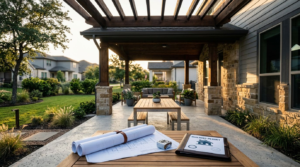
Permits vary by city, but most attached structures require plan review and inspections. Denton also cares about setbacks and how the cover ties to the house. Your builder should handle that process and build to local requirements.
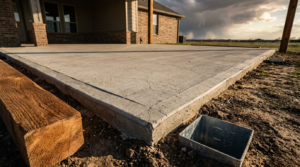
One more practical note: if your concrete patio is new or you’re pouring a larger slab, durability starts with good prep and curing. This guide on helping a concrete patio last is a helpful reminder of what to ask your contractor.
For homeowners who want a local team focused on cedar builds, this page on cedar patio covers in Denton explains common options and what to expect.
PAA-style FAQs about a 10×20 cedar patio cover
Is a 10×20 cedar patio cover big enough for dining and seating?
Yes. With smart furniture placement, 200 square feet can cover a dining table plus a small lounge area. You’ll get the best feel if you keep one clear walking lane.
How long will a cedar patio cover last in Texas weather?
With solid construction and routine sealing, cedar structures often last decades. Sun is the main enemy, so you’ll protect the look by re-staining or sealing every few years.
Do you need gutters on a patio cover?
If you want less splash on the slab and better control near doors, gutters help. They also reduce erosion along the edge of the patio.
What’s the difference between a patio cover and a pergola?
A patio cover usually provides real rain protection with a more complete roof. A pergola is more open and shade depends on slat spacing. For cost context in Texas, this Central Texas pergola cost guide (2026) shows how design choices change pricing.
Can you add fans and lights later?
Sometimes, but it’s easier when the framing and wiring paths are planned upfront. If you already know you want a fan, say it early.
Conclusion
A 10×20 cedar patio cover gives you a comfortable, defined backyard space without overbuilding. When you match the roof style, drainage plan, and finish to your home, the cover looks like it belonged there all along. If you’re ready to price options for your property in Denton or nearby, call 469-340-0839 and schedule a design consult. Your patio should feel like the best seat in the house, even in August.