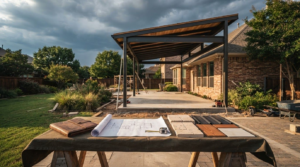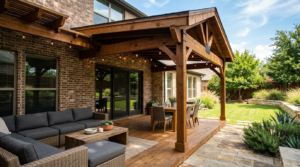
By 4 p.m., a west-facing backyard in North Texas can feel like a brick oven. The sun sits low, glare bounces off the slab, and the patio you paid for suddenly feels off-limits.
Most families want to sit outside after work, which is when the heat peaks. The best north texas patio covers solve that late-day problem without clashing with your home’s style.
A smart design blocks low sun, cools the space faster, and makes the yard usable again. Start with how west light moves, then choose the cover that answers it.
Why west-facing patios need more than overhead shade
West-facing patios get hit when people want them most. By late afternoon, the sun is lower, sharper, and harder to block. Light slips under shallow roofs and reflects off concrete, windows, and light stone.
That low sun also heats nearby rooms. Back doors, rear windows, and even indoor floors can pick up extra glare, so the cover affects comfort inside the house too.
That means a patio cover can’t only sit above the space. It also has to control glare from the side. In many homes, a deeper roof, a lower west edge, or a screen panel does more than a basic open pergola.
If you want a built-in look, attached patio covers often make the most sense. They shade the slab close to the house, protect the back door area, and feel like part of the original plan.
In a west-facing yard, side shade often matters almost as much as roof size.
This quick comparison helps narrow the field:
| Design | Best fit | Watch for |
|---|---|---|
| Attached solid cover | Deep afternoon shade near the house | Needs a clean roof tie-in |
| Lattice pergola | Filtered light and airflow | Limited glare control by itself |
| Louvered cover | Flexible sun control | Higher price |
| Freestanding pavilion | Shade away from the house | More posts and footings |
For most homeowners, the best answer is the one that blocks overhead sun and low-angle glare at the same time. Before you build, stand on the patio at 5 p.m. and look where the sunlight lands. That simple check can save you from choosing a cover that looks right but shades the wrong spot.
Patio cover designs that work best in west-facing North Texas yards
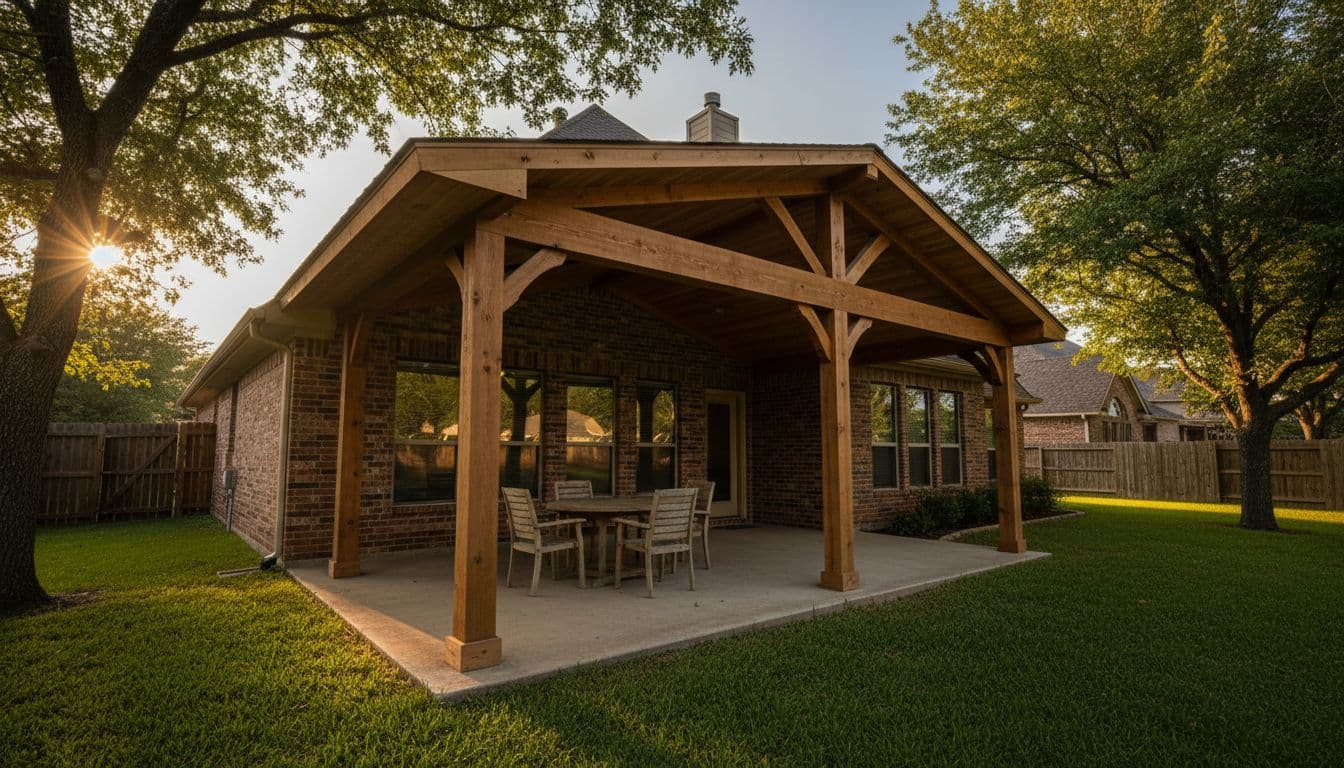
Attached solid covers for maximum relief
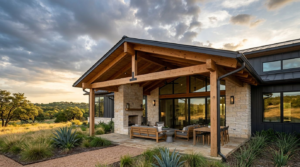
An attached solid cover is usually the strongest answer for harsh west sun. It blocks direct overhead heat, protects doors and windows, and makes the patio feel like an outdoor room instead of a hot landing pad.
If you want warmth and curb appeal, custom cedar patio covers are a strong fit for many brick and stone homes. Cedar also looks better than plain framing when the cover is visible from inside the house.
Keep the cover deep enough to shade the seating area, not only the back wall. On smaller patios, an attached roof can also make the whole yard feel larger because the walk from kitchen to patio stays cooler. A fan helps, but the roof has to do the heavy lifting first. Gutters and proper drainage matter too, because west storms can dump water fast.
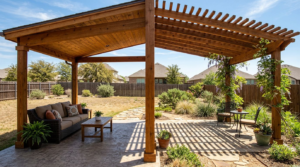
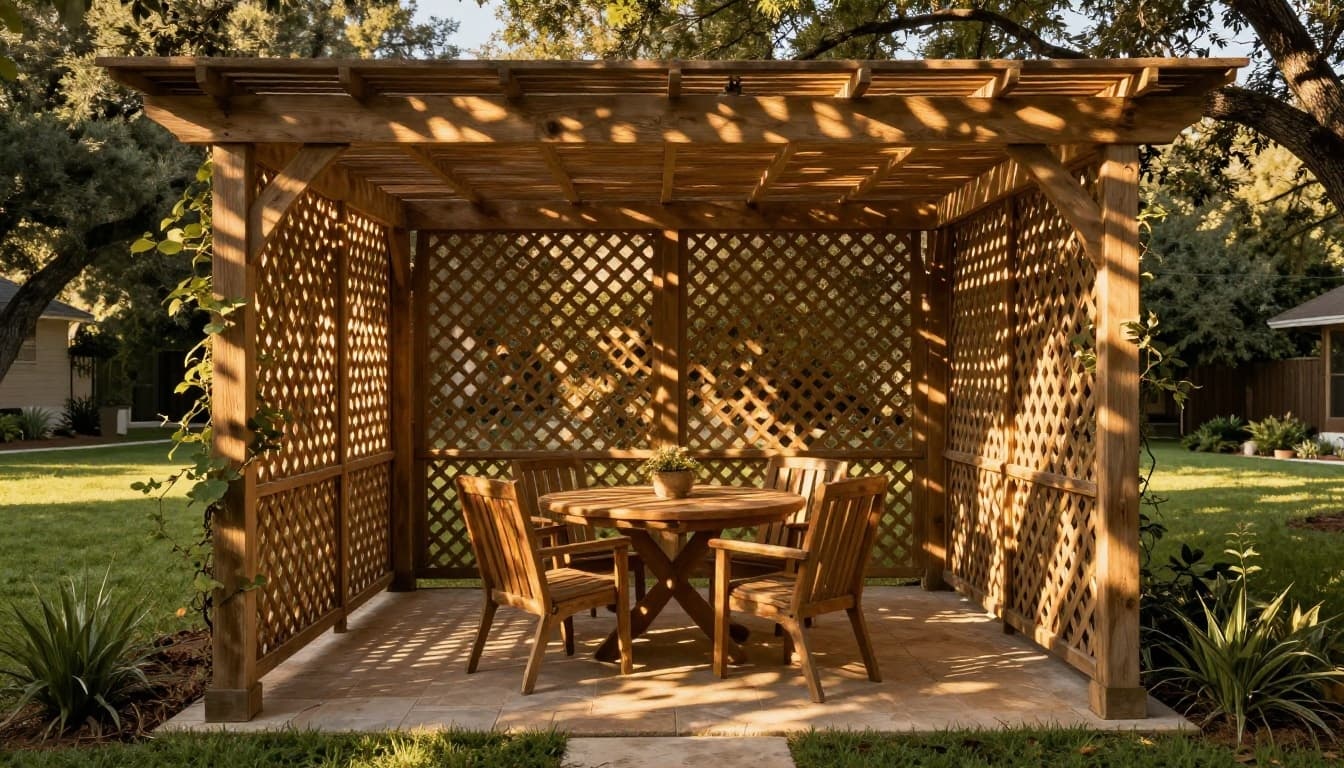
Lattice pergolas when you still want light
A pergola can work in a west-facing yard, but only with the right expectations. It softens the sun and keeps the space open. Still, slats alone won’t stop the lowest afternoon glare.
This design works best when you want filtered light, more breeze, and a lower price than a full roof. To make it more useful in summer, go deeper with the structure, tighten the slat spacing, or add a west-side shade curtain or canopy panel. Without that extra help, the patio may still feel bright and hot by dinner time.
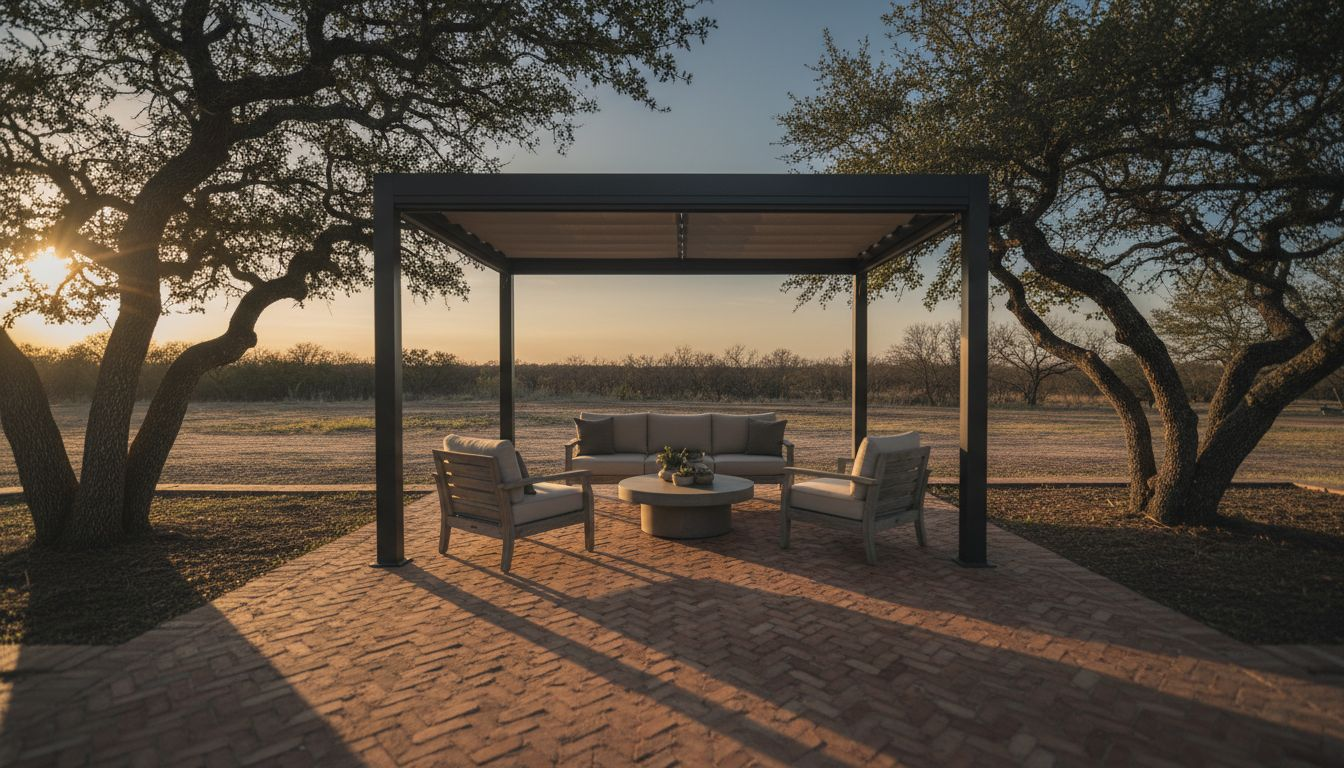
Adjustable louvered covers for flexible control
A louvered cover gives you control that fixed roofs can’t. Open it on mild mornings for more light, then close it as the west sun drops and starts aiming straight at your chairs.
This design fits modern homes and patios with changing uses. It’s also handy when one space has to handle lounging, dining, and weekend guests. The tradeoff is cost, and motorized options add more moving parts, but the flexibility is hard to beat.
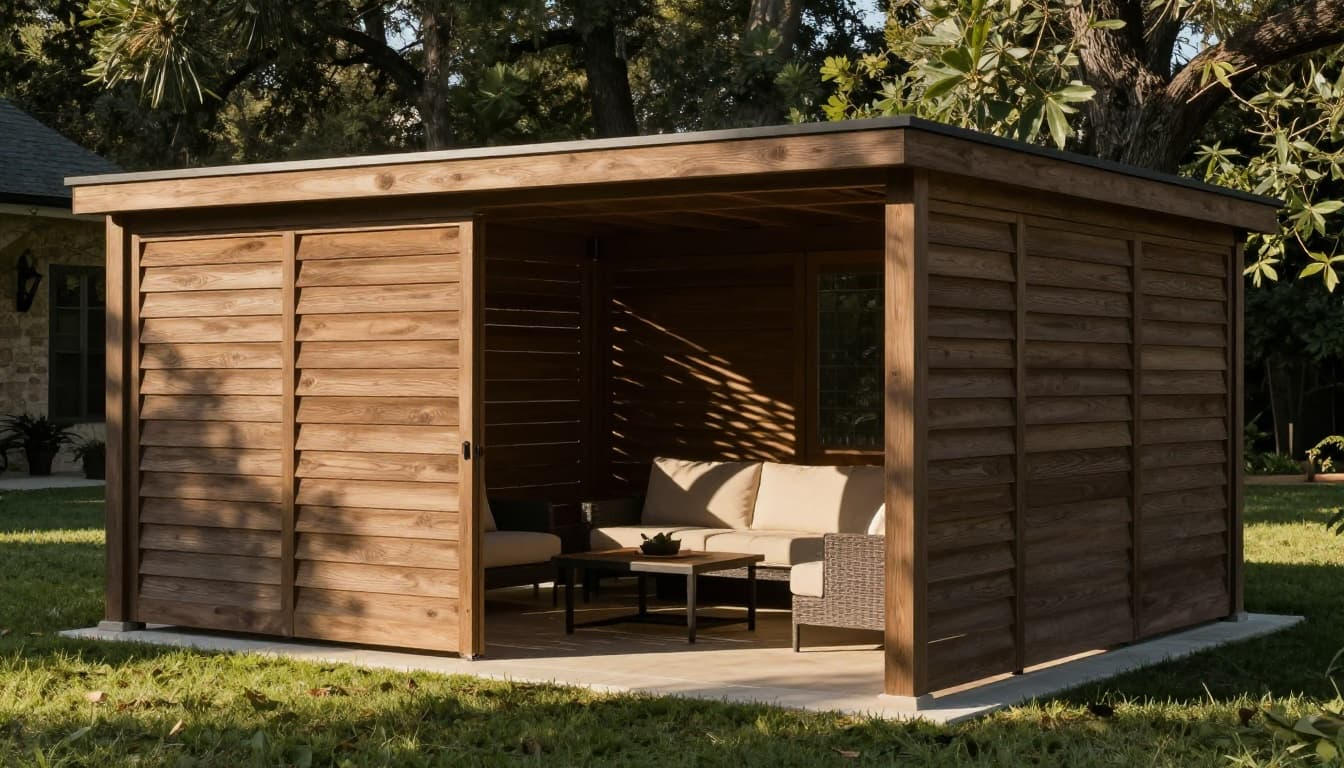
Freestanding pavilions for backyards with a hot zone away from the house
Some west-facing yards heat up farthest from the back wall, especially near pools, outdoor kitchens, or oversized patios. A freestanding pavilion lets you place the roof where the harsh sun lands most, instead of forcing everything against the house.
That added distance isn’t always a drawback. It can create a true destination zone for evening meals or a lounge area away from back-door traffic. You will need more footings and a clear path to the shade, so this option often costs more than an attached cover of similar size.
Small design choices that change comfort and cost
The best-looking cover can still feel hot if the details are off. Roof height matters. If the cover sits too high, west light slips under it. If it’s too shallow, your chairs stay in sun while the wall gets all the shade.
Post placement matters more than many homeowners expect. A post at the west corner can help block low sun, but it shouldn’t pinch traffic near the door or grill. Good planning balances shade, walkway space, and sightlines from inside the home.
Material matters too. Cedar brings a richer, more built-in look. Aluminum can lower upkeep and change the price. If you’re weighing appearance, maintenance, and storm wear, this guide to cedar vs aluminum patio covers is a useful next step.
Fans move air, but they don’t fix bad shade. West-side screen panels, a deeper overhang, and lighter roof finishes often do more for comfort. Lighting layout matters as well, because a deep cover with the right lights stays useful long after sunset.
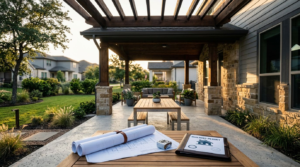
Budget gets easier when you rank your goals first. If you want the coolest patio, pick solid coverage and side protection. If style and airflow matter most, a pergola or louvered cover may fit better. Compare stain or finish samples against your brick or siding before you sign. Ask for a shade plan based on 4 p.m. sun, not only a rendering. Request a free estimate that breaks out size, materials, and add-ons line by line.
A west-facing backyard doesn’t need more square footage. It needs smarter shade.
The best north texas patio covers block low afternoon sun, fit the home, and make the patio usable when families want it most. Walk your yard in late afternoon, narrow your choices to the design you’ll use in August, and get expert input before summer turns the slab into a skillet.