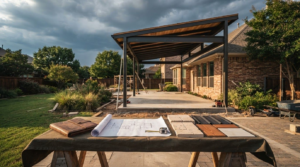
When homeowners type “patio covers north texas” into Google, they’re usually trying to solve one problem fast: too much sun, not enough usable backyard.
The hard part isn’t deciding if you need shade. It’s deciding what kind of cover fits your house, your yard, and your budget. In North Texas, that choice matters even more because heat, hail, wind, and sudden storms don’t cut anyone slack.
How attached and freestanding covers change the way you use your yard
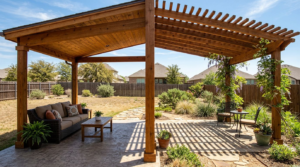
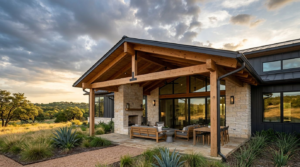
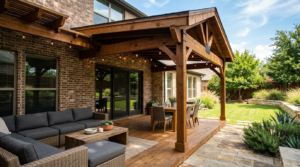
An attached patio cover connects to your home. Think of it like an outdoor room that starts at the back door. It often feels natural, easy to reach, and tied to the house design.
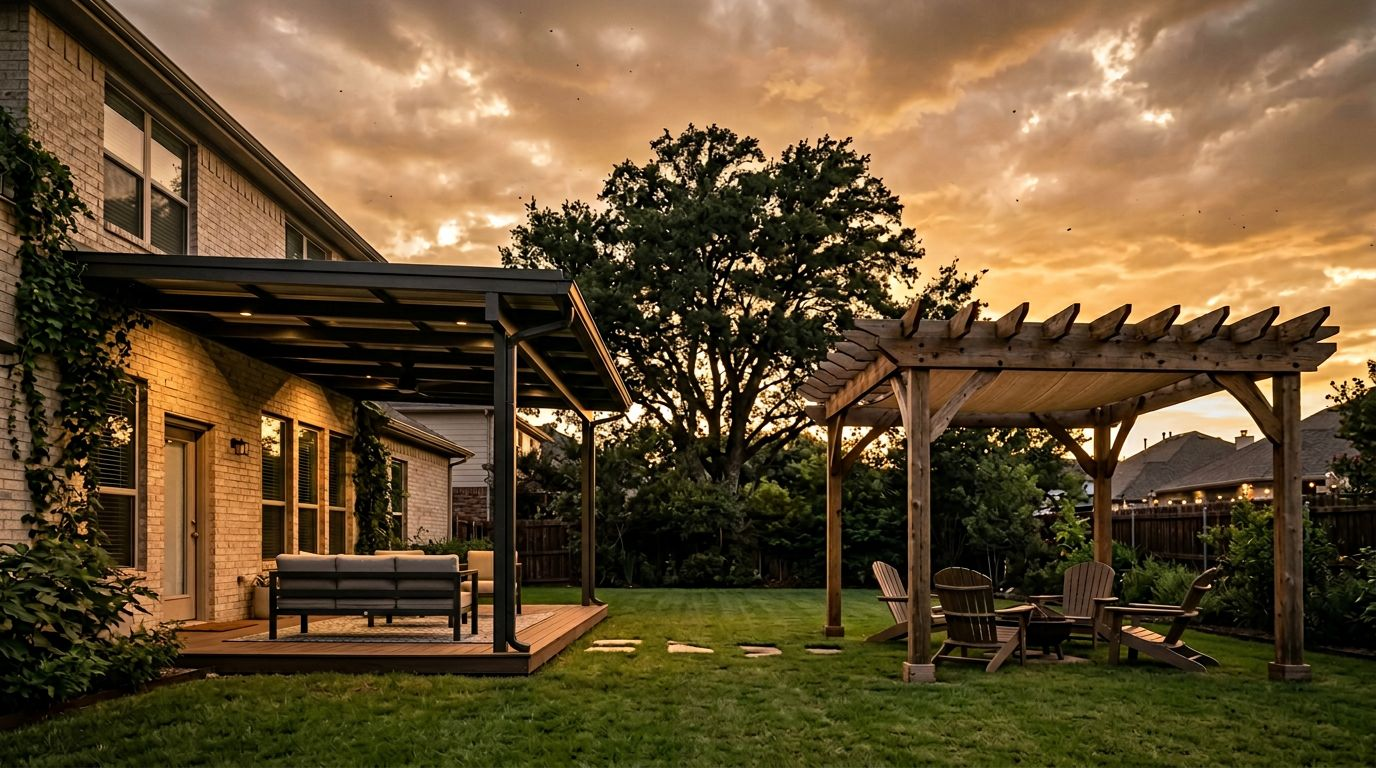
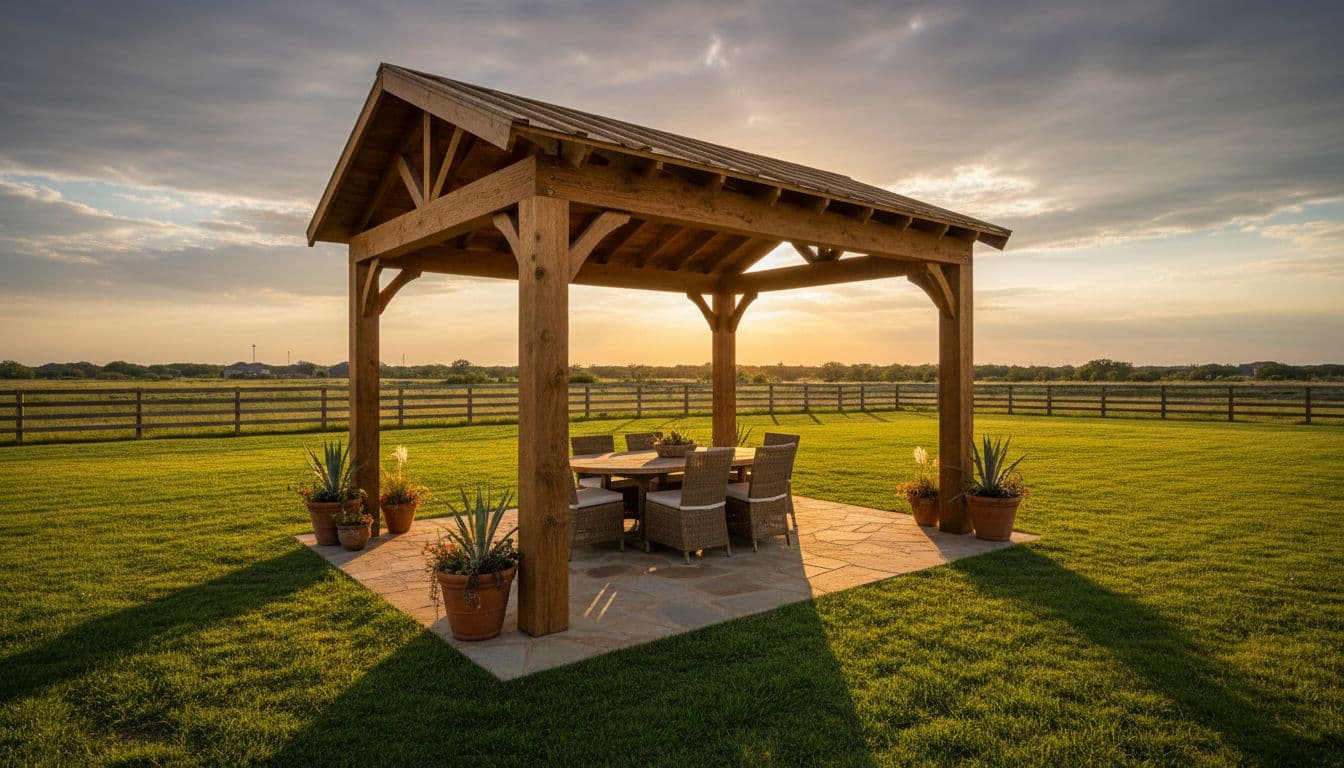
A freestanding patio cover stands on its own. It works more like a backyard destination, a shaded island set where you want it most.
Here’s the quick side-by-side view:
| Feature | Attached patio cover | Freestanding patio cover |
|---|---|---|
| Best location | Right off the house | Anywhere in the yard |
| Daily convenience | Excellent | Good, but less direct |
| Design feel | Built-in look | Separate outdoor zone |
| Budget pattern | Often lower for similar size | Can cost more due to extra posts and structure |
| Best for | Dining, grilling, family use near the house | Pool areas, garden seating, detached shade zones |
The table tells the story. Attached covers usually win on convenience. Freestanding covers win on placement freedom.
If the space needs to feel like part of the house, attached usually wins. If it needs to create a new zone, freestanding often wins.
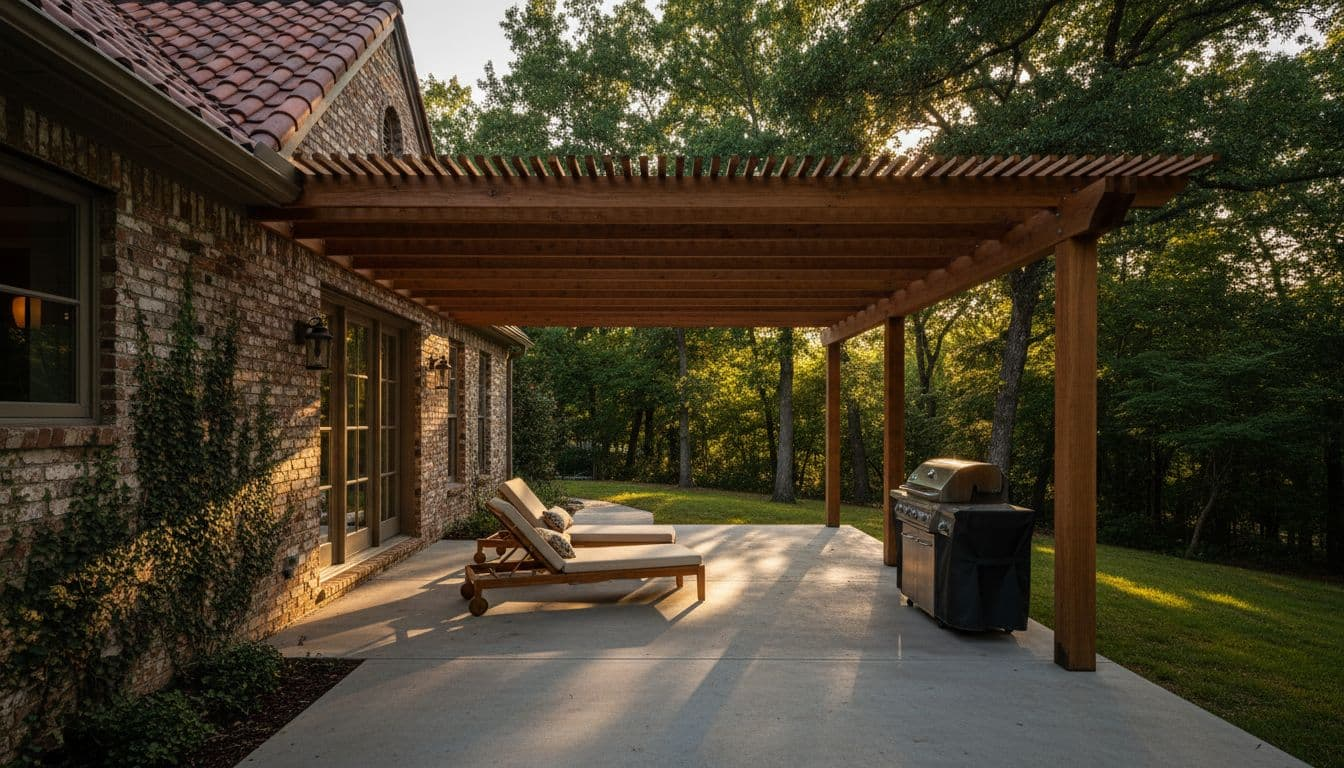
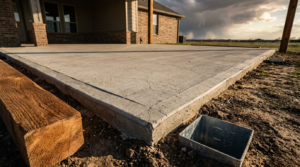
Attached covers make the most sense when your slab already sits close to the home. They’re easy to step under when the sun gets brutal at 4 p.m. They also help if you grill often, carry food outside, or want kids to move in and out without crossing the yard.
Meanwhile, freestanding covers shine when the best spot isn’t next to the house. Maybe your patio bakes in the afternoon, but the back corner near the trees feels better. Maybe you want a lounge space by a pool or fire pit. In those cases, forcing an attached design can feel like putting the umbrella in the wrong place.
If you already know you want shade tied into the home, look at attached patio covers in North Texas and compare how the roofline and posts change the final look.
Which option fits your budget, style, and long-term plans
Budget matters, but it shouldn’t make the choice by itself. The cheapest option on paper can become the wrong option in daily use.
Attached covers often cost less for the same footprint because the house helps carry part of the structure. That said, the connection point matters. Flashing, drainage, and attachment details need to be done right. A weak tie-in can create problems later. This structural and design breakdown explains why the connection to the house deserves real attention.
Style is another big factor. Attached covers usually look cleaner on traditional North Texas homes, especially when the trim, pitch, and posts match the house. They can make the backyard feel larger because the covered area starts where indoor living ends.
Freestanding covers have a different kind of appeal. They add shape to a flat yard. They can frame a dining area, define a garden retreat, or break a large backyard into useful zones. In other words, they don’t extend the house, they organize the yard.
Then there’s the future. If you might add lighting, fans, or an outdoor kitchen later, plan for that now. An attached cover often makes power access easier. A freestanding build may need more planning for wiring and layout.
Material choice matters too. In North Texas, custom cedar often beats off-the-shelf kits because it can be sized to the yard and built to match the home. Before you go with a stock system, compare custom vs prefab patio covers in North Texas. It’s a smart step before you sign anything.
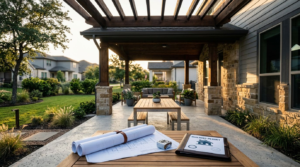
If you’re still torn, ask for a free estimate and compare both layouts on your actual property. A quick sketch on-site can save you from an expensive guess.
Why North Texas weather changes the answer
A patio cover in North Texas has to do more than look good. It has to hold up through harsh sun, heavy rain, spring wind, and the occasional hailstorm that sounds like gravel on a drum.
That’s why placement and structure go together. Attached covers can benefit from the house for support, but only if the ledger, flashing, and roof tie-in are done well. Freestanding covers avoid that attachment point, yet they rely fully on solid posts, footings, and bracing.
Local weather makes roof design important too. A cover that sheds water well and handles wind loads will age better than one chosen only for looks. This storm-ready patio cover guide is a helpful reminder that strength starts with design, not decoration.
Sun exposure changes comfort as much as structure. An attached cover over the back door can knock heat off the patio and even reduce glare inside the home. A freestanding cover can be placed where late-day shade works best. So the right answer depends on where the sun hits hardest in your yard.
If your current cover leaks, sags, or looks patched together, don’t keep throwing money at it. Start with patio cover replacement in Denton and get a straight answer on whether repair still makes sense.
The best move is simple: choose the layout that matches how you already live outside, then build it for Texas weather from day one.
Attached covers work best when you want easy access, a built-in look, and daily use near the house. Freestanding covers make more sense when your ideal shade zone sits somewhere else in the yard.
If you want help comparing both on your property, request a free estimate, ask for layout options, and get the plan settled before summer heat shows up again.