Buying a prefab cover can feel like buying a one-size-fits-all jacket. It might work, but you’ll notice the tight spots, the awkward gaps, and the parts that never quite sit right.
With custom patio covers, you’re not trying to force your backyard to match a kit. You’re building shade that fits your home, your sun angles, and how you actually use the space. If your goal is better outdoor living, the difference shows up fast, in comfort, in looks, and in how long it lasts.
If you’re weighing prefab against a custom build, here’s what you gain when you choose custom.
You get a patio cover that fits your home (not the other way around)
Prefab patio covers are designed to ship and assemble quickly, so they’re built around standard sizes and simplified connections. That’s fine for a basic shade patch, but your house isn’t “standard,” and neither is your patio.
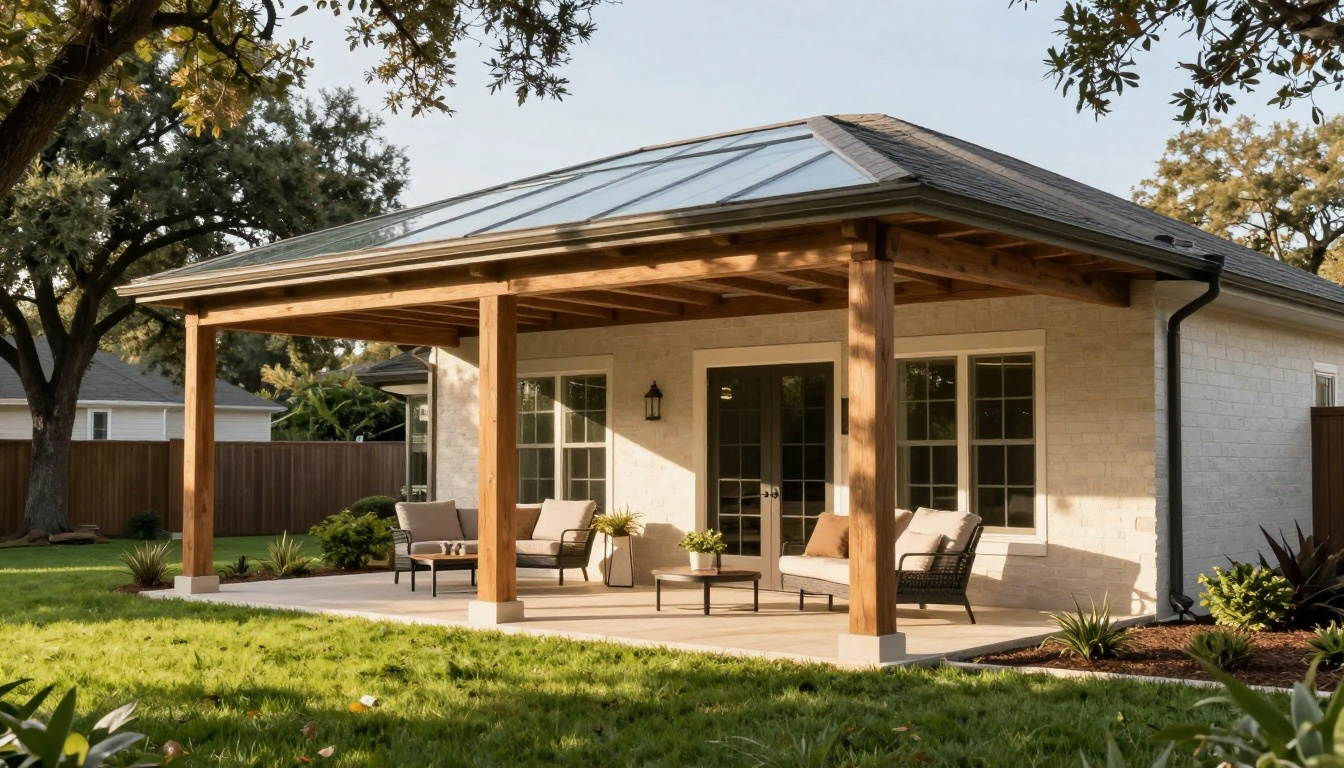
A custom build starts with your layout, roofline, and where water needs to go. Your patio cover contractor can match pitch, fascia style, and post placement so the structure looks like it belongs there, not like it was added later.
You also avoid the common prefab headache: working around obstacles. Low eaves, odd corners, existing concrete slopes, door swings, and window placement can all turn a kit into a compromise. Custom planning lets you keep your traffic paths clear and your sightlines open, which matters if you entertain or want the view to stay the star.
Here’s a quick way to think about the trade-offs.
| Feature | Prefab patio cover | Custom patio cover |
|---|---|---|
| Fit to existing roofline | Limited | Built to match |
| Post placement | Fixed or limited | Designed around your patio use |
| Shade coverage | Standard sizes | Sized for your sun and space |
| Drainage planning | Basic | Designed for your lot and runoff |
| Visual integration | Often “add-on” look | Intentional, finished look |
When your goal is comfortable covered patios, small details make a big difference. A custom design can extend coverage over seating, outdoor dining, or the grill area, instead of leaving you with a strip of shade that moves away from you by mid-afternoon.
You can choose materials and design that hold up in North Texas weather
Prefab often limits you to whatever material comes in the kit. Custom lets you choose what performs best for your conditions and your style.
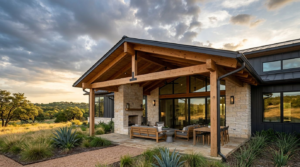
For many homeowners, cedar patio covers are the sweet spot. Cedar has natural resistance to rot and insects, and it looks warm and finished even without heavy ornament. If you like a more natural backyard feel, cedar can make the patio look like an outdoor room instead of a utility structure.
Custom also gives you real control over how the shade behaves. Do you want full cover for summer heat? Do you want filtered light? That’s where design choices matter.
A few examples you can decide upfront:
- Solid roof patio covers: Better rain protection, better midday shade, and more consistent comfort.
- Lattice or open designs: More breeze and dappled light, great if you like sun but want relief.
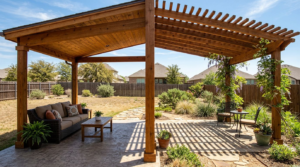
- Pergolas: Strong visual style and airflow, and you can add shade fabric or plant coverage later.
Comfort isn’t only about sun. It’s also about airflow, heat build-up, and where rain goes during storms. A thoughtful custom plan can add ceiling fan support, lighting placement, and proper slope for drainage so the structure feels good in July and doesn’t create puddles in spring.
If you’re planning a bigger backyard upgrade, it helps to look at how shade structures fit into the whole space. This page on outdoor living solutions in Denton shows how a cover can tie in with other features without making the yard feel crowded.
Custom usually wins on long-term cost, repairs, and resale
Prefab looks cheaper at first glance, but the real cost shows up over time. When a kit isn’t designed for your exact site, stress points show up at the joints, fasteners, and posts. Wind uplift, shifting soil, and repeated heat cycles can turn “good enough” into rattles, leaks, and visible sag.
Custom work can be built around the loads your structure needs to handle, with cleaner connections and better support spacing. That often means fewer problems later, and fewer patch jobs that never blend in.
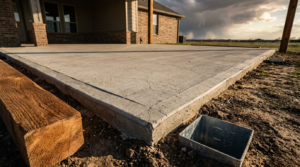
Custom also makes patio cover replacement easier when the time comes. If your current cover is aging, a contractor can plan the new structure around the existing slab, attachment points, and drainage lines, instead of forcing a prefab footprint onto a space it wasn’t made for.
Resale is another part homeowners forget. Buyers notice when a cover looks like part of the home. They also notice when it looks temporary. A custom cover can read like added living space, which supports the idea that the home was maintained and improved with care.
That matters whether you live in patio covers Denton TX neighborhoods or you’re comparing patio covers Argyle TX options where curb appeal and finish details tend to carry more weight.
For local planning, a builder who knows North Texas conditions can help you avoid mistakes that get expensive later, like poor drainage, awkward headroom, or a layout that blocks future upgrades.
You get a smoother installation experience with fewer “surprises”
Prefab promises speed, but speed only helps when nothing goes wrong. If your slab isn’t level, your house wall isn’t perfectly straight, or the kit hardware doesn’t match what your site needs, you can lose days in workarounds.
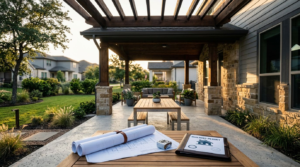
With professional patio cover installation, a custom approach often reduces surprise issues because the project is measured, planned, and built for what’s already there. That includes permitting and code requirements when they apply, plus basic realities like where downspouts should land and how close posts can be to utilities.
Custom also helps you plan for the way you live. If you want lighting for evening dinners, power for a TV, or a fan to make August tolerable, it’s best to design those supports at the start. Retrofitting later is possible, but it usually costs more and looks less clean.
If you’re in the broader service area, you’ll see the same sun and storm patterns across nearby communities, even if the homes look different. That includes patio covers North Texas. Argyle, Aubrey, Bartonville, Carrollton, Celina, Copper Canyon, Corinth, Cross Roads, Dallas, Denton, Double Oak, Flower Mound, Frisco, Grapevine, Hackberry, Hebron, Hickory Creek, Highland Village, Justin, Krugerville, Krum, Lake Dallas, Lakewood Village, Lewisville, Little Elm, Northlake, Oak Point, Paloma Creek, Pilot Point, Plano, Ponder, Prosper, Providence Village, Roanoke, Sanger, Savannah, Shady Shores, The Colony, Trophy Club, Westlake.
When you want a build that fits your home and lasts, choosing an experienced team matters. JBN Patio Covers is one option homeowners consider for custom work in this region.
Common questions homeowners ask before choosing custom
Are custom patio covers always more expensive than prefab?
Not always in the long run. Prefab can be cheaper upfront, but custom can reduce repairs, water issues, and early replacement costs. You’re also paying for a better fit and finish.
Can you combine pergolas and patio covers in one yard?
Yes. You can use patio covers for full shade near the house and pergolas to define a second zone, like a fire pit or garden seating area. Custom design makes the mix look planned instead of random.
What’s the biggest practical benefit of going custom?
You control the shade where you need it. That means your seating stays usable, your doors and walkways stay clear, and rain runoff is handled instead of ignored.
When should you consider patio cover replacement instead of repair?
If posts are soft, hardware is failing, or the roof tie-in leaks repeatedly, replacement is often the better call. A new custom design can fix the underlying layout issues, not just cover them up.
Conclusion
Prefab can shade a spot, but custom patio covers change how you use your backyard. You get a structure that fits your home, handles local weather, and feels like part of the property, not an afterthought. If you want a clear next step, talk with a trusted patio cover contractor and ask for a design that matches how you live outside. When you’re ready to discuss options with JBN Patio Covers, call 469-340-0839 and get answers tied to your home, not a kit.