If you’ve ever noticed a small drip after a storm or a new squeak when the wind picks up, you already know how patio cover problems start. They rarely fail all at once. They fail in slow motion, one loose fastener, clogged gutter, or hairline crack at a time.
A smart patio cover maintenance routine works like changing the oil in your car. It’s not exciting, but it keeps you from paying for a major breakdown later. And in North Texas, where sun, hail, heavy rain, and high winds can show up in the same month, “set it and forget it” doesn’t last long.
Below is a simple, seasonal checklist you can follow for most patio covers, including wood structures, covered patios, and pergolas.
The simple baseline routine you can do year-round
Think of this as your “10-minute walkaround.” Do it every month or two, and always after a big storm. You’re looking for changes, not perfection.
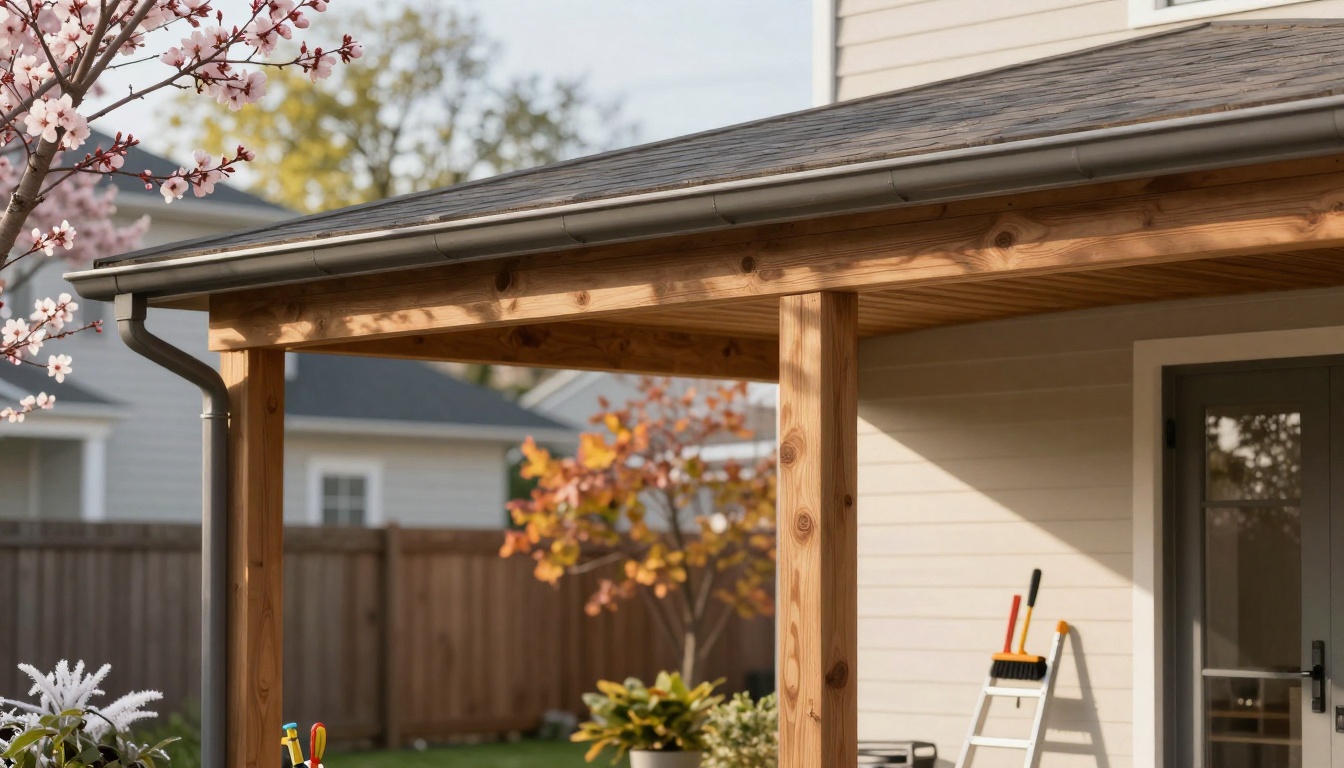
Start with safety. Use a stable ladder, wear eye protection, and avoid stepping onto any roof panels unless the manufacturer says it’s safe. If you’re unsure, stay on the ground and use binoculars.
Here’s what to check:
- Debris and drainage: Clear leaves, seed pods, and twigs from the roof and any drainage paths. Most leaks begin because water can’t leave the surface. If your cover uses fabric or vinyl components, follow a material-specific guide like ShelterLogic’s cover maintenance basics for cleaning and tension tips.
- Fasteners and hardware: Look for loose screws, missing washers, rust stains, or bolts that backed out. A single loose connection can let wind vibration spread through the frame.
- Movement at attachment points: Where the structure meets the house, check for gaps, pulling, or sagging. That area takes the most stress during storms.
- Surface wear: Fading stain, flaking paint, chalky residue, or dark spots can point to UV damage or trapped moisture.
- Ground contact and splash zones: Posts and lower beams take the worst water exposure. Make sure sprinklers aren’t soaking wood daily.
- Pest activity: Mud tubes, sawdust piles, or tiny exit holes can signal termites or carpenter bees.
If you want a deeper look at design choices that reduce long-term upkeep, see these outdoor living solutions in Denton and how material and layout affect maintenance.
Seasonal patio cover maintenance checklist (Spring, summer, fall, winter)
North Texas weather has patterns. If you match your routine to those patterns, you’ll catch problems early, when they’re still cheap to fix.
Spring: reset after storms and pollen
Spring is when hidden damage shows itself. After hail, high winds, or freezing nights, inspect the roof surface and connections first.
Wash off pollen and grime with a gentle cleaner and a soft brush, then rinse. For wood structures like cedar patio covers, spring is also a good time to evaluate the finish. If water no longer beads on the surface, your stain or sealer is wearing out. General cedar care advice translates well from deck maintenance, including this guide on caring for cedar outdoors.
Also check any nearby tree limbs. Branches that were fine in winter can scrape and damage roofing once spring winds pick up.
Summer: protect against UV and heat stress
Summer doesn’t just fade materials, it also expands them. Heat can loosen fasteners over time, especially on older patio cover installation work.
Do a mid-summer check for:
- Hairline cracks in sealant around flashing or roof joints
- Warping or splitting on exposed beams
- Rust “blooms” on brackets and screws (often the first sign of corrosion)
If you have pergolas, pay attention to the tops of slats and beams where the sun hits hardest. Bright sun can dry wood unevenly, which leads to checking and surface cracks. If your pergola is designed for Denton conditions, you’ll still get longer life with seasonal care. This page on maintaining pergolas in Denton explains how cedar and smart anchoring help in Texas weather.
Fall: clear organic buildup before it traps moisture
Fall is the season that quietly causes rot. Leaves and acorns sit in corners, hold water, and keep wood damp longer than you think.
Before winter, clean roof valleys, beam corners, and any areas where debris collects. Then look underneath the cover during daylight. If you see dark staining or soft spots, you may be dealing with moisture intrusion.
It also helps to trim plants back from posts and beams. Airflow is your friend. A covered patio that never dries will age much faster than one that gets sun and breeze.
Winter: handle freeze, wind, and surprise ice
Winters in North Texas vary, but a few freezing nights are enough to turn small gaps into bigger cracks. Water gets into a seam, freezes, expands, and the seam opens further.
In winter, focus on:
- Any existing cracks in caulk or sealant
- Loose flashing or edge trim that wind can lift
- Sagging roof sections where water could pond
If ice does form, don’t chip at roofing or wood. Let it melt naturally. Chipping can do more damage than the ice.
For a broader seasonal approach that also applies to outdoor living structures, this overview of seasonal maintenance for outdoor living spaces lays out what to prioritize as weather shifts.
When a small fix turns into a patio cover replacement (and what to do next)
A good routine keeps you out of emergency mode, but you should still know the warning signs that call for a patio cover contractor.
Pay attention if you notice:
- Recurring leaks in the same spot after you clean and reseal
- Soft or spongy wood near posts, beams, or the ledger area
- Visible sagging or a roofline that looks “wavy”
- Rust-through on key connectors or post bases
- Fasteners that won’t tighten, which can mean stripped holes or hidden rot
At that point, you’re not just doing maintenance, you’re deciding between repair and patio cover replacement. If you’re upgrading anyway, consider whether custom patio covers make sense for how you use your outdoor living space. A well-designed structure can improve shade, drainage, airflow, and long-term durability, all while making your backyard feel like an extra room.
If you’re planning new work, patio cover installation is also the best moment to address lighting, ceiling fans, and water management so you aren’t retrofitting later.
For service in patio covers Denton TX and patio covers Argyle TX, JBN Patio Covers works across patio covers North Texas. Argyle, Aubrey, Bartonville, Carrollton, Celina, Copper Canyon, Corinth, Cross Roads, Dallas, Denton, Double Oak, Flower Mound, Frisco, Grapevine, Hackberry, Hebron, Hickory Creek, Highland Village, Justin, Krugerville, Krum, Lake Dallas, Lakewood Village, Lewisville, Little Elm, Northlake, Oak Point, Paloma Creek, Pilot Point, Plano, Ponder, Prosper, Providence Village, Roanoke, Sanger, Savannah, Shady Shores, The Colony, Trophy Club, Westlake.
If you want an expert opinion before a small issue grows legs, call 469-340-0839.
Patio cover maintenance Q&A (quick answers)
How often should you inspect patio covers?
Do a quick visual check every month or two, and inspect again after major storms. A seasonal deep check is usually enough if you stay consistent.
What’s the biggest cause of patio cover damage in North Texas?
Trapped moisture and fastener failure are common, especially after wind-driven rain. Sun damage also adds up fast, even when everything looks fine from the ground.
Do cedar patio covers need sealing or staining?
Yes, if you want color retention and better water resistance. Cedar is naturally durable, but it still weathers. When water stops beading on the surface, it’s time to refresh the finish.
Can you DIY repairs, or should you hire a patio cover contractor?
You can handle basic cleaning, tightening accessible hardware, and minor sealing. Call a pro if you see sagging, ongoing leaks, rot, or attachment issues at the house. Those problems can affect safety.
How do pergolas change your maintenance routine?
Pergolas shed less water by design, so debris removal and UV protection matter more than leak checks. You’ll still watch hardware, posts, and any areas where water sits after rain.
Conclusion
You don’t need a complicated system to protect your investment. A steady, seasonal patio cover maintenance checklist helps you spot the small changes that lead to big bills, especially in Texas weather. Keep your structure clean, dry, and tight, and you’ll extend its life while keeping your outdoor living area comfortable year-round. If something looks off, trust your eyes and get a second opinion before it becomes a patio cover replacement.