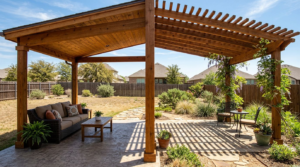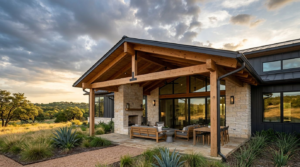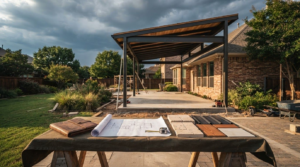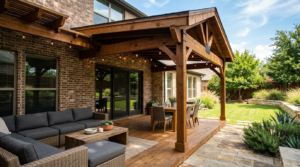
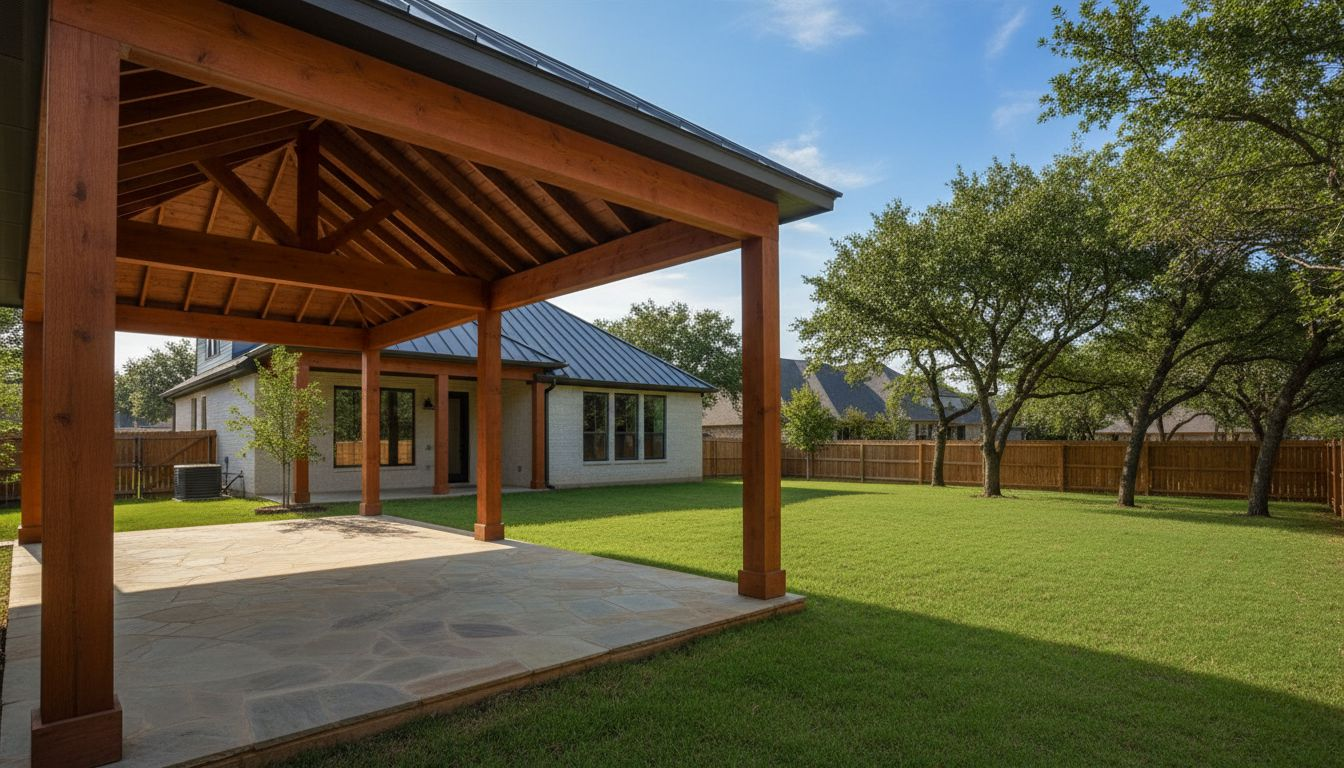
A backyard can look great on paper and still feel unusable by July. In Paloma Creek, heat, glare, and sudden storms can turn an open slab into wasted space.
That’s why cedar patio construction matters so much. When the design fits your home and the build is done right, the patio stops feeling exposed and starts feeling like another room. The details below are the ones that separate a good-looking cover from one that keeps performing.
Why build quality matters more than the stain color
Cedar wins people over fast because it looks warm and natural. Yet good looks are only part of the story. In North Texas, a patio cover has to handle hard sun, wind, rain, and shifting soil.
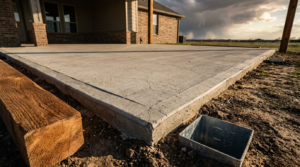
Quality starts below the posts. Footings need the right depth and placement for the load above. Then the framing, connectors, and post bases have to work together, so the structure feels solid in rough weather.
The house connection matters just as much. If an attached cover meets the wall or roof the wrong way, water finds the gap. That can lead to stains, rot, or leaks where you least want them.
Cedar is a smart material because it resists moisture and insects better than many common woods. Still, cedar alone doesn’t fix poor planning. A rushed build is like a nice pair of boots with a weak sole. It looks fine at first, then problems show up where you can’t ignore them.
If you want a better sense of how a custom build can match rooflines, trim, and drainage, see these cedar patio covers tailored to your home.
A cedar patio cover should look like it belongs to the house, not like it was dropped into the yard.
Request a free estimate before peak summer scheduling fills up.
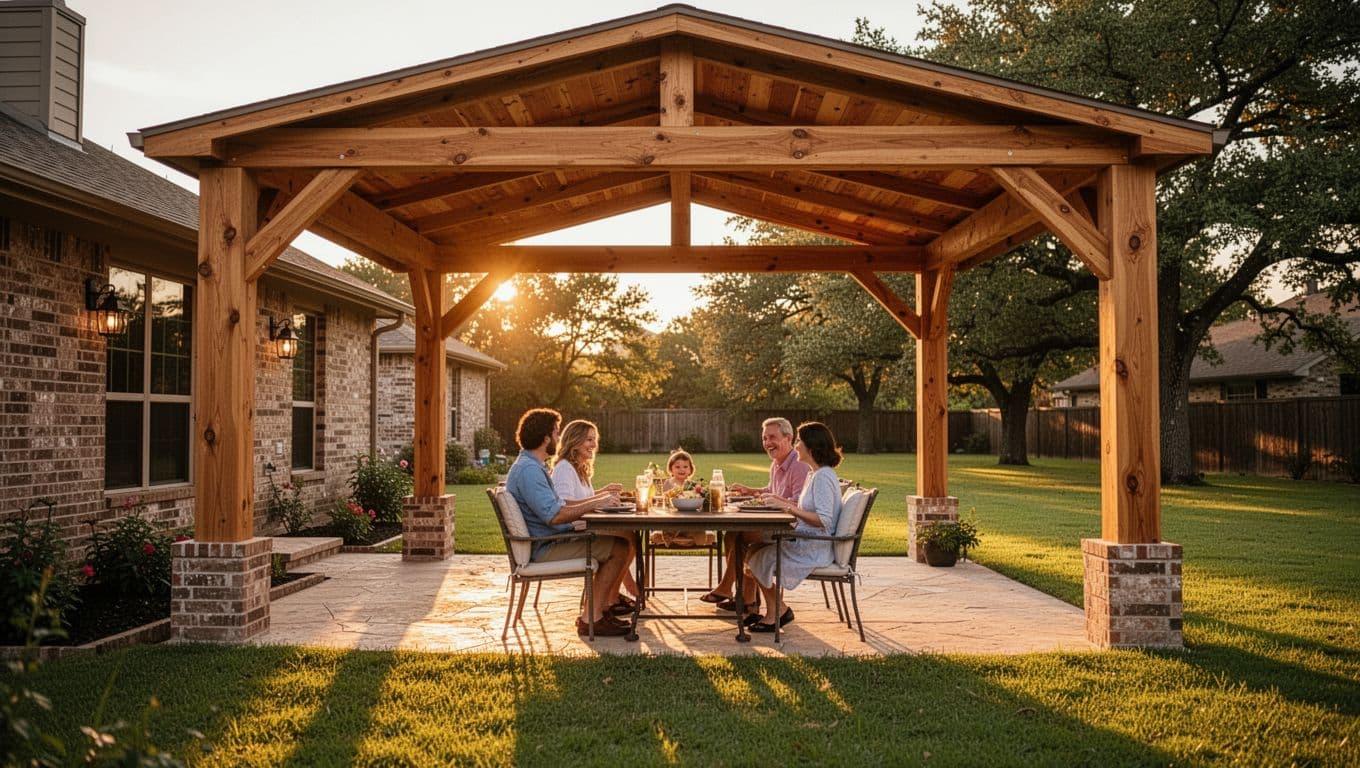
Design choices that make the patio feel built in
A strong build still needs the right shape. In Paloma Creek, the best layouts usually do two jobs at once. They create shade, and they make the backyard flow better.
Attached covers work well when the patio sits right off the back door. They create a smooth path from the kitchen to the grill or dining table. Freestanding structures fit better when the goal is a separate lounge, pool area, or outdoor kitchen zone.
Roof style changes the feel too. A pergola filters light and keeps things airy. A solid roof blocks more heat and handles rain better. The right pick depends on how you use the space at 6 p.m., not only how it looks at noon.
This quick comparison helps narrow the choice:
| Option | Best when | What it adds |
|---|---|---|
| Attached cover | Shade is needed by the house | Easy daily use |
| Freestanding pergola | You want a yard focal point | Open, relaxed feel |
| Solid roof cover | Sun and rain are top concerns | Stronger weather protection |
Size matters more than many homeowners expect. A shallow cover can leave a bright strip of sun near the door, while oversized framing can look heavy. If you’re comparing footprints, this 12×16 cedar patio cover design guide shows how layout affects dining, walking space, and post placement.
Schedule a design consultation early if you want lighting, fans, or an outdoor kitchen planned from day one.
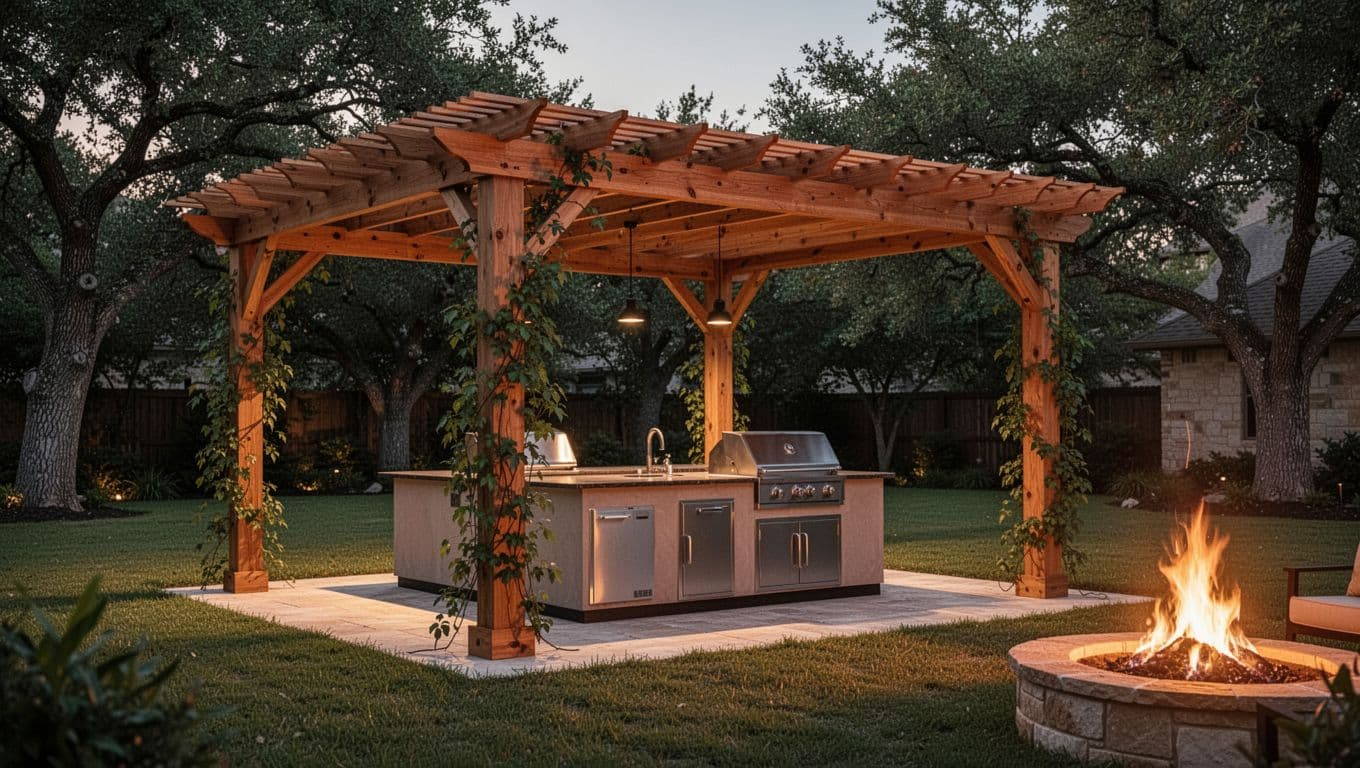
What a solid cedar patio construction process should look like
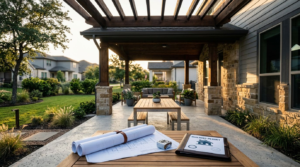
A good project doesn’t start with saws. It starts with a site visit, measurements, sun angles, and a plan for drainage. After that, the builder should explain how the cover ties into the house, where the posts land, and how water moves away from the structure.
Local permits or HOA review can also shape timing, so that talk should happen early. Good planning saves stress later.
Next comes layout and footing work. Then the crew sets posts, beams, and rafters in a sequence that keeps the frame square and stable. If the cover is attached, flashing and fasteners need extra care, because that joint does most of the long-term work.
Post spacing affects both appearance and strength. Too wide, and the front beam can feel bouncy or oversized. Too tight, and the patio starts to feel crowded. This cedar patio cover post spacing guide gives a plain-English look at how spacing changes the build.
A strong contractor also plans for the finish stage before the framing begins. That includes fan blocking, electrical paths, stain choices, and clean trim lines. In other words, the pretty parts depend on the hidden parts.
Ask for a site-specific framing plan before you compare bids. It helps you see whether you’re pricing the same job, or two very different ones.
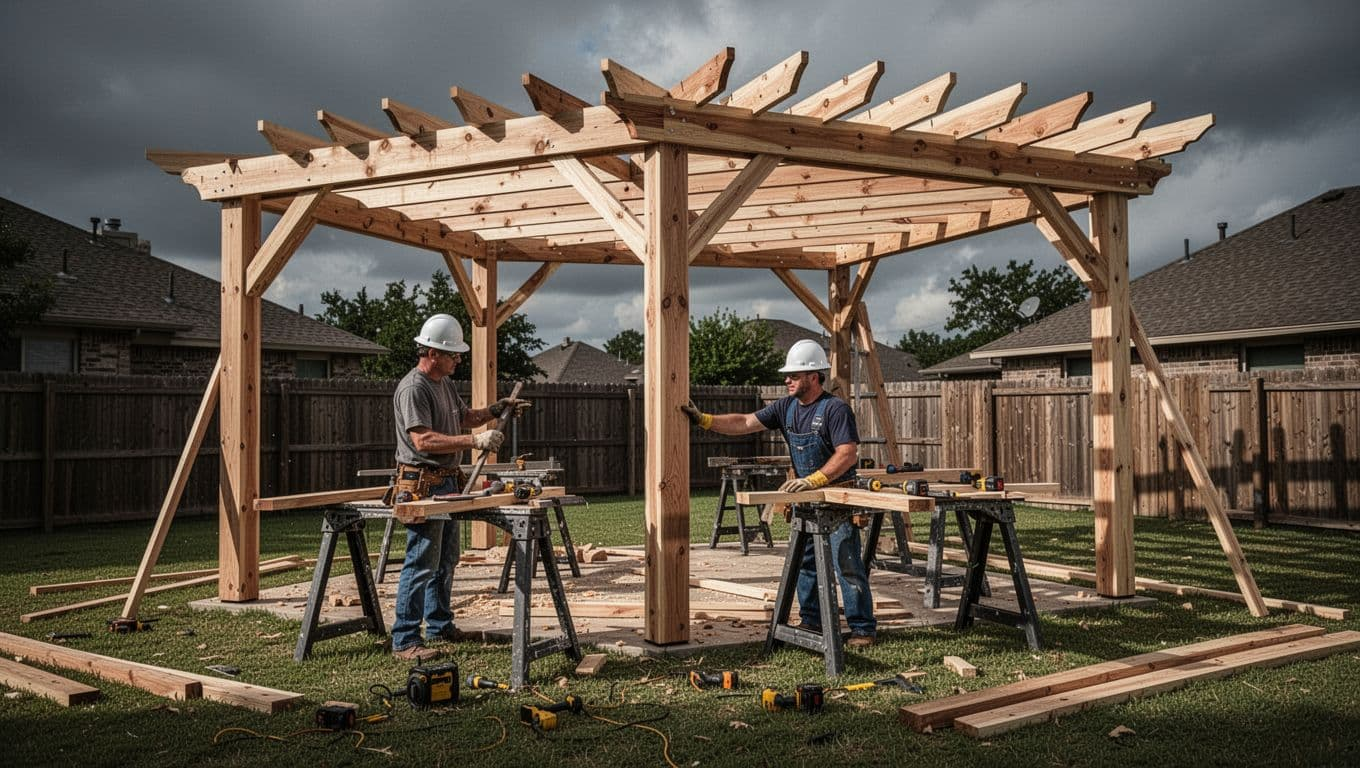
How to choose the right local contractor
Price matters, but the lowest number can hide the biggest shortcuts. A better bid should explain materials, attachment details, hardware, and what happens if the crew finds a problem during the build.
Before you sign, ask a few direct questions:
- What cedar is being used, and where will it be visible?
- How will the footings, post bases, and house connection be handled?
- Can you show recent patio covers with a similar roofline or layout?
- Who handles permits, cleanup, and final walkthroughs?
Get clear answers in writing. Then compare how each builder thinks, not only how each builder sells.
The bottom line for Paloma Creek homeowners
A patio shouldn’t turn into a hot strip of concrete every afternoon. The right cedar patio construction gives you lasting shade, cleaner lines, and a backyard that feels tied to the house instead of separate from it.
If you’re ready to compare ideas, ask for a layout built around your roofline, slab, and daily routine. That’s where a lasting outdoor upgrade begins.