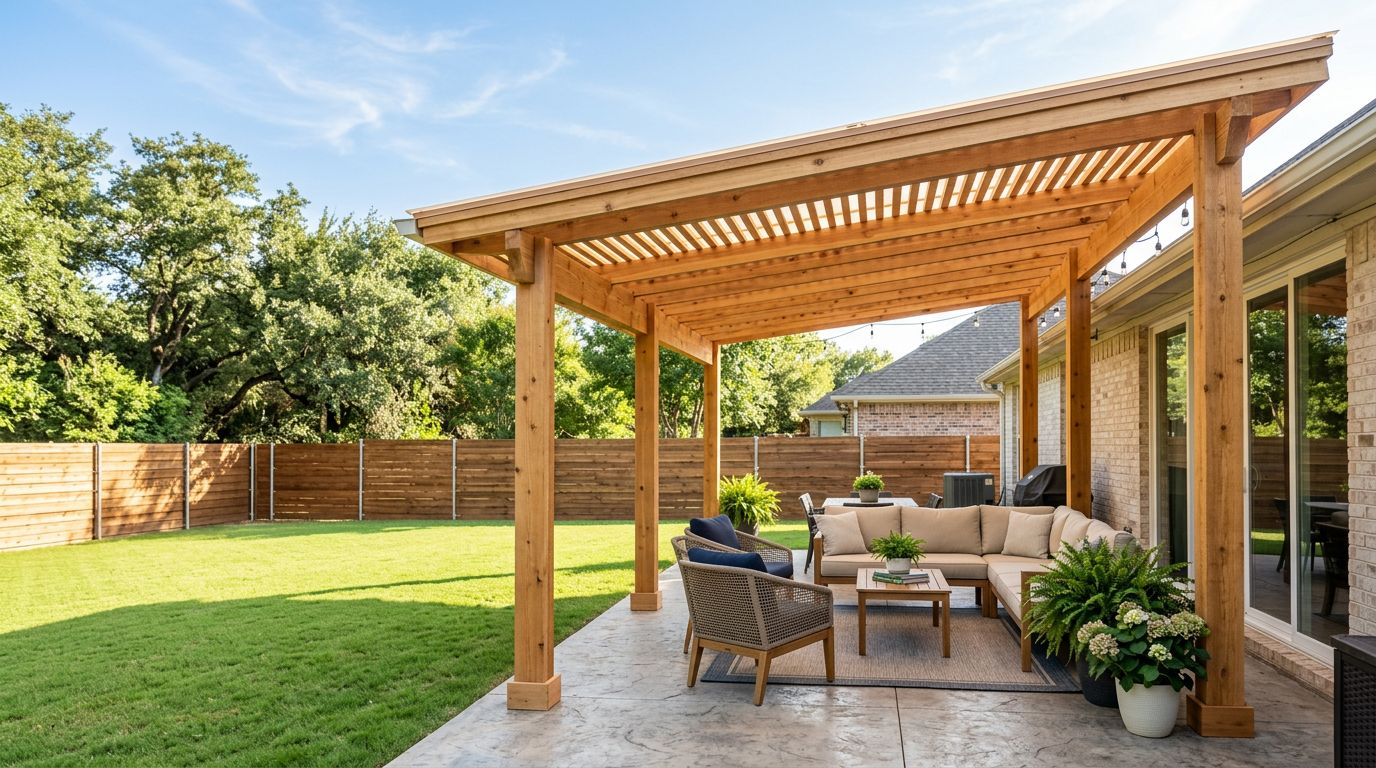
If you’re planning a cedar patio cover, post spacing feels like the one choice you can’t mess up. Space posts too far apart and the beam can sag or bounce. Put them too close and the cover looks crowded, plus you lose usable patio space.
The good news is you don’t need to guess. You just need to understand what post spacing is really doing, what variables change the answer, and how to talk through options with your builder. This guide walks you through cedar patio cover spacing in plain language, with a North Texas lens.
What post spacing actually supports (it’s not just “looks”)
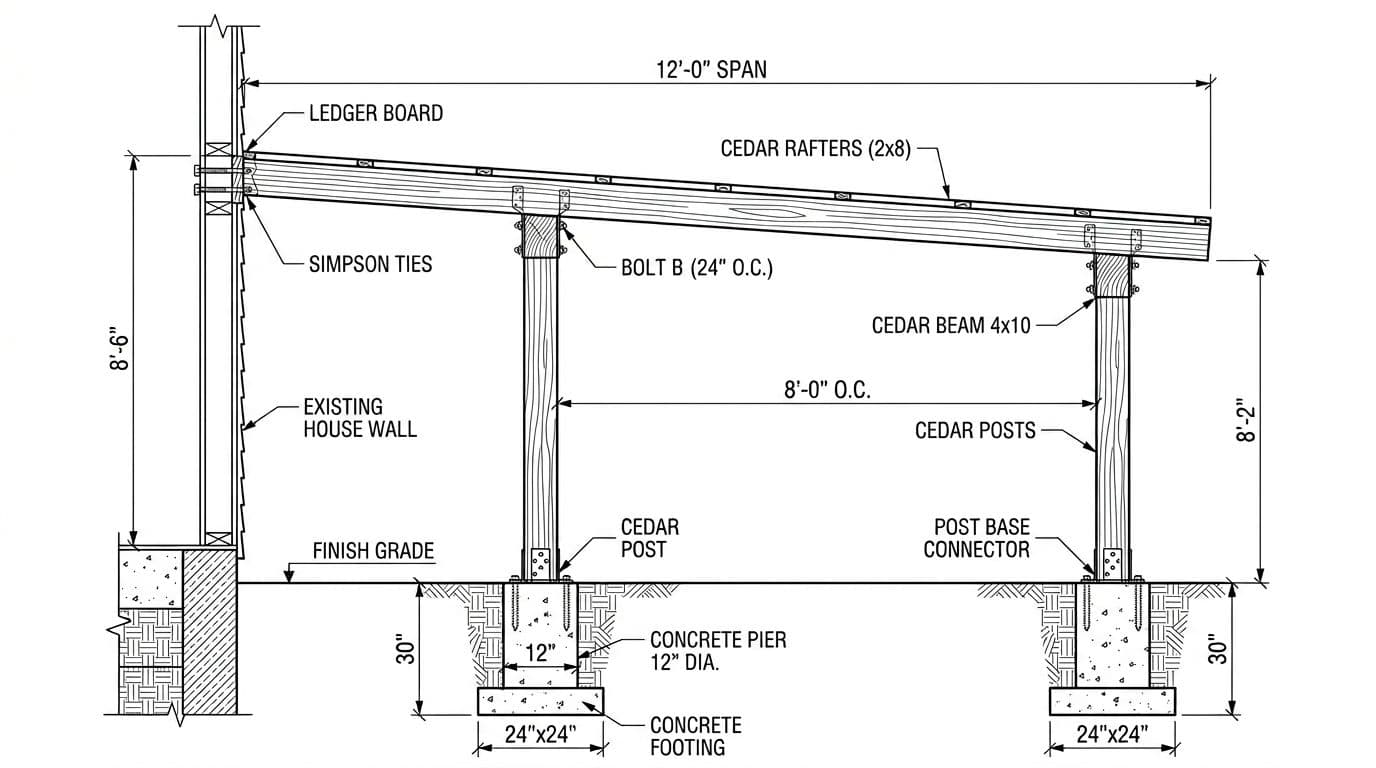
Think of your patio cover like a shelf. The posts are the brackets, the front beam is the shelf edge, and the rafters sit on top. Post spacing is basically the distance between those brackets. The wider that distance gets, the stronger the beam and connections must be.
Most spacing decisions come back to four structural inputs:
- Beam size and type: A solid cedar beam, a built-up beam, or an engineered beam all behave differently.
- Tributary load: In simple terms, how much roof area “feeds” weight into that beam section.
- Roofing and ceiling weight: A light open cover loads differently than a finished, roofed structure.
- Wind uplift and lateral bracing: In North Texas, strong storms can pull and rack a cover, not just push down on it.
That’s why two patio covers can be the same width, but need different post spacing.
If you want fewer posts, you’re not just buying “more wood,” you’re buying a stronger beam plan, better connections, and often bigger footings.
For deeper peer discussion on how beam sizing and post spacing connect on attached covers, see this covered porch beam and post spacing thread.
If you’re still deciding between a kit and a true custom build, you’ll also want to read custom patio covers vs prefab in North Texas, because kits often force post locations that don’t fit your patio use.
Typical cedar patio cover spacing ranges (and why 8 feet shows up a lot)
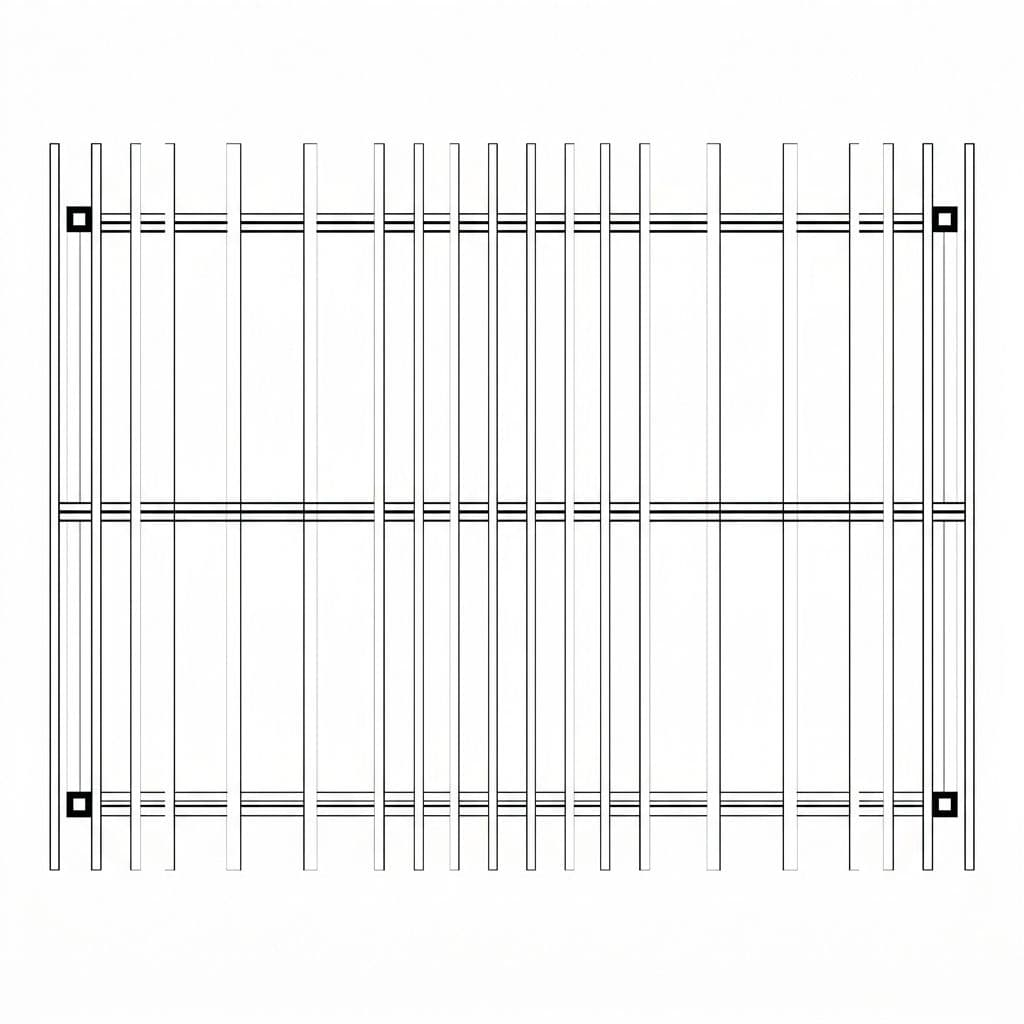
You’ll hear homeowners say, “I want 10-foot spacing,” because it feels open and premium. Sometimes that’s possible. Other times, it turns the beam into the whole project.
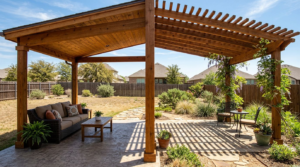
In many real-world builds, 8-foot post spacing is common because it balances structure, cost, and sightlines. Six feet can look busy on a small patio, while 10 feet often needs a heavier beam or different roof plan.
Here’s a quick, practical way to think about cedar patio cover spacing (these are planning examples, not a span chart):
| Spacing goal | What it tends to require | What you’ll notice |
|---|---|---|
| About 6 ft | Smaller beam can work in more cases | More posts, more “framing” look |
| About 8 ft | Often a sweet spot for many covers | Clean bays, good support margin |
| About 10 ft | Beam and connections usually need upgrades | Fewer posts, bigger front beam presence |
| Over 10 ft | Often pushes you toward engineered solutions | Higher cost, tighter engineering tolerance |
A popular homeowner question is simply, “How far apart should posts be?” If you want a general consumer-level overview before you talk to a builder, this article on how far apart patio cover posts should be helps frame the tradeoffs.
Aesthetic goals matter too. Even if a long span can be engineered, you still have to like the way it looks. A thick beam can feel heavy on a low roofline. On the other hand, extra posts can block a grill path or seating layout.
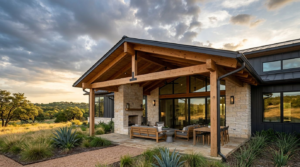
If you want design ideas that keep the structure looking intentional, start with cedar patio covers, because the best-looking covers usually “hide” the structure in good proportions, not in wishful spans.
How to choose the right post layout for North Texas homes
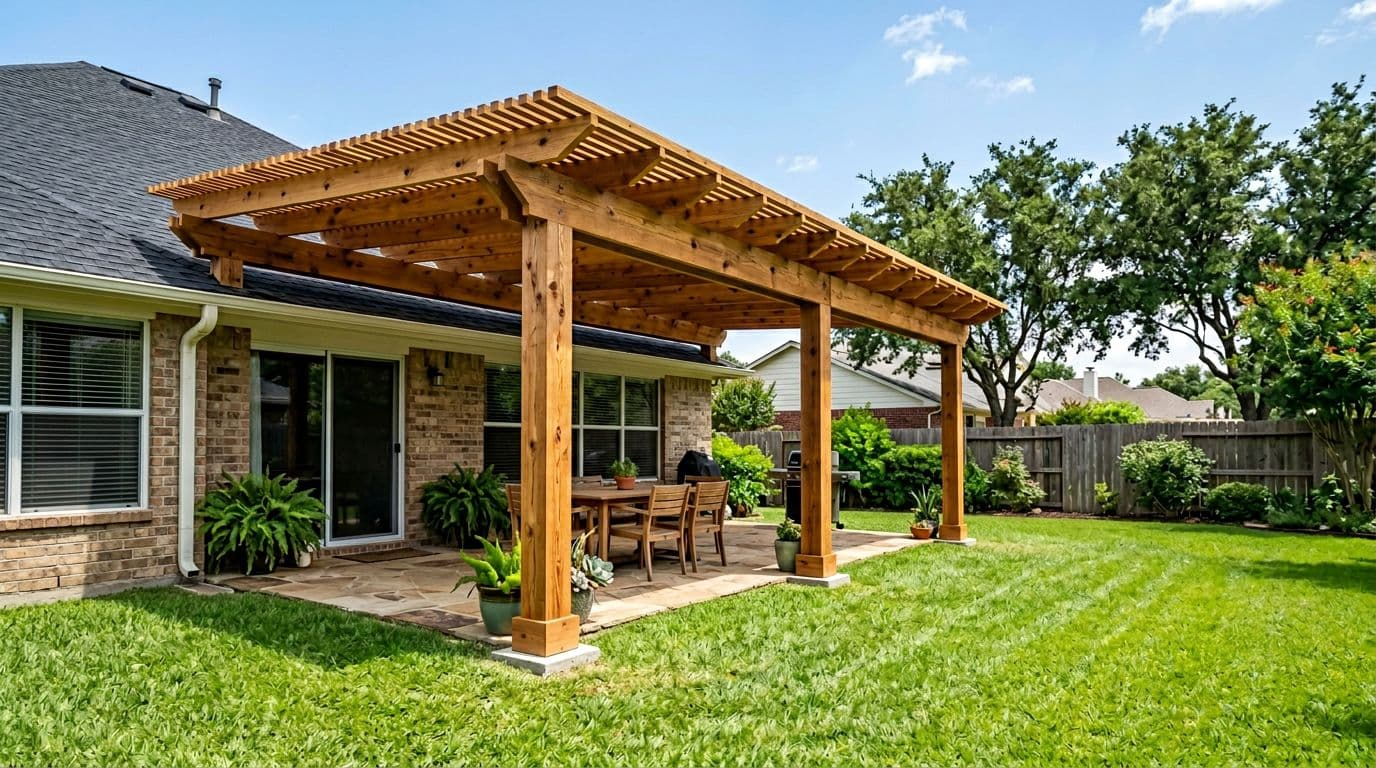
Once you know the “usual” spacing ranges, the next step is picking what fits your yard, your roof plan, and your risk tolerance. In Denton and nearby cities like Argyle or Flower Mound, three practical factors often steer the final layout.
First, wind and racking can decide where posts must land. A cover acts like a sail in a storm. Good builders plan bracing, post bases, and connections so the cover resists side-to-side movement. That sometimes means you can’t move a post “just a foot” without changing the whole load path.
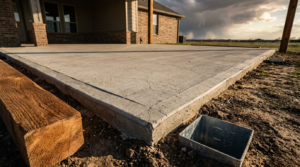
Second, pay attention to footings and post bases, not only the spacing number. A well-set post on a proper footing performs better than a longer span on questionable concrete. If you’re comparing mounting methods, this concrete and in-ground pergola post guide explains the basics of how posts get anchored.
Third, design around how you actually use the patio. A clean layout keeps posts out of these common conflict zones:
- The main walking line from your back door to the yard
- The grill and prep area (especially lid clearance and smoke path)
- Furniture corners where knees and shins find posts first
Also, remember that cedar patio cover spacing ties into the whole build style. A finished roof with electrical, fans, or tongue-and-groove ceilings adds weight and planning limits. If you’re looking for a structure built around your house lines, not generic bays, see custom cedar patio covers.
For a real-world example, see our 16×20 cedar patio cover guide with spacing, furniture layout, and roof style recommendations.
When you’re ready to talk through your layout in person, call 469-340-0839 and ask for a spacing plan that matches your roof load, your patio size, and your desired look.
Cedar patio cover spacing FAQs (PAA-friendly)
What is the best cedar patio cover spacing?
“Best” depends on beam size, roof weight, and wind bracing. Many homeowners like the balance of around 8 feet, because it keeps the patio open without forcing extreme beam sizes.
Can you space patio cover posts 10 feet apart?
Sometimes, yes, but it often requires a heavier beam, upgraded hardware, and stronger footings. Your builder should confirm spans and loads for your exact roof style.
Do you need fewer posts if you use a bigger beam?
A bigger beam can allow wider spacing, but it also changes the look and cost. In addition, connections and footings may need upgrades to match the higher loads at each post.
Does an attached cedar patio cover change post spacing?
It can. The house-side attachment (ledger or tie-in) affects load paths and uplift forces. Because of that, attached covers often need careful connection planning, not just a spacing preference.
Should you ask an engineer about post spacing?
If you want long spans, a finished roof, or you’ve got tricky site conditions (odd rooflines, drainage issues, or questionable existing concrete), an engineer or a contractor who builds to code-based loads is a smart move.
Conclusion
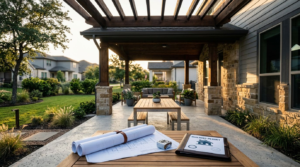
Cedar patio cover spacing is really a balance between strength, comfort, and how your patio functions day to day. Once you understand the beam, the load, and the wind story, the “right” spacing becomes much clearer. If you want a layout that looks clean and holds up through Texas storms, start with a plan, not a guess. For a local evaluation in Denton and across North Texas, call 469-340-0839 and get a spacing recommendation built around your home.