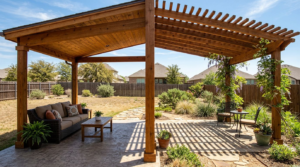
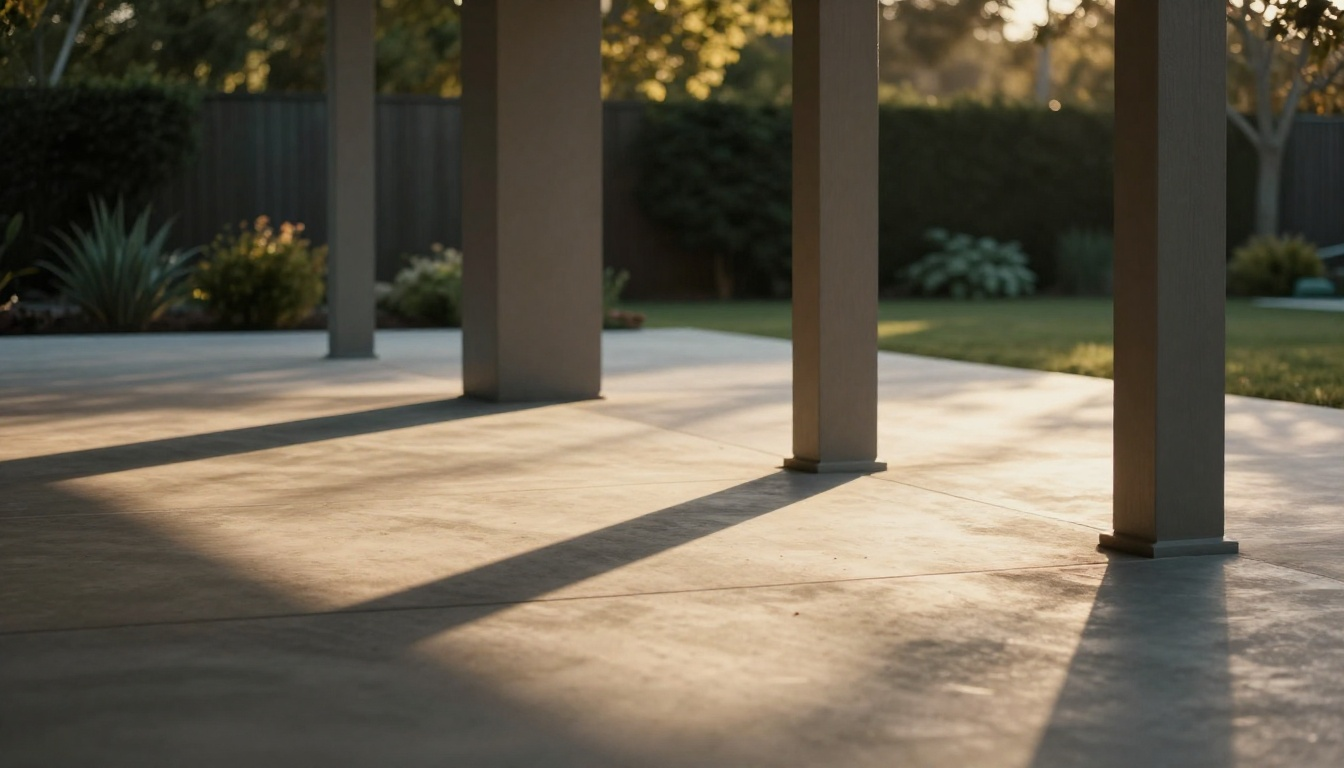
A patio cover can make your backyard feel like a real outdoor room. Still, the structure above is only as good as what sits below it. If you want solid patio slab support, you need to know whether your slab was built for a roof load or just for people, chairs, and a grill.
Here’s the short answer. A slab might support a cover if it’s stable, well-made, and designed for the load path. However, many backyard slabs are not meant to carry concentrated post loads, so a safe cover often needs separate footings.
A patio slab and a foundation are not the same thing
A concrete patio looks strong because concrete feels permanent. That can be misleading. A slab may hold everyday use with no trouble, yet still fail under the focused weight of cover posts.
Think of it like ice on a pond. You can walk across one area safely, but a heavy point load in the wrong spot can crack it fast. Patio cover posts create that kind of pressure. The roof weight, wind force, and movement all funnel into a few small contact points.
That’s why code matters. The 2024 IRC patio cover requirements center on one basic idea, the load has to transfer safely to a foundation or equivalent support. In other words, a clean slab surface alone is not proof.
The concrete itself matters too. The ACI guide to slabs-on-ground explains that slab performance depends on thickness, soil support, joints, reinforcement, and construction quality. So, two patios that look alike from the top can perform very differently.
A patio slab can look fine from ten feet away and still be the wrong base for a covered structure.
The visual signs that point to weak patio slab support
Before you think about anchors or post placement, look hard at the slab you already have. Surface clues won’t tell you everything, but they can warn you early.
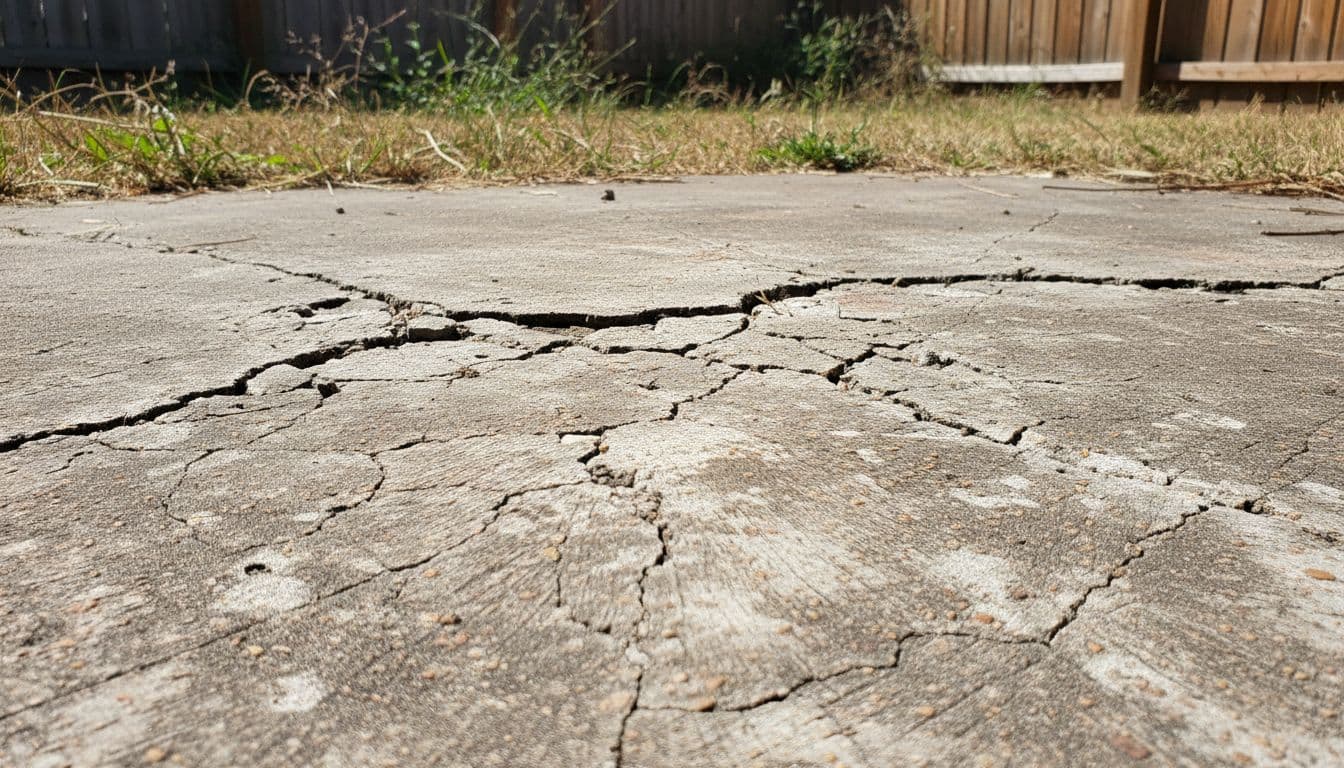
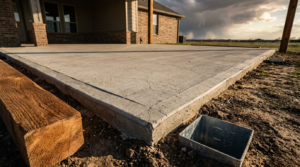
A few warning signs deserve real attention. Wide cracks matter more than hairline shrinkage marks. Vertical offset is worse than a flat crack. Spalling, crumbling edges, and old patchwork can also point to moisture issues or weak concrete.
This quick table helps you sort what you see:
| Slab condition | What it may mean |
|---|---|
| Fine hairline cracks only | Often cosmetic, but still worth checking |
| Wide cracks or raised edges | Settlement, heaving, or loss of support |
| Rocking corners or low spots | Poor subgrade or slab movement |
| Spalled surface or repeated patches | Concrete breakdown or water damage |
Pooling water is another red flag. If water sits near the house or around planned post locations, the slab may already have slope or drainage trouble. In North Texas, shifting soil can make that problem worse over time.
Also check the slab edges. If the perimeter breaks away easily, the slab may not have the strength you want for anchored posts. If you already have a worn or sagging structure above it, a full patio cover replacement Denton TX plan should include a slab and footing review, not just new lumber.
How to check the slab before you build
Visual signs are a starting point. Next, you need a more practical review.
First, look for old plans, permits, or builder records. If you know when the slab was poured and what it was meant to support, you start with facts instead of guesswork.
Next, inspect movement. Use a long straightedge or level to spot dips, humps, or slope changes. Then check whether cracks continue through control joints or cut across them. Random cracking often tells a different story than planned joint lines.
After that, inspect the edges and nearby soil. If soil has washed out under the slab, or if roots have lifted sections, your support is already compromised. This is especially common where drainage sends roof runoff straight onto the patio.
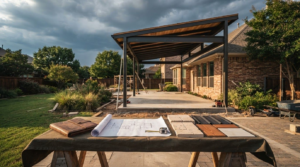
Finally, match the slab to the cover design. A light shade structure and a solid-roof cedar cover do not ask the same thing from the concrete. If your design uses load-bearing posts, review a patio cover footings depth guide before anyone drills anchors into the slab.
If the answer still feels fuzzy, bring in a pro. A contractor or engineer can check crack patterns, slab movement, anchor locations, and whether the posts should bear on new footings instead. That step costs less than repairing a cracked slab after the cover goes up.
When slab anchors may work, and when you need new footings
This is the part many homeowners miss. A patio cover does not always rely on patio slab support alone.
Sometimes a slab can work with engineered anchors, especially for lighter structures with the right design and a proven load path. On the other hand, a heavier solid-roof cover, tall freestanding build, or structure with fans and lighting often needs isolated footings cut through the slab or poured beside it.
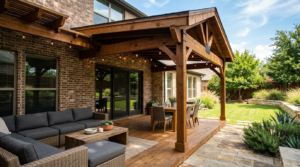
Material choice changes the math too. Cedar looks great, but it still puts real weight on the support system. Wind matters as much as gravity. Even an open pergola can create uplift, which is why comparing patio covers vs pergolas in Texas is about structure, not just style.
The safest approach is simple. Let the cover design decide the support method, not the other way around.
The bottom line
If you’re wondering whether your patio slab can support a cover, don’t trust appearance alone. Check for movement, cracking, drainage issues, and how the planned load will reach the ground. In many cases, the right answer is not “use the slab” or “replace the slab,” but “add proper footings where the structure needs them.” That’s how you get patio slab support you can trust for years, not just for the first season.