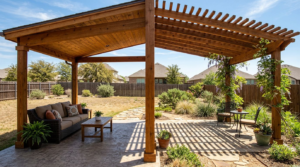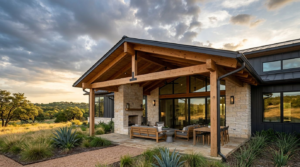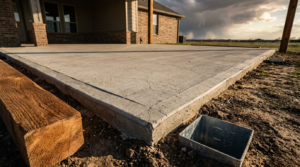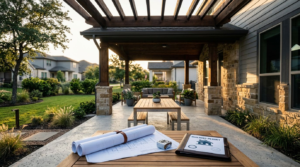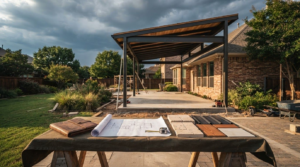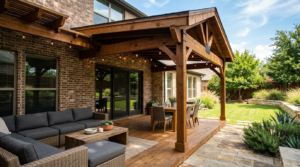
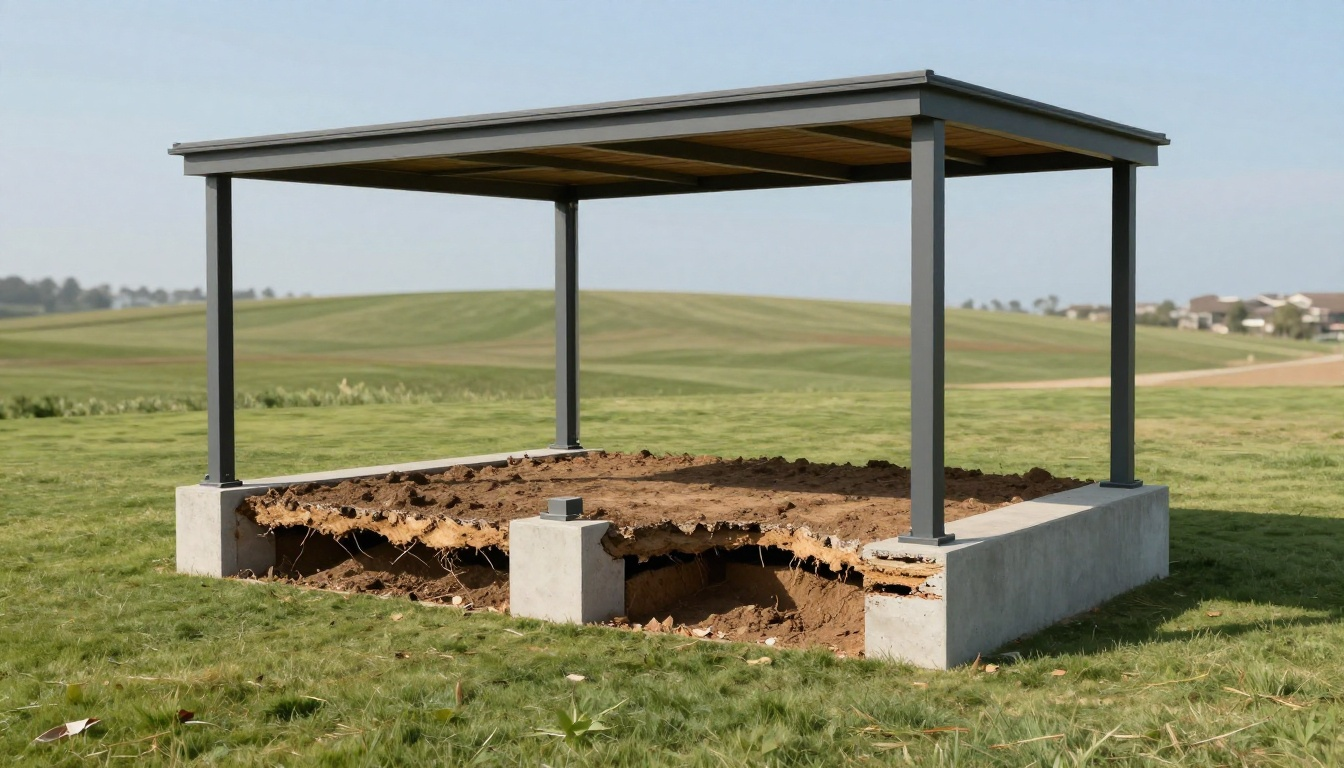
If your patio cover is the “hat,” the footing is the spine. You rarely see it, but you feel it every time the wind kicks up, the soil shifts, or a post starts to lean.
Getting patio cover footings right is what keeps your outdoor living space solid for decades. Get them wrong, and you can end up with cracked concrete, racked beams, and doors that suddenly “stick” because the structure is pulling where it shouldn’t.
This guide breaks down depth, width, and the real reasons they matter, without guessing your exact numbers, because your city, soil, and design loads decide that.
What patio cover footings actually do (and why failures look “small” at first)
A footing spreads the weight of patio covers and covered patios over enough soil that the ground can carry it without sinking. It also anchors the structure so wind can’t lift it, shift it, or slowly loosen connections.
At first, a footing issue can look harmless. A hairline crack near a post. A tiny slope you swear wasn’t there last summer. Then the problem stacks up. Once one post settles or heaves, the roof frame twists, fasteners work loose, and water starts finding the wrong path.
Here are common footing problems homeowners run into (often after a DIY pour or an unpermitted build):
- Too shallow: Seasonal movement can lift or tilt the pier, especially where soils swell and shrink.
- Too narrow: The post load concentrates, and the pier “punches” into soil over time.
- Poor bearing soil: Loose fill, soft clay, or wet spots can settle, even if the concrete looks perfect.
- Weak uplift resistance: High winds can rack a frame, especially on taller patio cover posts with larger roof areas.
If you’re planning a new patio cover installation, footings are where you win or lose long-term performance. If you’re planning a patio cover replacement, footings determine whether you can keep what’s there or need to start fresh.
How deep should patio cover footings be in North Texas?
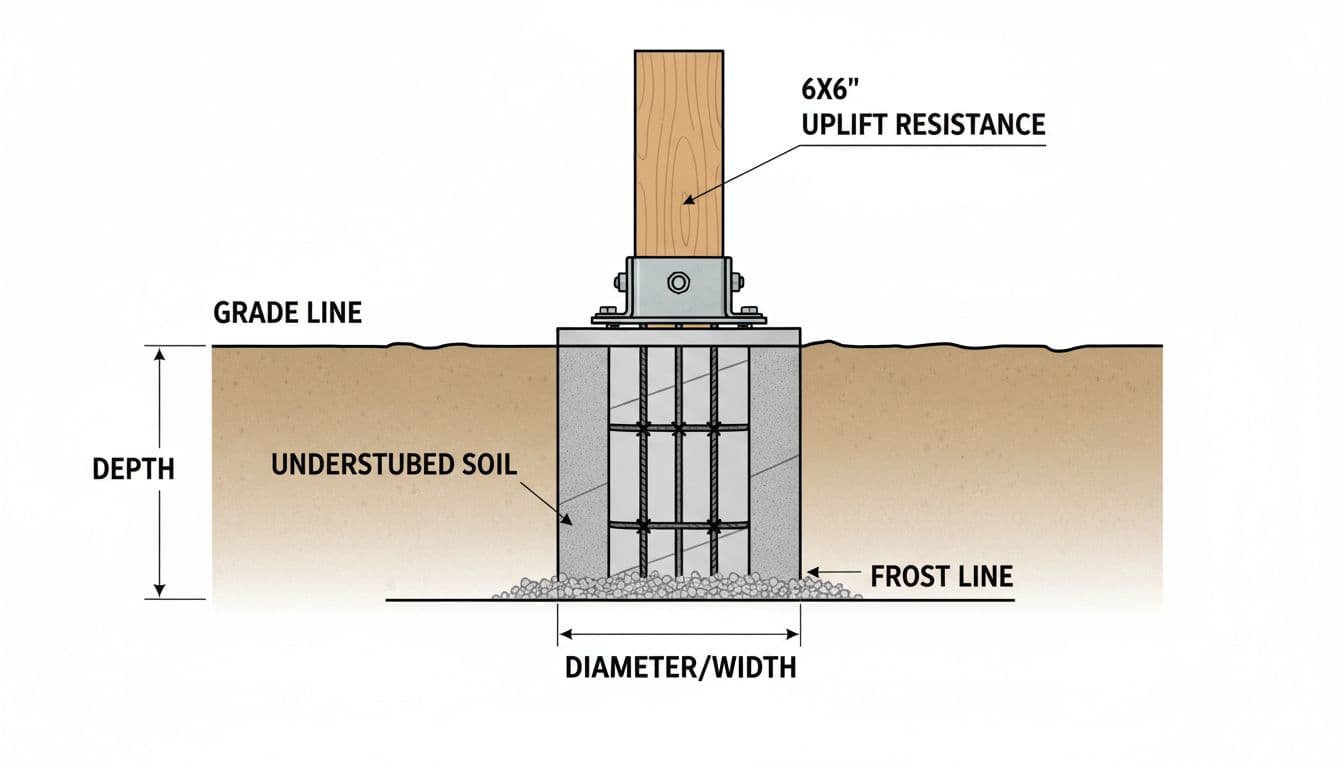
Depth is about stability. The deeper the footing extends into undisturbed soil, the less likely it is to move with surface changes like temperature swings, saturation, or erosion around the patio edge.
In most residential rulesets, you’ll hear a simple phrase: extend below the local frost line. That line isn’t a vibe, it’s a measurable standard your building department uses. Even in warmer regions, inspectors often still require minimum depths for structural stability, not just freezing.
Because local adoption varies, it helps to reference the code language your area might use, such as the Texas residential patio cover appendix (see Texas IRC Appendix AH for patio covers). The key takeaway is not a universal inch number, it’s that footings must match local requirements, loads, and soil.
Depth also changes with design choices:
- Attached covers (ledger to the house) still need solid outer posts, because roof loads and wind loads transfer there.
- Freestanding covers and pergolas rely on footings even more, since every post is doing structural work.
If you want your structure to feel “locked in,” don’t treat depth as a guess. Call your local permitting office, or work with a patio cover contractor who handles plan sets and inspections. When you’re building with JBN Patio Covers, the goal is simple: footings sized to your specific patio cover design, so your custom patio covers stay straight and quiet through the seasons.
For ideas on building a complete backyard setup that pairs shade with function, see outdoor living solutions in Denton TX.
How wide should patio cover footings be (diameter, bearing area, and uplift)?
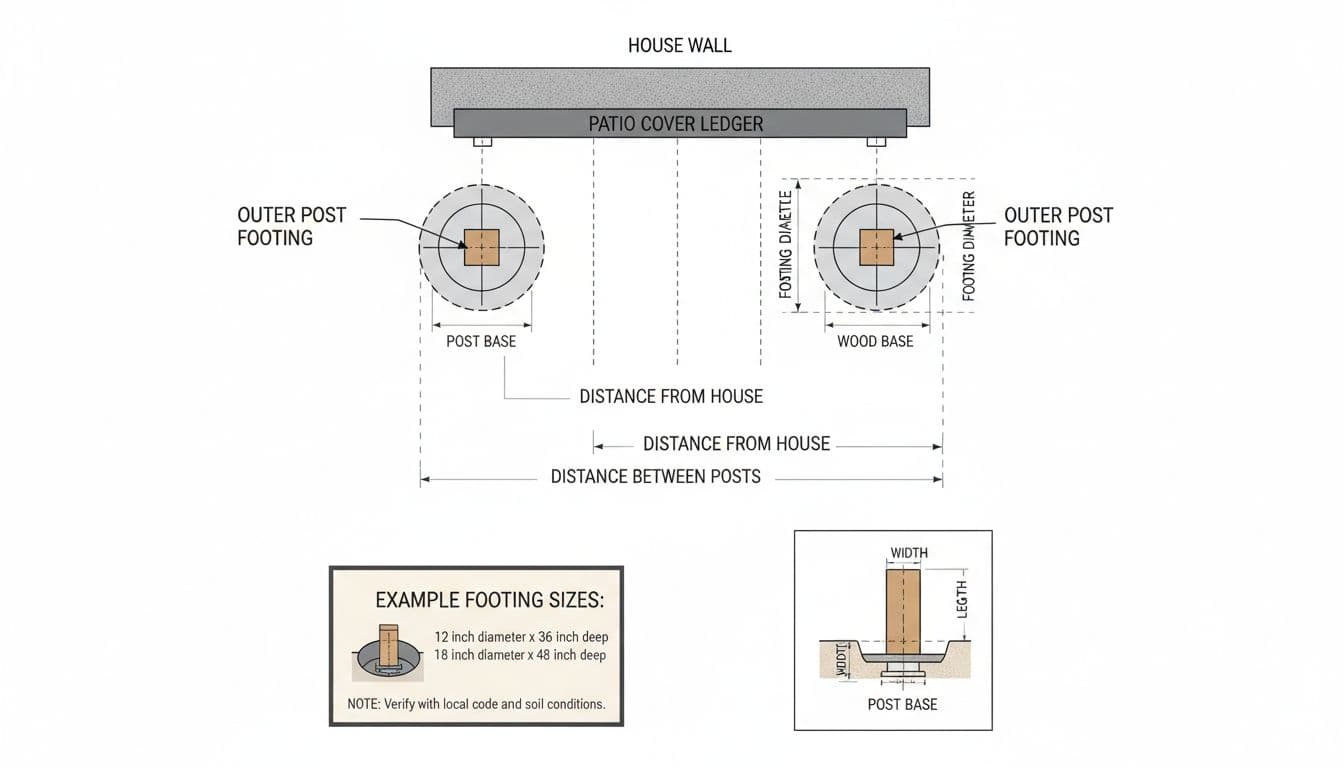
Width is about pressure. A wider footing spreads the same load over more area, lowering the stress on the soil. Picture snowshoes versus boots. The person didn’t get heavier, but the ground feels less pressure.
A “right-sized” footing diameter depends on what you’re building:
- Roof area and weight (solid roof versus lighter cover)
- Post spacing and beam spans
- Wind uplift and lateral loads (a big deal in storms)
- Soil bearing capacity (what your ground can safely carry)
You’ll also hear details like rebar, sonotubes, and gravel bases. These aren’t just extras. Rebar helps concrete handle tension forces (especially from uplift and racking), while a gravel base can improve drainage and provide a more consistent bearing surface.
For the broader foundation rules that often guide how footings are formed and supported, see Texas IRC Chapter 4 foundations. It’s not patio-cover-only, but it explains why soil, drainage, and minimum footing concepts matter.
One more thing people miss: width isn’t only below grade. The top connection matters too. A galvanized post base and proper anchor hardware help keep wood posts off the concrete surface, reducing rot risk. That’s especially important on cedar patio covers, because you want the wood to last as long as the structure design.
Quick Q&A and next steps for North Texas homeowners
Do you need a permit for patio cover installation?
Many cities require permits for patio covers, even when the structure looks “simple.” Permits protect you at resale and help confirm footings and attachments meet local standards. If you want a plain-English look at why cities care, read patio cover permitting basics.
Can you reuse existing footings for a patio cover replacement?
Sometimes, yes, but only after you verify depth, diameter, concrete condition, and post layout. If the new roof is larger, heavier, or taller, the old footings may be undersized. Reuse is a win only when it’s engineered, not assumed.
Do pergolas need footings too?
Yes. Pergolas may have less roof weight, but they can still rack in wind if posts aren’t anchored correctly. If you’re considering pergolas as an option, compare designs and anchoring approaches with custom pergolas in Denton TX.
Where do footing needs change around Denton County?
You’ll see the same footing questions across patio covers Denton TX and patio covers Argyle TX. If you’re comparing patio covers North Texas. Argyle homeowners often run into different lot grading and soil history than nearby areas like Aubrey, Bartonville, Carrollton, Celina, Copper Canyon, Corinth, Cross Roads, Dallas, Denton, Double Oak, Flower Mound, Frisco, Grapevine, Hackberry, Hebron, Hickory Creek, Highland Village, Justin, Krugerville, Krum, Lake Dallas, Lakewood Village, Lewisville, Little Elm, Northlake, Oak Point, Paloma Creek, Pilot Point, Plano, Ponder, Prosper, Providence Village, Roanoke, Sanger, Savannah, Shady Shores, The Colony, Trophy Club, and Westlake. Your best move is to confirm requirements with your city, then match the footing plan to your actual patio cover design.
If you want guidance from a local team that builds patio covers that fit Texas weather, call JBN Patio Covers at 469-340-0839.
Conclusion
When your patio cover looks great but feels “off,” the cause is often underground. Depth controls seasonal movement, width controls soil pressure, and both help resist wind uplift and frame twist. Treat patio cover footings as the foundation of your outdoor living plans, not an afterthought. Get the footing plan right, and your covered patios, pergolas, and custom patio covers will stay straight, strong, and comfortable for years.