A patio cover seems simple until you start pricing it. One quote looks reasonable, the next feels like it belongs on a different house. That’s because patio cover cost works more like a menu than a single price tag, your material, size, roof style, and add-ons all stack up.
If you’re in North Texas, the details matter even more. Sun exposure, wind, and sudden storms can push you toward sturdier framing, better fasteners, and smarter drainage. The goal is not just shade today, it’s fewer repairs later.
If you want a fast, local starting point for design ideas and what holds up best in summer heat, see Denton TX outdoor living solutions. When you’re ready for numbers on professional installation, use the breakdown below to sanity-check bids, decide where to spend and where to save, and boost your home value through enhanced property appeal.
What you’ll pay in 2026: typical ranges and what they include
Most homeowners start by asking for an average. The problem is that averages mix basic covers with high-end roofed structures, complicating patio cover cost estimates.
National cost guides put many professionally installed patio covers in a mid-range band. For example, Angi reports a national average cost around $8,500, with many projects falling between $4,500 and $12,000, depending on size and materials, as explained in their patio cover installation cost guide.
Once you move into larger, more “room-like” covered patios (heavier framing, nicer finishes, electrical, and upgraded roofing), totals climb quickly. HomeGuide notes many covered patio builds land around $50 to $150 per square foot installed, with a 200-square-foot example often totaling $10,000 to $22,500; a 20×20 patio cover (400 square feet) would scale up accordingly, outlined in their covered patio cost breakdown.
So what’s a realistic way to read those numbers?
- If you’re pricing shade-first (simple cover, fewer upgrades), your bid often tracks closer to the lower national ranges on a per square foot basis.
- If you’re pricing outdoor-living-first (ceiling finish, fans, lighting, gutters, and a cleaner “built-in” look), cost per square foot tends to move toward the higher end.
In cities like Denton, Frisco, McKinney, and Fort Worth, permit requirements and inspection timelines can also affect labor costs and scheduling, which shows up in the final quote even when materials look similar.
Material choices that shift patio cover cost the most
Material choices drive material costs the most for your patio cover. They impact not just the initial bill, but also maintenance costs and how the cover looks against your home.
Here’s a practical comparison of common options you’ll see in 2026:
| Material | Typical price feel | Why you might choose it |
|---|---|---|
| Cedar or other solid wood | Mid to high | Natural look, strong shade, easy to customize a wood patio cover, needs staining or sealing over time |
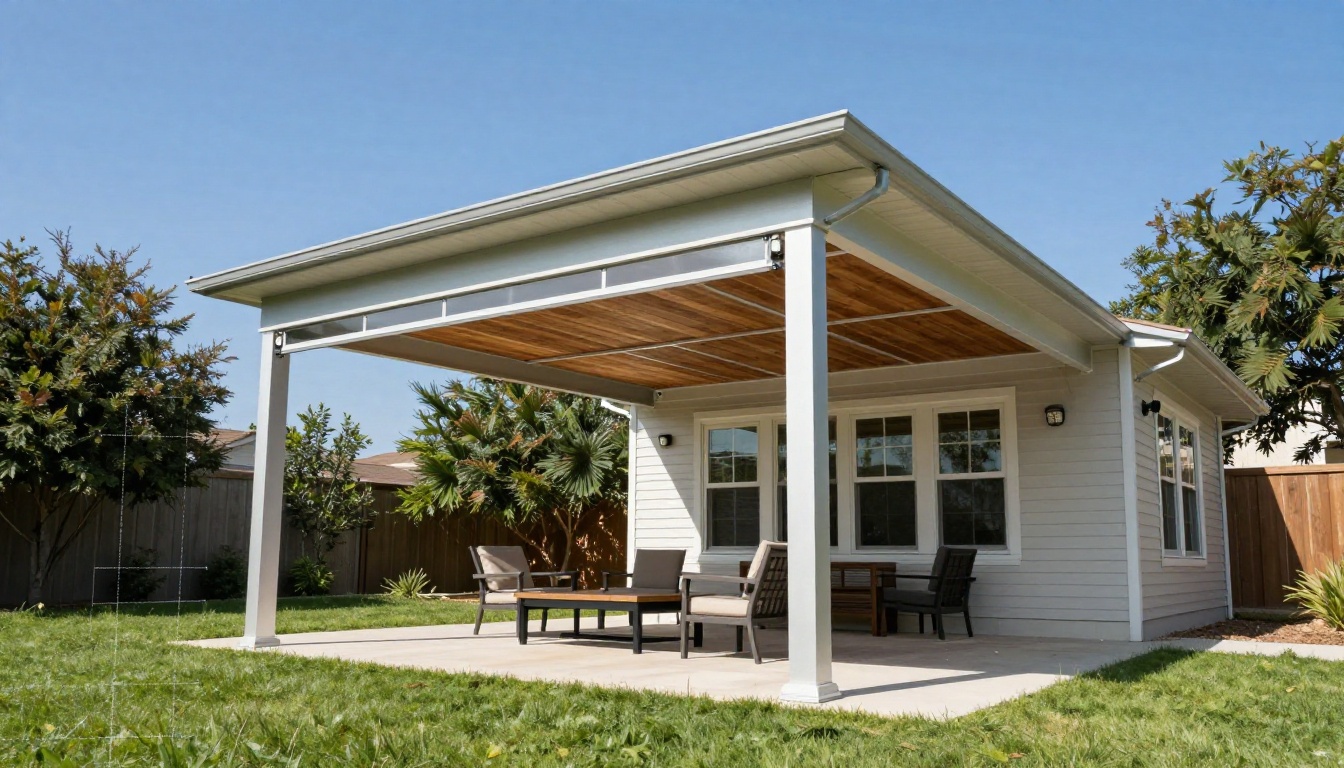
| Aluminum patio cover (including “wood-look” alumawood systems) | Mid | Lower upkeep, consistent finish, good for clean lines on aluminum patio covers, fewer worries about rot |
| Steel | Mid | Strong spans, slimmer members possible, needs proper corrosion protection |
| Vinyl patio cover | Mid to high | Low maintenance, style limitations, can feel bulky depending on design |
| Insulated roof panels | Mid to high | Better heat control under the cover with insulated panels, often chosen for full shade and comfort |
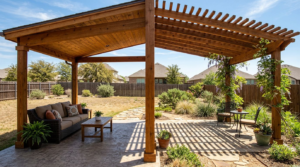
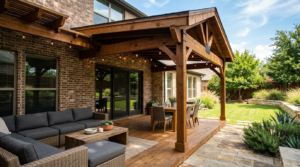
If you like the warmth of a wood patio cover but want a structure that’s designed specifically for North Texas weather, cedar remains a popular choice for both patio covers and pergolas. If you’re weighing a slatted look that still breathes in summer, or alternatives like a lattice patio cover or louvered pergola for those not wanting a full roof, compare pricing and design options for pergolas Denton TX. A pergola can cost less than a solid roof, but add-ons like shade panels can narrow the gap.
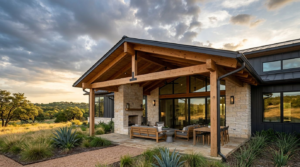
One more reality check: premium “covered patio” builds with upgraded rooflines and architectural posts can pass typical shade-cover budgets fast. You can see how those higher-end projects get priced in this covered patio cost snapshot for 2026.
Size, roof style, and attachment: why square footage isn’t the whole story
It’s tempting to price per square foot alone. That gets you in the ballpark, but two covers with the same square foot footprint can land far apart.
Bigger isn’t just bigger. As the cover gets wider or deeper, spans increase. That can require larger beams, more posts, or upgraded footings. Those changes raise both material and labor costs per square foot, even before you add any “nice-to-haves.”
Roof style matters. A simple shed-style roof (single slope), such as a slatted design, often costs less than a gable roof, a solid patio cover, or a more complex shape with valleys and trims. Roof style customization lets these vary based on homeowner needs, but complex rooflines take longer to frame, finish, and flash properly.
Attached vs freestanding changes the build. Covers attached to the house can look seamless, but they may require careful ledger attachment, wall flashing, and sometimes engineering help if loads are significant. Freestanding covers avoid tying into the home, but they typically need more posts and footings to stay rigid.
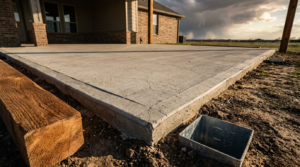
Existing conditions can save or cost you. If you already have a solid patio slab in good shape, you might save. If the slab is cracked, sloped wrong, or too thin to support posts, you could be paying for demo, new concrete, or reinforced footings.
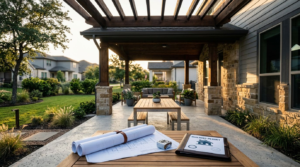
A good quote should spell out these “hidden” choices in plain language. If it doesn’t, ask for the assumptions in writing.
Add-ons that raise the price (and which ones are usually worth it)
Add-ons are where patio cover cost can creep up quietly, especially compared to simpler options like an awning or DIY kits. Each upgrade sounds small on its own, but together they can turn a basic shade cover into a full outdoor room.
The most common price movers are:
- Electrical (ceiling fans, outdoor lighting, recessed lights, outlets): You’re paying for wiring routes, switching, weather-rated fixtures, labor costs, and sometimes panel capacity upgrades.
- Gutters and drainage: Worth it when runoff hits walkways, outdoor kitchens, or foundation areas, especially in heavy rain.
- Ceiling finish upgrades: A clean tongue-and-groove look costs more than exposed framing, but it changes the whole feel overhead.
- Stain, paint, and sealing: Often overlooked in early quotes. Wood needs protection, and better prep usually lasts longer.
- Privacy or bug control: Screening systems and privacy walls add comfort, but also add framing, hardware, and installation time.
If you’re trying to keep the budget steady, pick one “comfort” upgrade (like a fan and lights) and one “protection” upgrade (like gutters). You can phase the rest later.
For pricing and scheduling, it also helps to talk to a builder early. Call 469-340-0839 and ask what details they need to quote your space accurately (photos, dimensions, and your preferred roof style usually get you a faster, tighter estimate).
Patio cover pricing Q&A (quick, PAA-friendly)
What’s the cheapest patio cover option in 2026?
A simple, smaller cover with basic materials and minimal electrical is usually the lowest cost. Keeping the roofline simple and skipping ceiling finishes helps control labor.
Why do two quotes for the same size cover look so different?
Differences in patio cover cost often stem from assumptions about beam sizes, material costs, footings, attachment methods, and finish levels. Ask each contractor to list what’s included for electrical, drainage, permits, and finishing.
Does a pergola cost less than a solid patio cover?
Often yes, unlike a gazebo which tends to be more enclosed; a pergola uses an open-lattice roof. Costs can rise if you add shade panels, rain protection, or electrical features.
Should you pull a permit for a patio cover in North Texas?
Many projects require permits, especially attached covers or structures with electrical. Your city and HOA rules decide the details, so confirm before construction starts.
Can you add lighting and a fan later?
Usually yes, but it’s often cheaper to rough-in electrical during the build, even on an aluminum patio cover. Retrofits may require extra cuts, conduit runs, and patch work.
Conclusion: build your budget around the choices that matter
Patio cover cost in 2026 comes down to three things you can control: material, design complexity, and add-ons. If you decide what comfort features you truly want for your outdoor living space, then match the structure to your climate, your quote gets clearer and your results last longer.
When you’re ready to price your specific space per square foot, call 469-340-0839 and ask for an itemized estimate that separates the base structure from upgrades on a square foot basis. That one step makes it much easier to compare bids and avoid surprises.