A patio cover can look perfect and still leak. Often, the problem isn’t the panels or shingles, it’s the slope. Water doesn’t need much time to find a fastener hole, a seam, or a weak flashing.
The fix usually starts with one decision: patio cover roof pitch. Pick the right pitch, and water moves off the roof instead of hanging around. Pick the wrong pitch, and you’re asking your patio cover to act like a bowl.
Key term (so you can talk with confidence): Patio cover roof pitch is how steep the roof is, written like 2:12 or 3:12. The first number is the rise in inches for every 12 inches of run.
What roof pitch really controls (and why “almost flat” often fails)
Pitch is gravity’s steering wheel. With enough slope, water sheds fast. With too little slope, water slows down, then it spreads out, then it finds a way in.
Think of it like tipping a dinner plate after rinsing it. A small tilt leaves puddles. A stronger tilt clears the water in seconds. Your patio roof works the same way, except the “puddle” can sit for hours after a heavy Texas downpour.
Low pitch doesn’t automatically mean leaks, but it raises your risk because it increases:
- Ponding time: Standing water stresses seams and coatings.
- Debris buildup: Leaves and grit act like little dams.
- Wind-driven backflow: Storm gusts can push water uphill at edges.
- Fastener exposure: Screws and washers take more abuse over time.
If you remember one rule, make it this: water should always have a clear, fast path off the patio cover, and that path should lead away from your home.
Also, pitch affects what roofing you can use. Some materials need steeper slopes because they shed water by overlapping. Others can work on low slopes because they rely on sealed seams.
For a practical explanation of common slope targets across patio roof types, see patio roof pitch guidelines and tips.
Patio cover roof pitch recommendations for drainage (with North Texas reality)
In North Texas, sudden storms and hard rain are normal. As a result, many builders treat 2:12 as a minimum starting point for a solid patio cover roof pitch, then push steeper when the design allows. A 3:12 pitch often drains better and feels less “flat roof” in day-to-day performance.
Still, your best pitch depends on three things:
- Roof covering limits (manufacturer and code)
- How the roof ties into the house (ledger and flashing details)
- Where the water discharges (gutters, downspouts, splash control)
Here’s a quick reference to match pitch with common roof coverings. Use it to frame conversations with your builder and your city inspector.
| Roof covering type | Practical minimum slope | Better target for fewer leaks | Why it matters |
|---|---|---|---|
| Single-ply or low-slope membrane | 1/4 inch per foot | 1/2 inch per foot | Designed to seal, but needs positive drainage to avoid ponding |
| Standing seam metal (profile dependent) | 1/4 inch per foot | 1/2 inch per foot or more | Seams resist water well, but details still matter at edges and penetrations |
| Asphalt shingles (product dependent) | 2:12 to 3:12 | 4:12 when possible | Overlaps shed water best on steeper slopes |
| Polycarbonate style panels | 1/2 inch per foot | 1 inch per foot | Faster shedding helps reduce staining and leak paths at fasteners |
For more background on minimum slope concepts and drainage basics, read minimum slope for roof drainage.
One more North Texas note: if you live in places like Denton, Argyle, or Flower Mound, your patio cover plan may get reviewed like any other roof structure. Some cities look closely at slope, discharge location, and attachment to the home.
Details that make any pitch drain better (and stop leaks at the usual weak spots)
A good patio cover roof pitch can still leak if the water exits in the wrong place. That’s where the “boring” parts matter most.
Start with the direction of slope. You generally want the roof to drain away from the house, not toward the wall. When the roof drains back toward the house, flashing has to work harder, and that’s where small install mistakes show up as stains on drywall or rot at the fascia.
Next, plan for clean water exit:
- Gutters and downspouts: Size them for the roof area, then send water to a safe discharge point.
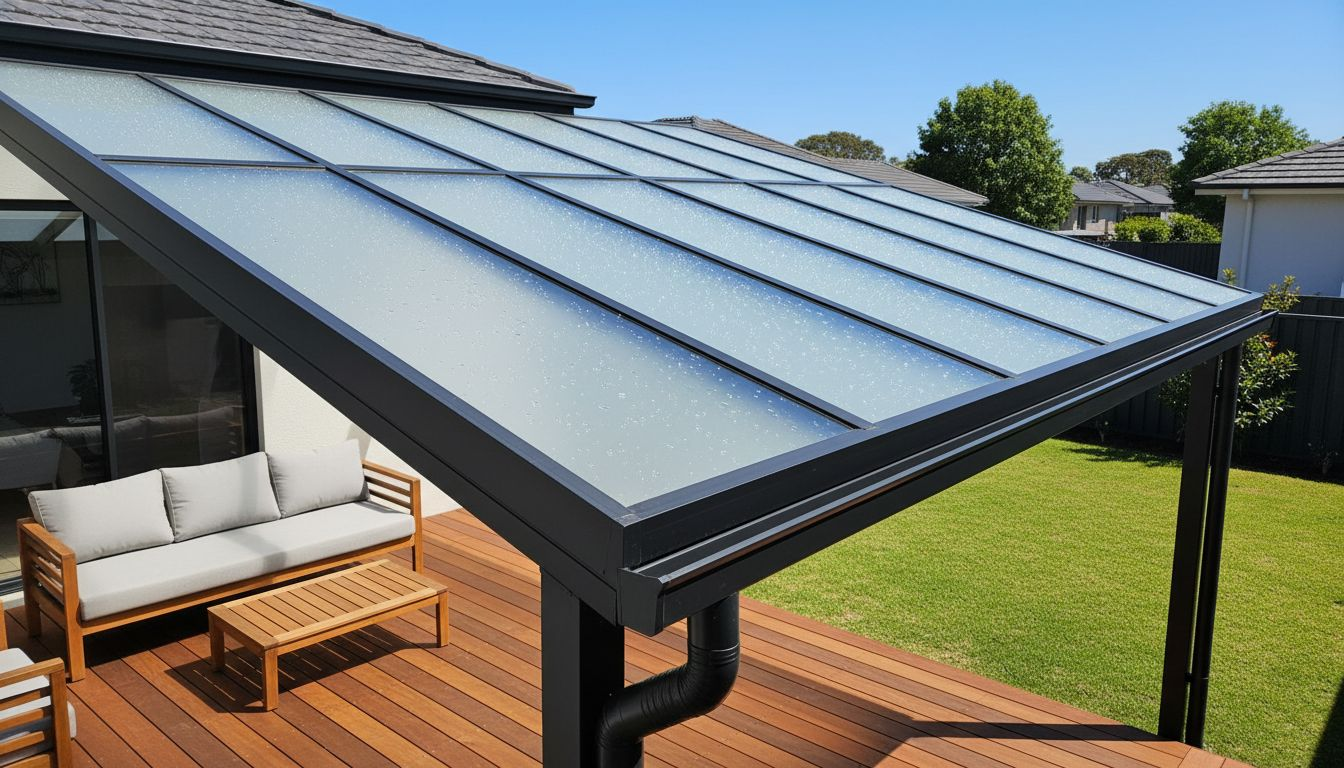
- Drip edge and overhang: These keep water from curling back under panels.
- Flashing at the tie-in: This is where most “mystery leaks” start, especially on attached covers.
If you want a quick example of how building departments document patio cover requirements, skim this solid roof patio cover permit guideline. Even though it’s from another city, it shows the kind of notes inspectors tend to care about.
Material choice also affects how forgiving your roof is. Wood structures look great, but they need precise pitch and clean drainage planning. If you’re considering a natural look, custom cedar patio covers with proper drainage can be designed around your home’s rooflines so the pitch looks intentional, not forced.
When you can’t go steeper: low-slope strategies that prevent recurring leaks
Sometimes your hands are tied. A second-story window, a roofline, or HOA height limits may cap your patio cover roof pitch. In those cases, the goal changes from “shed fast” to “seal well and drain positive.”
Low-slope success usually comes down to:
1) Use the right roof system for the slope
If the pitch is near-flat, you typically want a roof covering built for low slope, not one that depends on overlap alone.
2) Build in positive drainage
Even on a membrane roof, you want water moving. Small framing adjustments can remove “birdbaths” where water sits.
3) Reduce penetrations
Every skylight, fan mount, and electrical penetration is a leak opportunity. Fewer holes means fewer long-term problems.
4) Fix the structure first
If the patio cover sags, the pitch you started with is no longer the pitch you have. If you see waviness, chronic drips, or soft spots, consider a full rebuild instead of patching. This is where a patio cover replacement for leaks and sagging can cost less over time than repeated repairs.
A “leak repair” won’t last if the roof plane holds water. First you restore the slope, then you seal the system.
North Texas drainage and stability issues people miss (Denton to Frisco)
Local weather is only part of the story. In North Texas cities like Highland Village, Lewisville, and Frisco, you also deal with wind-driven rain and soil movement. That combination can twist a patio cover over time, and even a small twist can open seams and flashing lines.
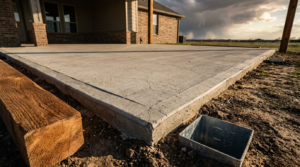
That’s why roof pitch and foundation work are linked. If posts settle or heave, your drainage path changes. To understand the structural side, use this patio cover footings depth and width guide as a reference point before you finalize a roof design.
If you’re planning a new cover, it helps to think in a simple chain: stable footings lead to stable posts, which leads to consistent pitch, which leads to better drainage and fewer leaks.
Quick Q&A (PAA-friendly)
What is a good patio cover roof pitch for drainage?
In North Texas, many homeowners aim for at least 2:12, and 3:12 often sheds water better. Your final pitch should match the roof covering requirements and your home’s tie-in details.
Can a patio cover roof be “flat” and still not leak?
Yes, but it needs a low-slope roof system and positive drainage. “Flat” roofs that hold water tend to fail at seams and penetrations.
Does more pitch always mean fewer leaks?
Usually, yes, because water leaves faster. However, poor flashing or bad gutter discharge can still cause leaks even on steep roofs.
Which direction should a patio cover slope?
In most cases, slope it away from the house so water doesn’t concentrate at the wall flashing. Site grading and gutter placement still matter.
What if my patio cover is already leaking?
First confirm whether the roof plane is holding water because of sagging or low spots. If the structure is failing, replacement can be the most reliable fix.
Conclusion
The right patio cover roof pitch is less about looks and more about behavior in a storm. When water has a fast path off the roof, your seams, fasteners, and flashing get a much easier job. If you want help choosing a pitch that fits your home and drains the right way in North Texas, call 469-340-0839.