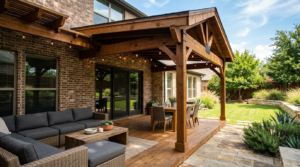
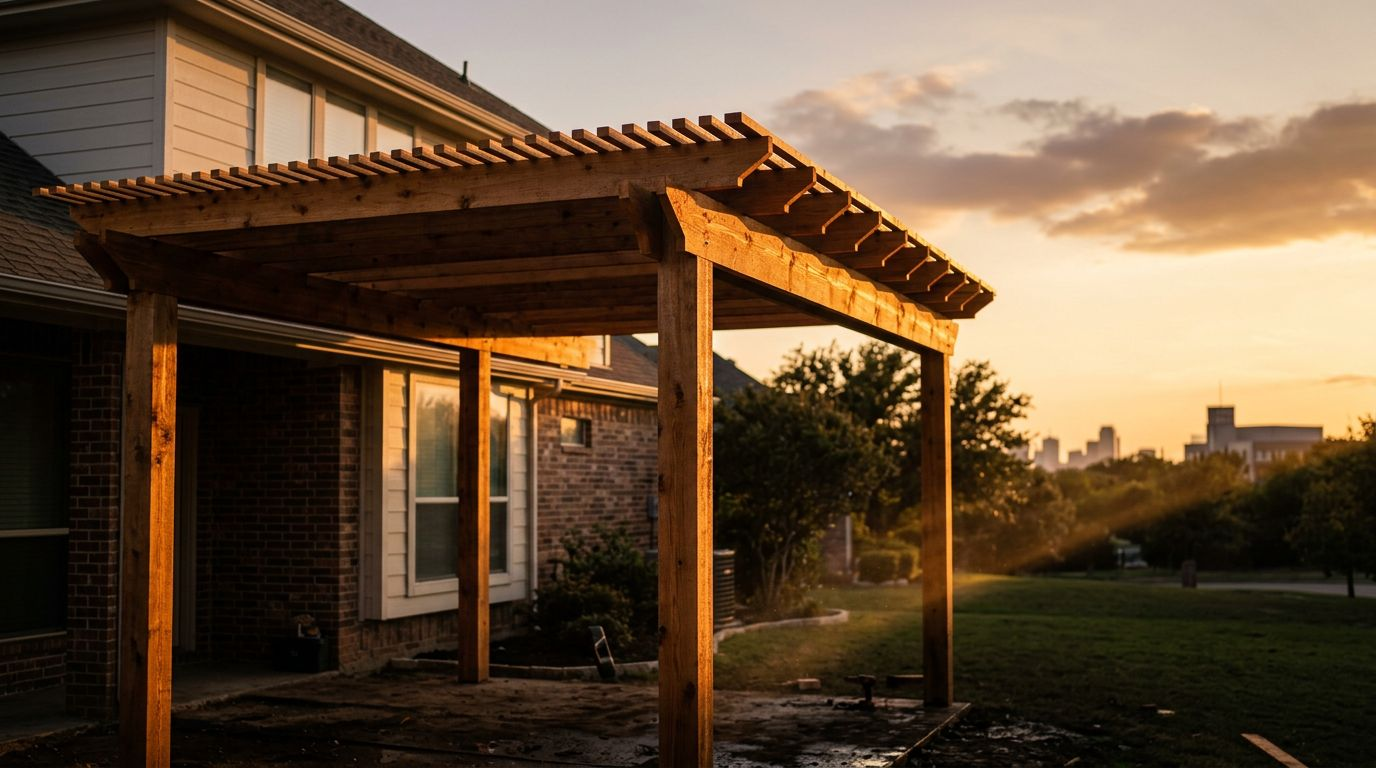
You can pick the perfect cedar, choose the roof style, and still get stalled by paperwork. In North Texas, that happens all the time.
When homeowners search patio cover permits texas, they’re usually trying to avoid that exact delay. Most roofed patio covers, attached pergolas, and outdoor structures with electrical work need city approval.
The hard part is that Denton, Dallas, Fort Worth, Plano, and nearby cities don’t all use the same rules. Start with the permit path first, then let the design follow.
What usually triggers a patio cover permit in North Texas
In April 2026, the safest rule is simple: if your patio cover has a roof, attaches to the house, or adds electrical, expect a permit. That’s the pattern across Denton, Dallas, Fort Worth, Plano, Frisco, and nearby cities.
Texas doesn’t use one single statewide patio cover rule. Instead, cities apply the 2021 residential code with local changes. As a result, one town may exempt a small ground-level patio, while the next wants plans for a similar project.
This quick snapshot shows what homeowners usually run into:
| City | Permit trend | What that usually means |
|---|---|---|
| Denton | Usually yes for covered patio covers | Plans, setbacks, and inspections are common |
| Dallas | Yes for roofed or structural covers | Separate electrical permits may apply |
| Fort Worth | Usually yes for covered or permanent structures | Structural and trade permits can stack |
| Plano and Frisco | Often yes for attached or covered structures | HOA review is often a second hurdle |
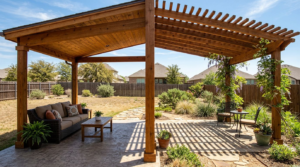
The main dividing line is usually structure, not style. A light open pergola may be treated differently than a solid roof cover. If you’re still comparing layouts, this pergola vs patio cover North Texas guide helps show why one option may draw more review than the other.
Local documents back that up. Plano publishes a patio cover permit checklist, and Arlington states in its residential patio cover requirements that attached or detached patio covers and pergolas require a building permit.
HOA approval matters, but it does not replace a city permit.
Call your city building department before you lock in the design. That one move can save weeks.
The plans, inspections, and HOA steps that slow projects down
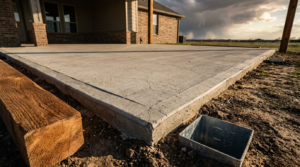
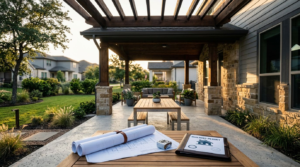
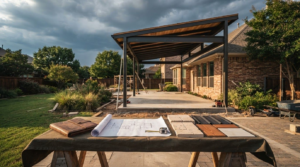
Once a permit is required, cities usually want the same core items. You may need a site plan, setback distances, footing or pier details, framing notes, roof attachment details, and any electrical layout for fans or lighting.
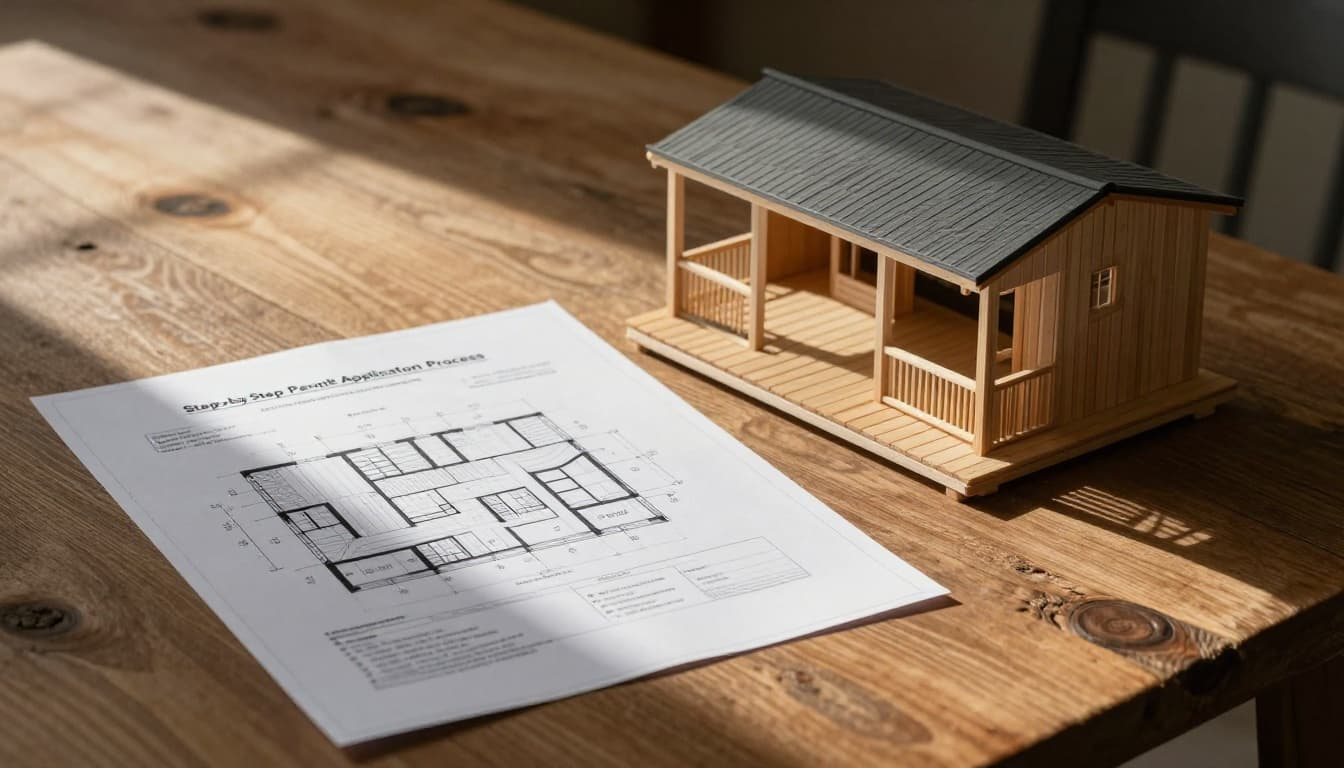
In Denton, current local guidance points homeowners toward plan review, inspections, and fees that change with scope. A simple cover may move fast. Add outlets, a fan, or an outdoor kitchen, and the project gets more involved.
Most projects follow a path like this:
- Submit the plans and site information.
- Wait for review and corrections, if any.
- Build after approval, then schedule footing, rough trade, and final inspections.
- Keep HOA records and permit records with your house documents.
That middle step causes the most headaches. If the plans don’t show setbacks, lot coverage, or how the roof ties into the home, the city may kick them back. It’s like trying to bake from half a recipe, you usually lose time first.
HOAs add another layer. In many Plano and Frisco neighborhoods, the city checks safety while the HOA checks roofline, color, height, and visibility. For a broader look at common timing and fee ranges, see this Plano patio permit guide and this Fort Worth permit guide.
Get HOA approval in writing before materials are ordered. Also, if your cover includes lights, fans, or outlets, ask whether separate trade permits are required.
How to avoid permit trouble before the first post hole
The easiest permit problems to fix are the ones you catch early. Measure setbacks first. Check deed restrictions second. Then work with a builder who knows your city.
That matters even more when the structure ties into the house. Roof attachment, flashing, drainage, and footing depth can all affect approval. A permit-ready builder should already know what the city wants to see on the plans. If you’re hiring locally, a patio cover builder in Denton can help you start with site-specific plans instead of guesswork.
Homeowners also get tripped up by kits. A store-bought pergola may look simple, but local wind loads, setbacks, and electrical add-ons can change the whole picture. If you’re leaning toward a lighter structure, look at custom pergolas in Denton before you buy anything.
Three moves make the process smoother. First, call the city before you pour concrete or order lumber. Next, ask the HOA for written approval, not a verbal nod. Finally, schedule a site visit with a permit-aware contractor before finalizing size, roof pitch, or electrical features.
If you want a patio cover that feels like part of the house, request a detailed estimate and a permit plan at the same time. That keeps design, cost, and code in one conversation.
Conclusion
Most patio cover problems in North Texas start long before the first board goes up. They start when homeowners treat permits like an afterthought.
Handle approval, HOA review, and inspections before you buy materials. Then the build usually moves faster, the structure is safer, and resale questions are easier later.
If you’re planning a patio cover or pergola in Denton or a nearby North Texas city, get the permit questions answered early, get the HOA sign-off in writing, and ask for a site-specific quote before construction starts.