Denton, Texas • Outdoor Shade & Cedar Construction
Cedar Patio Cover Contractor in Denton, TX: What to Expect & How to Choose the Right Builder
A cedar patio cover is one of the highest-impact upgrades you can make to a Denton backyard: it reduces harsh sun, makes your patio usable more months of the year, and adds a warm, natural finish that looks “built with the home” rather than tacked on. The difference between a patio cover you love for 15+ years and one that starts sagging, staining, or leaking comes down to planning and craftsmanship—especially in North Texas where wind, UV exposure, and heavy rain events test every connection.
This guide walks you through what to expect from a cedar patio cover contractor in Denton, typical design paths, what drives cost, and the questions that help you choose the right builder—so you can invest with confidence.
Key takeaway
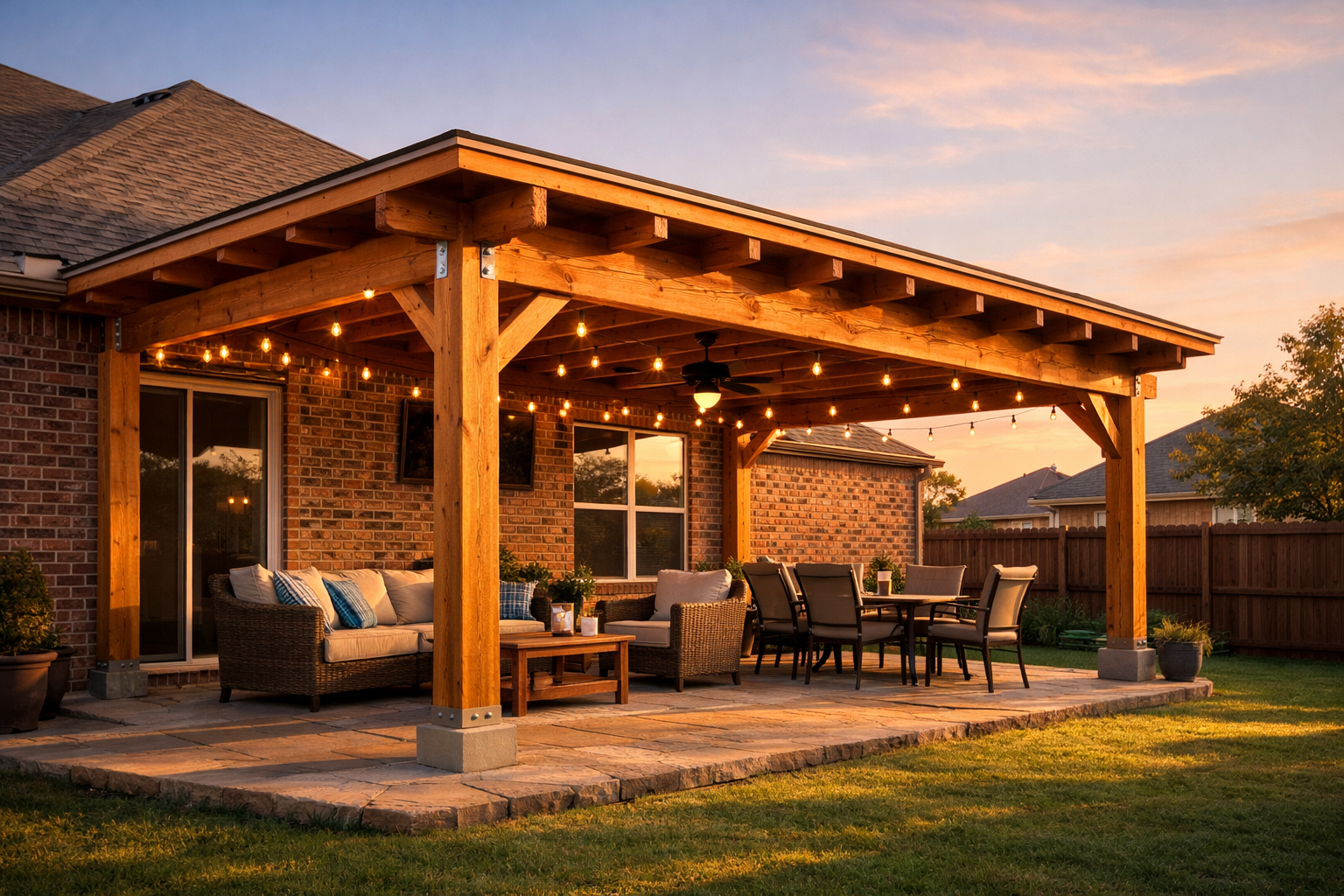
The best patio covers start with a clear scope: exact size, shade goals, roof style, drainage plan, footing strategy, and a written materials list. A quality contractor will be comfortable documenting all of it—before the first post hole is dug.
Why Cedar Is a Top Choice for Patio Covers in North Texas
In Denton, your patio cover needs to do more than look good on day one. It has to handle intense summer UV, spring storms, shifting soil, and the occasional “surprise” hail or wind event. Cedar performs well here because it balances durability, stability, and aesthetics in a way many other materials struggle to match.
1) Natural resistance where it matters most
Cedar contains natural oils that make it more resistant to rot and insects than many common softwoods. That matters for shaded areas that dry slowly, for portions exposed to sprinkler mist, and for any joints where water could linger. It’s not magic—cedar still needs proper finishing and detailing—but it gives you a head start.
2) A premium look that fits Denton homes
From classic brick exteriors to modern mixed-material façades, cedar’s grain and color read as “architectural.” With the right stain, you can go from natural honey tones to deeper, richer browns. If curb appeal and resale are on your mind, cedar is often the best blend of style and substance.
3) Strong enough for exposed-beam designs
Homeowners in North Texas love the look of exposed beams, decorative tails, and clean rafters. Cedar’s strength-to-weight ratio helps contractors build these features without turning the structure into a bulky “box.”
4) Finish flexibility for long-term maintenance
Cedar accepts stains and sealants well. That means you can choose a finish plan based on your exposure conditions—full sun vs. partial shade, and whether you prefer a natural look or a darker stain that hides dirt and UV change better.
Practical truth: In Denton’s sun, every wood patio cover will weather. The goal isn’t “never changes,” it’s even weathering with a finish plan that’s easy to maintain.
If you’re comparing cedar to other materials, it helps to consider the experience you want. Do you want a warm, natural ceiling above your patio? Do you want exposed joinery and trim details? Cedar is often the most satisfying choice for homeowners who care about the “feel” of the space, not just the shade.
For more Denton-specific performance benefits, you may also like: Cedar Patio Covers Denton TX That Beat Heat Fast.
Popular Cedar Patio Cover Styles for Denton Homes
The “right” style depends on how you actually use your backyard. Are you trying to make grilling comfortable at 6 pm? Create a shaded dining area? Add cover near a pool? The best contractor will guide you through options based on orientation, wind exposure, and the look of your home—then recommend a structure that performs.
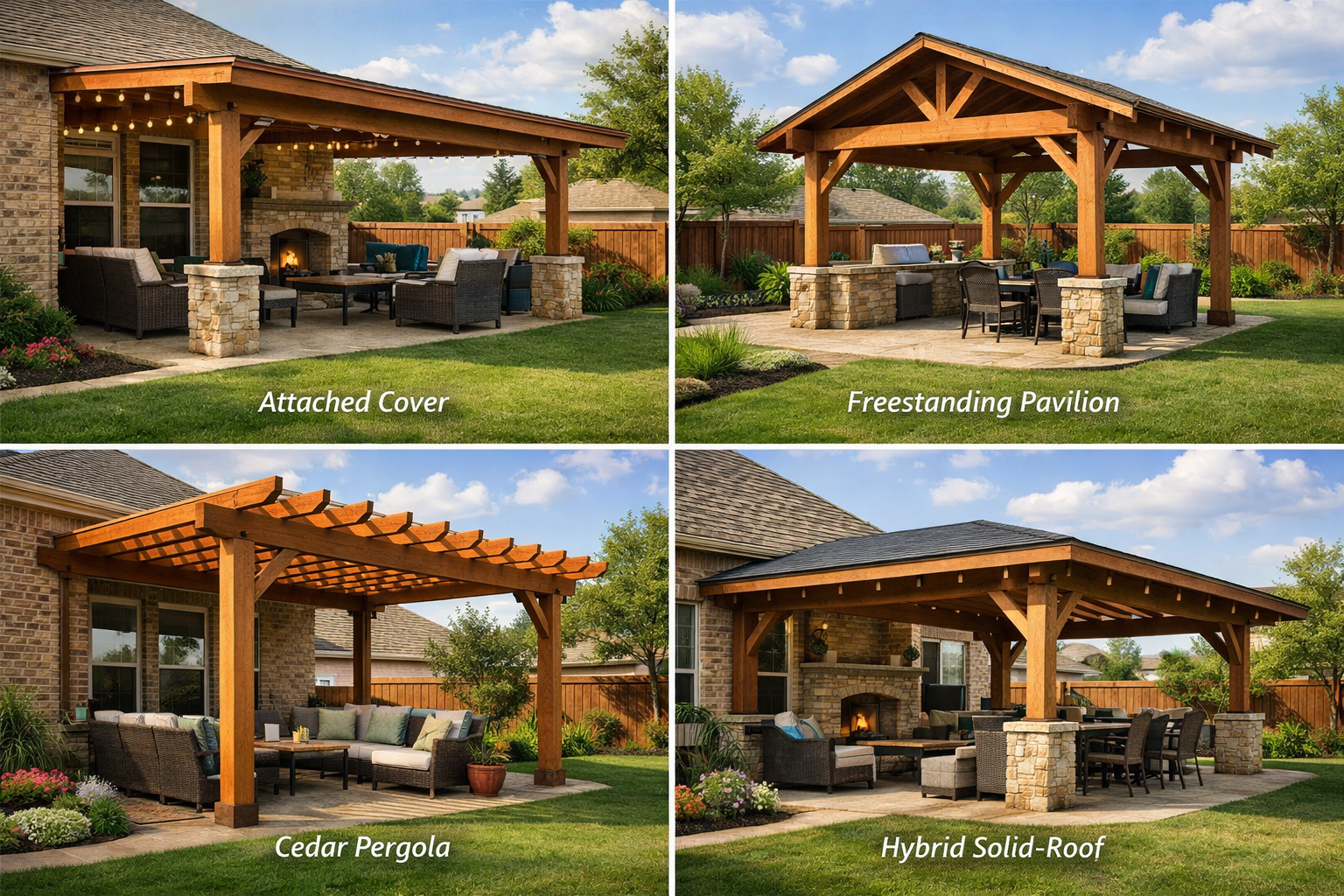
Attached cedar patio covers
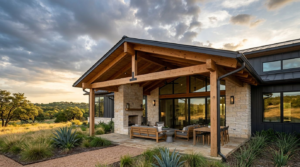
Attached patio covers are popular because they extend your indoor living area outward and create an intentional transition from home to yard. They’re great for patios near the kitchen (grilling/dining), and they can look especially seamless when the beam lines, trim, and roof pitch complement your existing architecture.
- Best for: everyday use, outdoor dining, and “backyard living room” layouts
- Design focus: ledger/attachment strategy, flashing, drainage, and matching rooflines
- Common upgrades: ceiling fans, recessed lighting, outlets, and tongue-and-groove ceilings
If you’re leaning attached, understanding water management at the wall connection is crucial. This is worth reading before finalizing your plan: Patio Cover Flashing Guide For Brick And Siding Walls and Ledger Board Attachment Basics For Attached Patio Covers In North Texas.
Freestanding cedar covers (pavilions)
Freestanding structures are ideal when an attached cover isn’t practical—like when you want shade away from the house, near a pool, or over a separate seating area. They can also reduce complexity around tying into the home, but they demand strong footing work and thoughtful bracing for wind.
- Best for: poolside shade, detached lounge areas, outdoor kitchens set away from the home
- Design focus: post spacing, lateral bracing, and roof style for sun/rain protection
Pergola-style cedar builds (open roof)
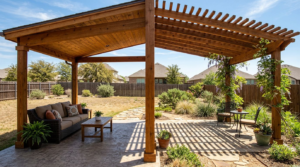
Pergolas create a lighter, more open feel. They provide partial shade and can be paired with shade panels, adjustable slats, or climbing plants. In Denton, pergolas are often chosen for aesthetics and airflow—especially if you want dappled shade and an outdoor space that feels airy.
- Best for: aesthetics, partial shade, and spaces where airflow is a priority
- Design focus: slat spacing, sun angles, and optional shade add-ons
Still deciding between attached vs. freestanding? This comparison can help clarify tradeoffs: Attached vs Freestanding Patio Covers for North Texas Homes.
Solid or hybrid roof designs
If your goal is heavier shade and better rain protection, a solid roof (or a hybrid approach) can transform how often you use your patio. These designs typically require more planning for pitch, runoff, and structural loads. When done well, they feel like an outdoor room rather than just shade.
Style selection quick test
- If you want to eat outside during peak sun: lean toward attached or solid/hybrid.
- If you want shade near the pool or a firepit zone: consider freestanding.
- If you want architectural interest with airflow: start with a pergola and add shade features as needed.
What a Cedar Patio Cover Contractor Should Handle (Start to Finish)
A contractor isn’t just someone who “builds the cover.” A good cedar patio cover contractor manages the full process—planning, structural choices, permitting realities, and finish guidance—so you don’t get surprised by hidden costs or problems that show up after the crew leaves.
Step 1: On-site assessment (not guesses from photos)
A real estimate begins with measurements and a conversation. Expect your contractor to look at:
- Patio dimensions and how you want to use the space (grill clearance, dining table size, walkway paths)
- Sun orientation (morning vs. afternoon exposure) and where shade is actually needed
- Slope and drainage so runoff doesn’t dump where you walk or pool near the slab
- Access to the backyard for materials, concrete work, and staging
Step 2: Design planning (structure first, then aesthetics)
Design isn’t only about “how it looks.” It’s post placement, beam sizing, spans, and (if applicable) roof pitch. When a builder does this well, you get both beauty and long-term performance. When it’s rushed, you see the results: awkward post locations, low headroom, or water that splashes exactly where you don’t want it.
A solid plan should clarify:
- Post locations and whether they interfere with doors, steps, or traffic flow
- Beam and rafter sizes based on span and roof type
- How connections will be made (anchors, brackets, hardware)
- Finish approach (stain/sealant options and maintenance expectations)
Step 3: Permits, HOA coordination, and code realities
Even when a project seems straightforward, permitting and HOA requirements can change details fast (setbacks, height limits, roof runoff handling). A contractor who builds in the Denton area should be able to discuss typical requirements and help you avoid designs that trigger rework.
Watch for this red flag: If a builder dismisses permits and structural requirements as “never needed,” you may be inheriting risk—especially if you plan to sell later or insure the structure properly.
Step 4: Installation (footings, fastening, and finish details)
The build stage is where craftsmanship shows. You want consistent cuts, straight lines, clean joinery, and hardware that’s appropriate for outdoor exposure. Installation should include:
- Footings done right for your soil conditions, load, and design
- Accurate post setting (plumb, aligned, and braced)
- Proper fastening with exterior-rated hardware where needed
- Final walkthrough including maintenance guidance and how to spot early issues
If you want to go deeper on foundations, read: Patio Cover Footings 101, How Deep, How Wide, and Why It Matters.
Key takeaway
A quality contractor can explain why posts go where they go, how loads travel to the ground, and what will be done to manage water. If those answers are fuzzy, keep shopping.
Cedar Patio Cover Cost in Denton, TX: What Drives the Price
Homeowners often ask for a single “average price,” but the truth is that cedar patio cover pricing moves with a few big variables. Two projects with the same square footage can land far apart because of roof type, structural spans, site conditions, and finish details.
1) Size, spans, and complexity
Bigger covers require larger beams and more material, but spans also matter. A wide-open layout with fewer posts can look cleaner, yet it often requires stronger (and more expensive) structural members. Complexity adds cost too: multiple rooflines, unusual shapes, or tight access.
2) Roof style and weather protection
A pergola is often simpler than a solid roof system. If you want better rain protection, the structure may need a defined pitch, runoff strategy, and materials that handle water correctly. Those details can raise the investment—but they also raise how often you can actually use the space.
3) Material grade and visible finish level
“Cedar” isn’t one uniform product. Species, grade, and the finish expectations (smooth vs. more rustic, exposed hardware vs. concealed, decorative tails, trim packages) influence both material cost and labor time.
4) Site conditions and slab readiness
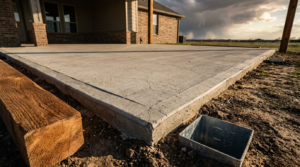
The condition of your existing concrete matters. A contractor may need to add footings, work around irrigation lines, or adjust post locations based on slab joints and thickness. If you’re unsure whether your slab can handle a cover (or whether footings are required), this is a must-read: Patio Slab Support: How to Tell If Your Slab Can Handle a Cover.
5) Add-ons: electrical, lighting, and comfort features
Comfort upgrades can be worth it—especially if the patio becomes your go-to space. Common add-ons include ceiling fans, recessed lights, outlets for TVs or heaters, and dedicated switches. These are easier (and often cheaper) to plan up front than retrofit later.
Pricing reality check
The most accurate price comes from a site visit and a written scope. If your quote doesn’t clearly list materials, dimensions, roof type, and what’s included (demo, footings, stain/seal, cleanup), you’re not comparing apples to apples.
For a deeper dive into how add-ons and design choices affect budgets, see: Patio Cover Cost Breakdown (2026): Materials, Size, and Add-Ons That Change the Price and How Much Does a Custom Cedar Patio Cover Cost Per Square Foot?.
As a practical planning guideline, many homeowners find it helpful to start with a target size (like a 12×12, 10×20, or 20×20) and refine from there based on furniture layout and traffic flow. If you’re in that stage, these size guides can help:
- 12×12 Cedar Patio Cover: Design, Cost, and Build Guide
- Buyer’s Guide: 10×20 Cedar Patio Cover Design and Installation
- 20×20 Cedar Patio Cover Planning And Build Guide
Questions to Ask Before You Hire a Patio Cover Builder
The best questions do two things: they reveal how a contractor thinks, and they help you compare proposals fairly. In Denton, you’re looking for a builder who’s confident in structure, clear in communication, and realistic about maintenance.

Material & finish questions (so the look lasts)
- What cedar species and grade will you use, and why is it appropriate for a patio cover?
- What stain or sealant do you recommend for Denton weather and sun exposure?
- How often should it be re-sealed, and what signs tell me it’s time?
- Will the lumber be allowed to acclimate, and how do you minimize warping/cupping?
Structural questions (so it feels solid for years)
- How are post sizes and beam sizes determined for my span and roof style?
- How will the structure be anchored, and what hardware will be used?
- If attached: how will you handle the ledger connection and flashing to prevent water intrusion?
- What’s your plan for roof runoff and where will water discharge?
Process questions (so the experience is smooth)
- What’s the realistic timeline from deposit to build day—and then to completion?
- What hours will the crew work, and who is the on-site point of contact?
- How will you protect landscaping and keep the site clean?
- How do change orders work if we adjust design details mid-project?
Proposal & warranty questions (so you can compare builders)
- Can I see a written scope listing materials, dimensions, and included work?
- What workmanship warranty do you provide, and what does it cover?
- Are electrical and lighting included or excluded—and if excluded, how do you coordinate with an electrician?
A proposal should clearly spell out:
- Exact footprint (length × depth) and height/headroom
- Roof type (open pergola, solid, hybrid) and drainage approach
- Footing plan and how posts are anchored
- Stain/seal plan or whether finishing is excluded
- Cleanup, debris hauling, and final walkthrough
If you want an additional overview tailored to this market, see: Cedar Patio Cover Builder in Denton, TX: Design, Costs, Permits & What to Expect.
Trust signal: Great builders don’t avoid details. They welcome them. The more specific your questions, the easier it is to spot who has a repeatable process versus who is improvising.
Maintenance Tips to Keep Your Cedar Patio Cover Looking Great
Cedar is durable, but in North Texas it’s constantly dealing with sun, pollen, humidity swings, and storm debris. A simple maintenance routine keeps the finish consistent and helps you catch small issues before they become expensive ones.
1) Clean it periodically (especially after heavy pollen)
Dust and pollen can hold moisture against the surface and dull the finish over time. A gentle wash a couple of times a year (or as needed) helps the wood look even and keeps mildew from gaining a foothold in shaded areas.
2) Reapply stain/sealant based on exposure, not a fixed calendar
South- and west-facing surfaces often weather faster. If you notice water no longer beading on the surface, or the finish looks patchy and dry, it may be time to refresh. The goal is to maintain protection before the wood looks “tired,” not after.
3) Inspect hardware and joints annually
After major storms or high winds, do a quick walk-around. Look for early movement, minor separation, or fasteners that need tightening. Catching small changes early typically saves money and keeps the structure feeling tight and secure.
4) Reduce moisture exposure from sprinklers and nearby vegetation
Aim sprinklers away from posts and beams. Trim branches so they don’t rub against the structure or drop constant debris onto top surfaces. Less moisture + less debris = longer finish life.
Maintenance takeaway
Plan on periodic cleaning and finish upkeep. In exchange, cedar rewards you with a look that stays warm and architectural—rather than fading into a gray, blotchy “outdoor lumber” appearance.
Conclusion: Choosing the Right Cedar Patio Cover Contractor in Denton
A cedar patio cover can change the way you live at home—more shade, more comfort, and a backyard that finally feels like an extension of your interior space. The projects that age best are the ones built around strong fundamentals: correct post and beam sizing, a thoughtful drainage plan, solid footings, and a finish strategy that fits Denton’s sun and storms.
When you’re comparing builders, focus on the details that predict long-term performance. Ask how they handle attachment and flashing, how they plan footings, what materials they use, and how they document the scope. A contractor who can explain these clearly is far more likely to deliver a structure that stays straight, tight, and beautiful for years.
Ready to Build a Cedar Patio Cover in Denton, TX?
Contact JBN Patio Covers to discuss design options, get a clear scope, and schedule an on-site estimate. Phone: 469-340-0839