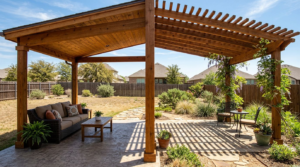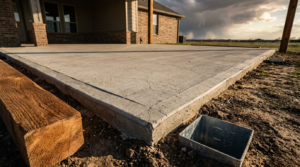
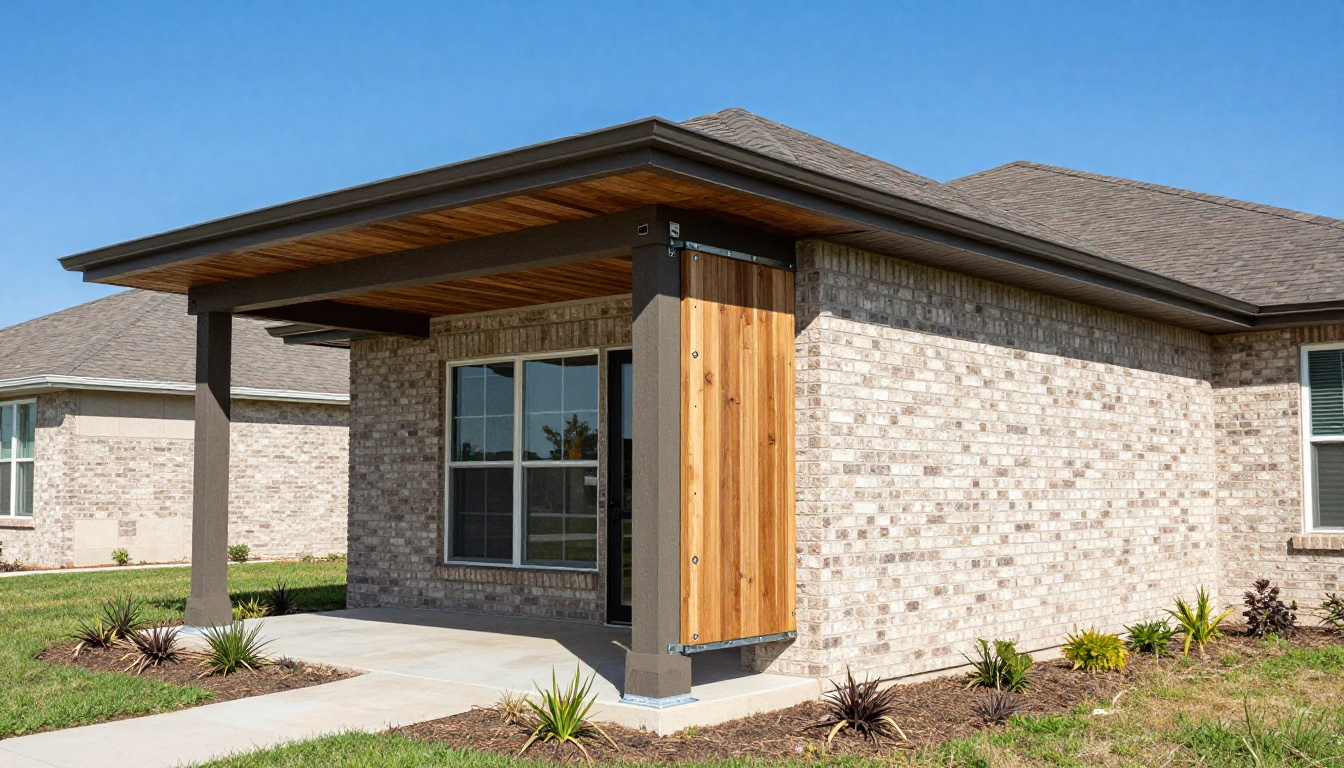
A patio cover that’s tied into your house can feel like the structure “belongs” there. The catch is that one board does most of the trust-building: the ledger board.
If your ledger board attachment is wrong, you can end up with leaks inside the wall, rot at the rim joist, or a roof that sags over time. If it’s right, your attached patio cover feels solid, drains well, and holds up to North Texas wind-driven storms.
This guide walks you through the parts that matter, what to watch for on common North Texas homes, and what to ask your installer before the first hole gets drilled.
What the ledger board really does on an attached patio cover
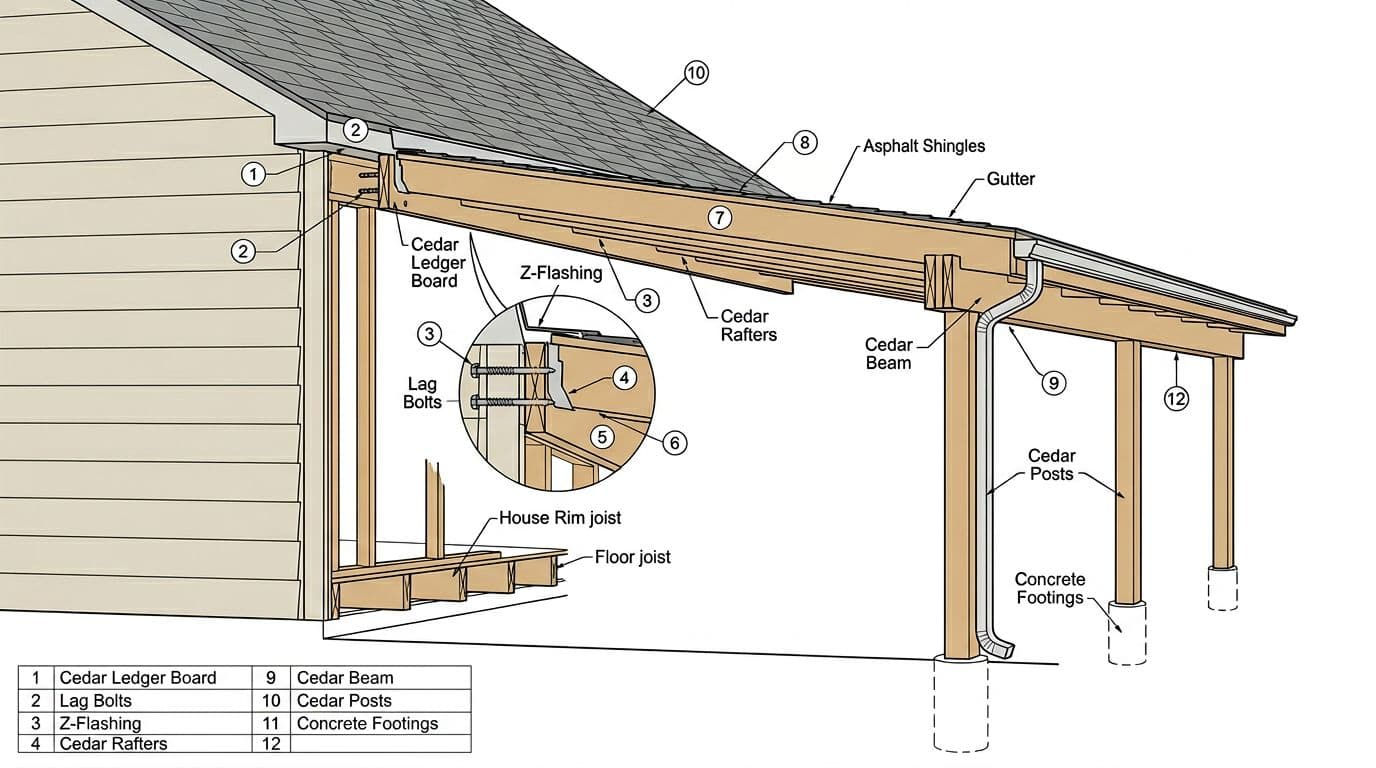
Think of the ledger as the “handshake” between your home and the patio cover. It transfers weight from the patio cover roof into the house framing, while also resisting uplift when storms push and pull on the roof.
In North Texas, that uplift isn’t theoretical. Fast-moving thunderstorms can bring strong gusts, then dump heavy rain that tests every flashing detail. So you’re dealing with two enemies at once: movement and water.
The most important reality is this: a ledger board should fasten into structural framing, not decorative materials. That means the target is usually the house band, rim joist, or wall studs, depending on the design. If you have brick veneer, stone veneer, or thick foam-backed cladding, the plan often changes.
Brick veneer is common in areas like Frisco, McKinney, Flower Mound, and parts of Denton County. Veneer looks strong, but it’s not meant to carry a roof load. Attaching a ledger through brick without the right structural connection can crack masonry, trap water, and still fail under load.
That’s why many homeowners choose a custom design that matches the home’s roofline and framing conditions instead of forcing a one-size approach. If you’re comparing materials and styles for a long-term build, it helps to see how a high-end wood structure is typically planned, for example these Custom Cedar Patio Covers in Denton TX that focus on durable, tailored attachments and finishes.
The anatomy of a durable ledger board attachment (fasteners plus flashing)
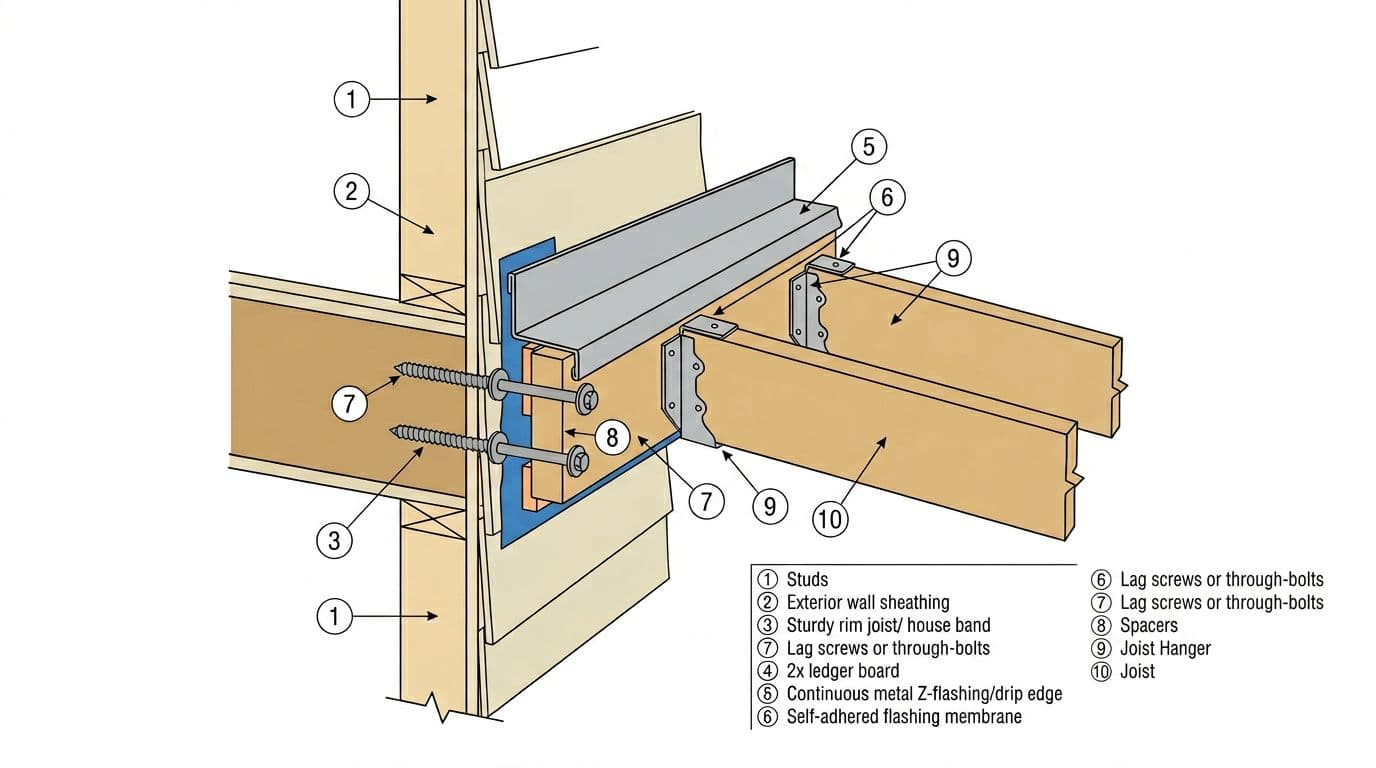
A good ledger connection is two systems working together: structure (fasteners into framing) and water management (membranes and metal flashing that shed rain). Miss either one and the wall becomes a sponge.
Here’s what you’re looking for in a typical wood-framed house connection:
- The installer locates the rim joist or other structural member and confirms it’s sound.
- Siding at the ledger area is removed or detailed so flashing can tuck behind the weather-resistive barrier.
- A self-adhered flashing membrane is applied in shingle-style layers so water always laps over the layer below.
- The ledger is installed with approved fasteners (often structural screws, lag screws, or through-bolts) and washers where required.
- Continuous metal Z-flashing (or an approved equivalent) sits above the ledger and directs water out and away.
- Joist hangers connect the patio cover members to the ledger, using the correct hanger nails or connector screws.
Fastener type and spacing depend on loads, span, and the house structure. Your city inspector may also expect code-aligned details. If you want to see how code language often treats ledger connections in general, review an example like ledger attachment code text and then confirm what your local authority requires.
If you remember one thing, remember this: flashing is part of the structure because rot can weaken the very framing holding the ledger.
Permits and plan requirements also vary by city. For a real-world example of a North Texas municipality outlining patio cover permit expectations, see the Arlington residential patio cover permit bulletin (PDF). Even if you don’t live in Arlington, it shows the kind of documents and code references cities often want.
What to confirm before install day (and what inspectors tend to flag)
A clean install starts with the right questions, asked early. Once the ledger goes up, “we’ll fix it later” usually means pulling boards back off and redoing flashing.
Here’s a simple sequence you can use to sanity-check the plan:
- Verify the attachment surface: confirm the ledger fastens to framing (rim joist, band board, studs) and not just sheathing or brick.
- Confirm water-shedding layers: membrane behind, metal flashing on top, and proper lapping with existing house wrap.
- Choose the right fasteners: structural-rated screws or bolts, corrosion-resistant, with washers when required.
- Set a straight, level ledger: small errors here telegraph into the whole roof.
- Use correct connectors: joist hangers sized for the members, installed with approved fasteners.
- Plan the roof tie-in: slope, drip edge, and how shingles or roofing integrate without creating a trough.
- Schedule inspections: if your city requires it, don’t cover the ledger before it’s approved.
This quick table helps you compare two common approaches when your wall conditions make ledger work risky:
| Approach | When it fits | Tradeoff to know |
|---|---|---|
| Attached ledger to house framing | Wood framing is accessible, details can be flashed correctly | More wall work, flashing must be perfect |
| Freestanding cover (posts near house) | Brick veneer, uncertain rim joist access, or you want less wall disturbance | Extra posts and footings, may affect layout |
In places like Denton, Argyle, Lewisville, and Prosper, the permit desk may call out setbacks, headers, and electrical details if you add fans or lighting. To avoid surprises, it also helps to review general guidance on how local compliance can differ across jurisdictions, like this overview of best practices for local code compliance.
A common red flag is a ledger “floating” on uneven siding, with no clear flashing path. Water always finds that gap.
Quick Q&A (PAA-friendly)
Can you attach a ledger board to brick veneer?
Not safely by treating the brick as structure. Brick veneer is a cladding layer, not a load-bearing surface. A proper design either connects through to structural framing with the right detailing, or uses a freestanding patio cover design near the wall.
What fasteners are best for ledger board attachment?
You typically want structural-rated screws, lag screws, or through-bolts sized for the load and installed to a plan. Corrosion resistance matters too, especially when lumber is treated or hardware is exposed to wet cycles. Your installer should be able to explain fastener selection, spacing, and washer use without guessing.
Do you still need flashing if the patio cover is under the eave?
Yes, in most cases. Even under an eave, wind-driven rain can reach the ledger line, and water can run behind siding. Flashing and membrane create a controlled path so water exits outside the wall.
Do you need a permit for an attached patio cover in North Texas?
Often, yes, especially for attached structures and any electrical work. Requirements vary by city, so check your local building department early, and ask your contractor how inspections will be handled.
How can you tell an existing ledger connection might be failing?
Look for staining near the ledger line, soft wood, rusted hardware, or a sagging roof edge. Inside, watch for wall bubbling or musty smells near the attachment area after heavy storms. If you see any of those, it’s smart to have it assessed before the next season of storms.
Conclusion
A solid patio cover starts where you can’t easily see it: the ledger board attachment and the flashing behind it. When structure and water management work together, your cover stays straight, dry, and dependable through North Texas weather. If you want a builder to review your wall conditions and propose the safest attachment plan, call 469-340-0839 and schedule a consultation. The right details now can save you from opening up a wall later.