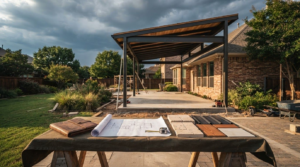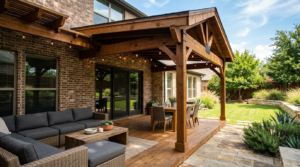
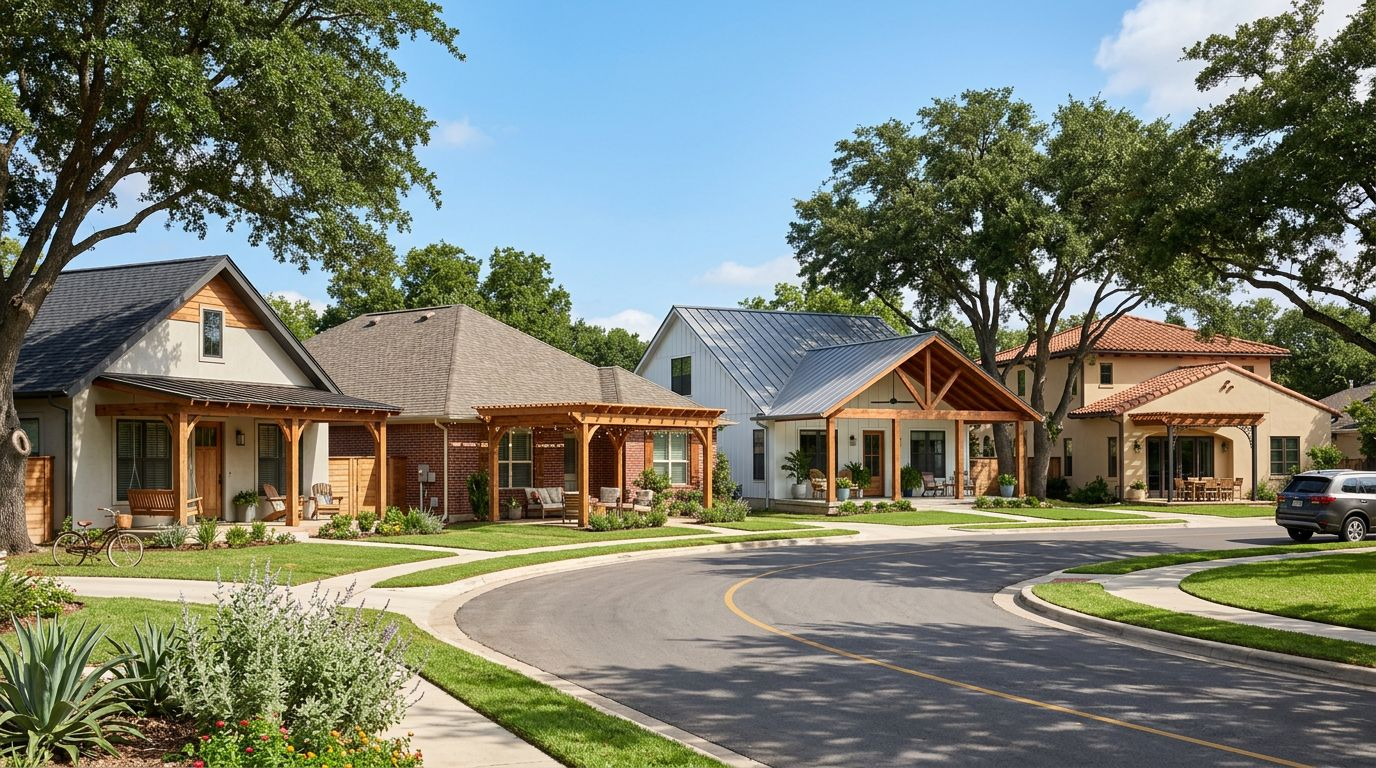
In Texas, your roofline does more than top off your house. It sets the “rules” for anything you attach to it, especially a patio cover.
If you want Cedar Patio Cover Design that look original to the home (not like an afterthought), you need to match pitch, fascia height, and trim details. The payoff is big: better shade, cleaner drainage, and a structure that fits the neighborhood.
Below are design styles that pair well with common roof shapes you see across Denton, Argyle, Flower Mound, Frisco, Plano, and nearby North Texas cities.
Why matching your roofline makes a patio cover look custom
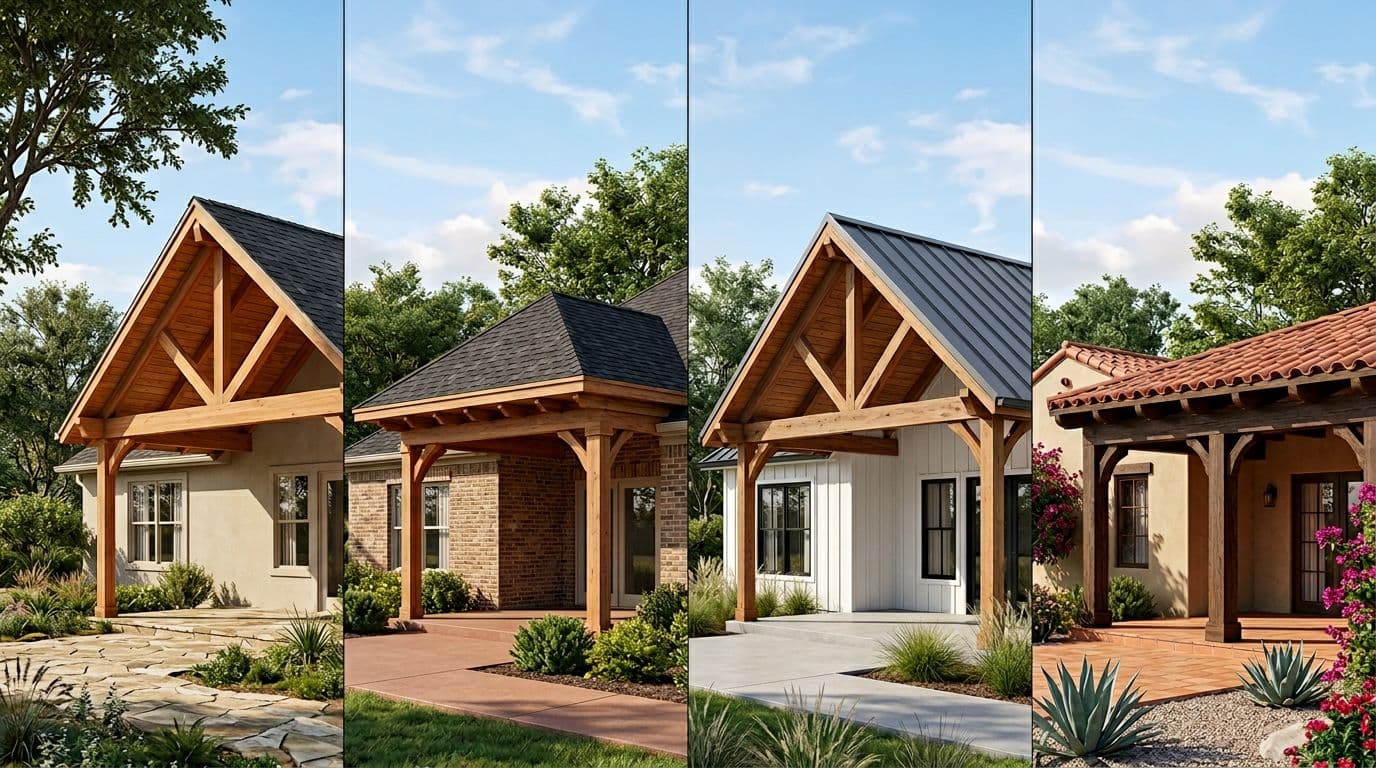
A roofline is like the profile of your home. When a patio cover fights that profile, your eye catches it right away. On the other hand, when the new cover lines up with the existing fascia and pitch, it reads as one complete design.
Matching matters for practical reasons, too. North Texas storms push wind-driven rain sideways, and harsh sun bakes surfaces daily. A cover that ties in cleanly helps you control runoff, protect doors and windows, and create shade where you actually sit.
Start by looking at three alignment points:
- Pitch (slope): Even a small mismatch can look “off,” especially on gable roofs.
- Fascia and soffit height: This is where the cover meets the home visually.
- Trim language: Boxed eaves, exposed rafter tails, and brick frieze lines should guide your details.
If you’re collecting inspiration, it helps to compare real-world builds in Texas climates, like these patio cover design ideas for Texas backyards. Then, bring your favorites to a builder who can adapt them to your roof, not just copy a photo.
For a deeper look at custom options and attachments, see custom cedar patio covers.
A patio cover looks “right” when it follows the home’s lines first, then adds personality through beams, posts, and finish.
Gable and hip roof cedar patio cover styles that blend in
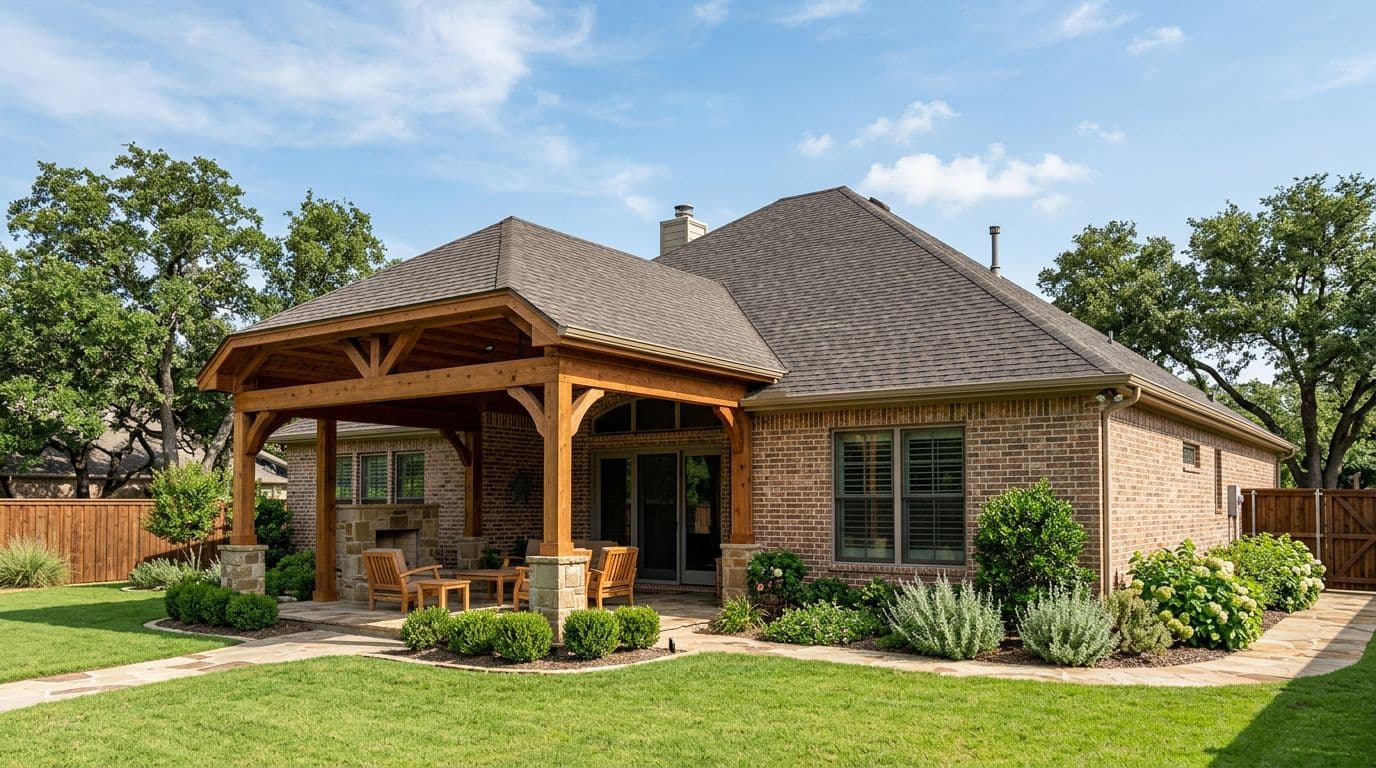
Suburban ranch gable roofs: open gable vs. shed-style tie-ins
A classic Texas ranch often has a straightforward gable. That gives you two strong cedar directions.
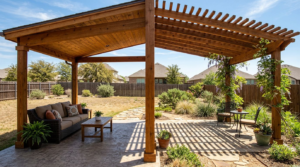
An open-gable patio cover mirrors the triangle shape and can feel like a “mini addition.” It works well when you want height for ceiling fans, a smoky grill zone, or an outdoor fireplace draft path. Visually, it pairs best with exposed cedar rafters (or a tongue-and-groove ceiling if you want a more finished room feel).
A shed-style (single-slope) cover can still match a gable home, as long as it aligns with the fascia and doesn’t cut across windows awkwardly. This style usually looks best with clean edges and consistent rafter spacing, since the slope becomes a prominent line.
Traditional hip roofs: wraparound balance and clean edges
Hip roofs show up everywhere in brick neighborhoods from Highland Village to Lewisville. They look “balanced” from most angles, so your cover should keep that calm geometry.
For hip roofs, the best-looking cedar patio covers usually do three things:
- Keep facia lines level with the home’s trim.
- Use substantial posts so the cover doesn’t look spindly next to a wide roof mass.
- Choose simple beam tails or modest corbels, since hips already have visual complexity.
If you’re replacing an older, sagging structure, it’s smart to start with a condition check, because attachment points and rot often hide until demo day. This page on patio cover replacement Denton TX lays out the common warning signs and what a true rebuild involves.
Modern farmhouse metal roofs and Spanish tile homes: cedar details that keep it cohesive
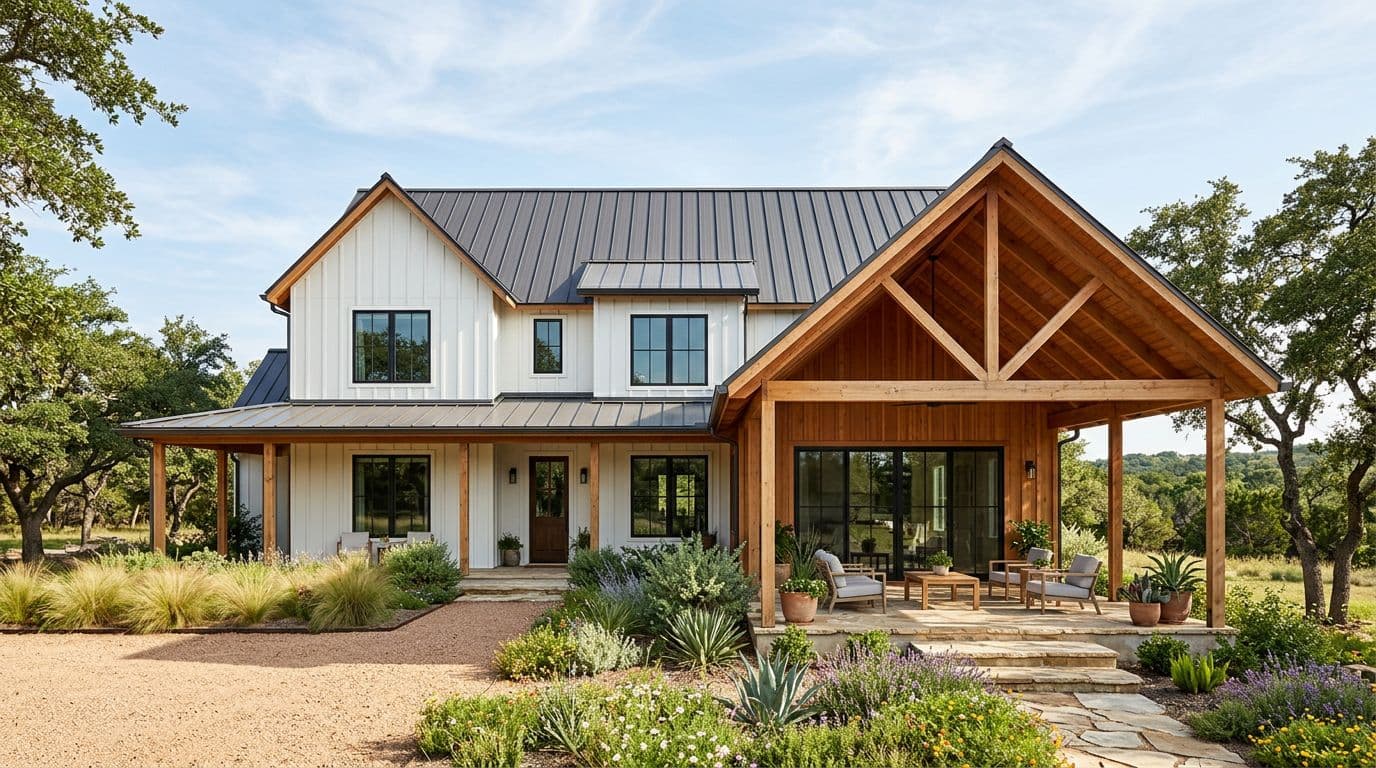
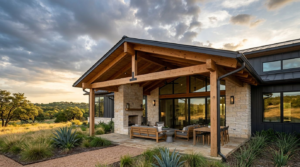
Modern farmhouse gables with standing-seam metal: crisp structure, warm wood
Metal roofs highlight straight lines, so your cedar framing needs discipline. Think square posts, clean beams, and consistent rafter layout. Black hardware can look sharp here, but only when it’s placed intentionally and repeats across the build.
Also, consider a flatter, cleaner beam profile if your home has board-and-batten siding and large windows. The goal is contrast, not competition. Cedar brings warmth, while the roof and trim stay crisp.
If you want a sense of what’s popular across the state right now, this roundup of patio cover design trends in Texas homes can help you put words to the style you like.
Spanish or Mediterranean low-slope roofs: avoid “almost matching”
Texas Spanish-style homes often have lower slopes and heavier roof materials. That changes the proportions. If your cedar cover is too thin or too steep, it can look disconnected.
Two guidelines help:
- Match fascia height first, then tune the pitch so the intersection looks planned.
- Use heavier timbers (bigger beams and posts) to balance tile, stucco, and arched openings.
Stone bases or accent columns can also help the cedar feel grounded. If you like that Hill Country blend, this patio cover with stone and cedar project shows how the materials can work together without feeling busy.
PAA-style Q&A: cedar patio covers for Texas rooflines
How do you match a cedar patio cover to an existing roof pitch?
You measure the home’s pitch and align the new framing so the slope reads the same from the yard. Even when the cover uses a different roofing finish, the visible lines should track together.
Is an attached patio cover always better than a freestanding one?
Not always. Attached covers usually look most natural on gable and hip homes, because trim lines can connect. Freestanding covers work great when the house roofline is complex, or when you want shade by a pool or outdoor kitchen zone.
What’s the best cedar patio cover style for Denton-area weather?
In North Texas, you want strong connections, smart runoff control, and enough headroom for airflow. A custom design also lets you plan for fans and lighting from day one. If you’re comparing layouts and options, start with custom cedar patio covers Denton TX.
Where can you see more Texas patio cover ideas before you choose a style?
Browsing real projects helps you spot what fits your home’s architecture.
If you want to talk through roofline match options with a local builder, call 469-340-0839.
Your roofline already tells you what will look right. When you follow its angles, heights, and trim cues, cedar patio covers feel like a true extension of the home. The best next step is simple: pick the roof style you have, choose the cedar detailing that matches your exterior, then confirm pitch and drainage before construction starts.