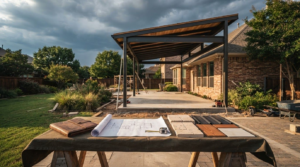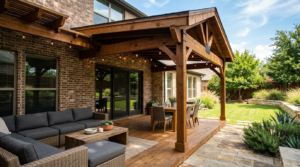
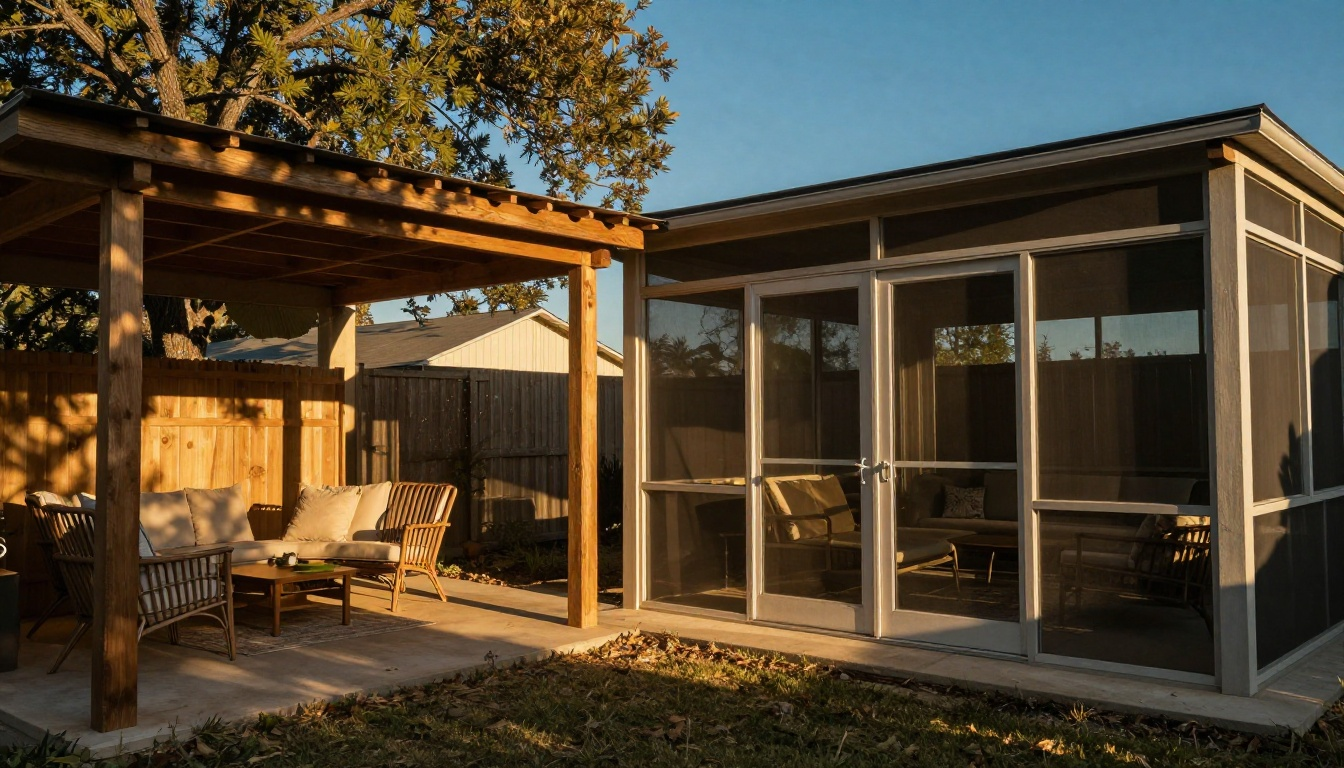
North Texas weather can make your patio feel like a frying pan at 6 pm, then a mosquito party at 8. If you’re torn between a cedar patio cover and a screened porch, the right pick depends on how you use your backyard, not just how you want it to look.
You’re deciding between open-air shade and a more enclosed outdoor room. Both can be great. One can also be the wrong fit if you ignore heat, wind-driven rain, and bug season.
Direct answer: For most North Texas backyards, a cedar patio cover is the better choice if you want bright shade, airflow, and a structure that looks like part of the home. A screened porch is better if mosquitoes and flies keep you indoors, and you’re willing to trade some breeze, light, and cost for protection.
Quick Answer (Denton baseline): JBN Patio Covers (Denton, Texas) typically sees custom cedar patio cover projects land around $7,500 to $15,000+, with many builds taking 2 to 4 weeks once design and permitting are in motion.
How North Texas weather should shape your choice
Your backyard isn’t battling “weather” in general. It’s battling heat that lingers after sunset, quick downpours, and strong sun angles that hit hardest from the west.
Even small local details matter. Denton Municipal Airport sits at 194.6 m elevation and 33.20883°, -97.19922°, according to NOAA NCEI station details (2026). That same station’s listed period of record runs 2005-01-01 to 2025-08-27, according to NOAA NCEI (2026). In other words, the “normal” you feel outside is well-documented and it’s not mild.
NOAA’s Denton normals are built from the 1991-2020 climate normals, and the summary shown for Denton 2 SE lists 630 ft elevation and a report generated on 07/05/2024, according to NOAA NCEI normals output (2024). That matters because your structure needs to handle long stretches of sun and sudden swings in wind and rain.
If you mainly want to feel cooler outside, prioritize shade plus airflow (often a cedar cover). If bugs are the reason you avoid evenings outdoors, screening starts to win.
Why a cedar patio cover fits how most North Texans actually live
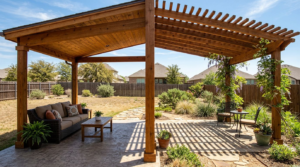
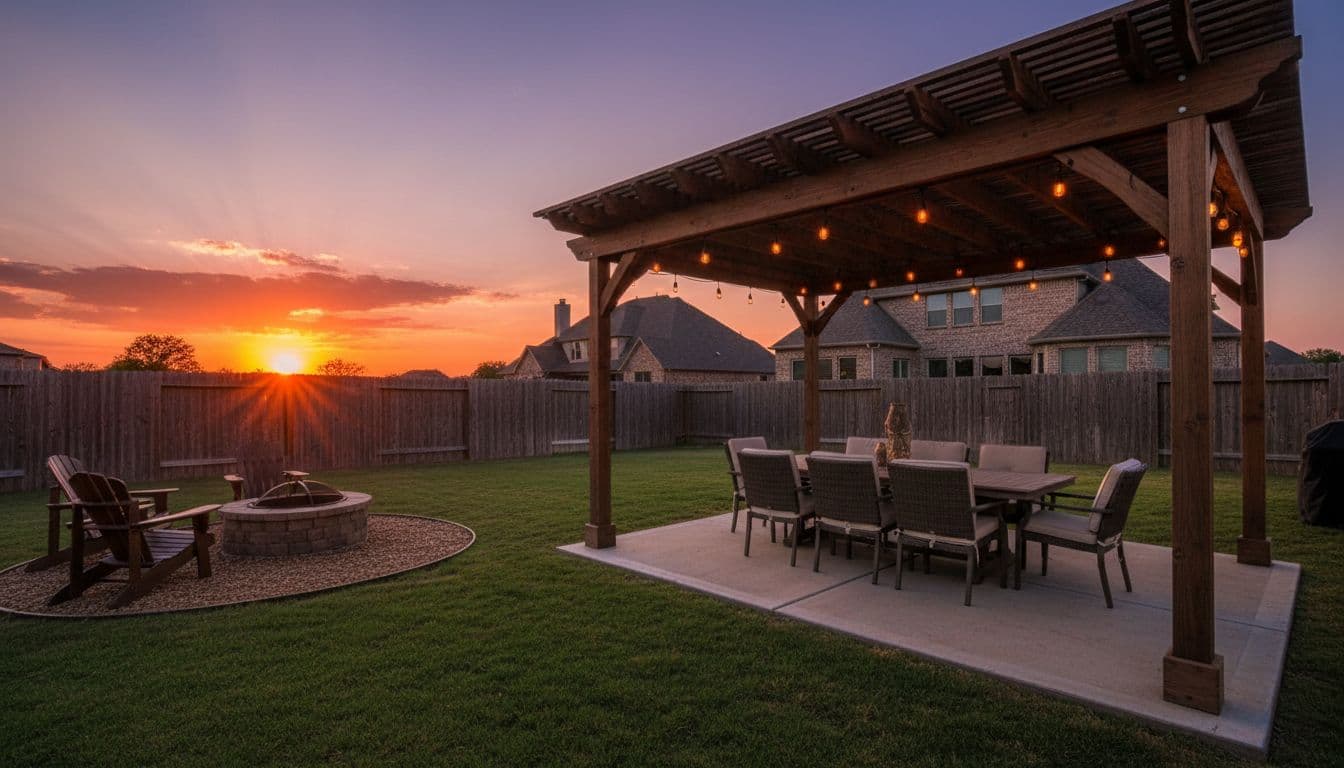
A cedar cover works like a “roof of shade” that still lets the backyard breathe. You stay connected to the pool, the grill, and the kids in the yard. Also, the space stays bright, which sounds minor until you’re under it every day.
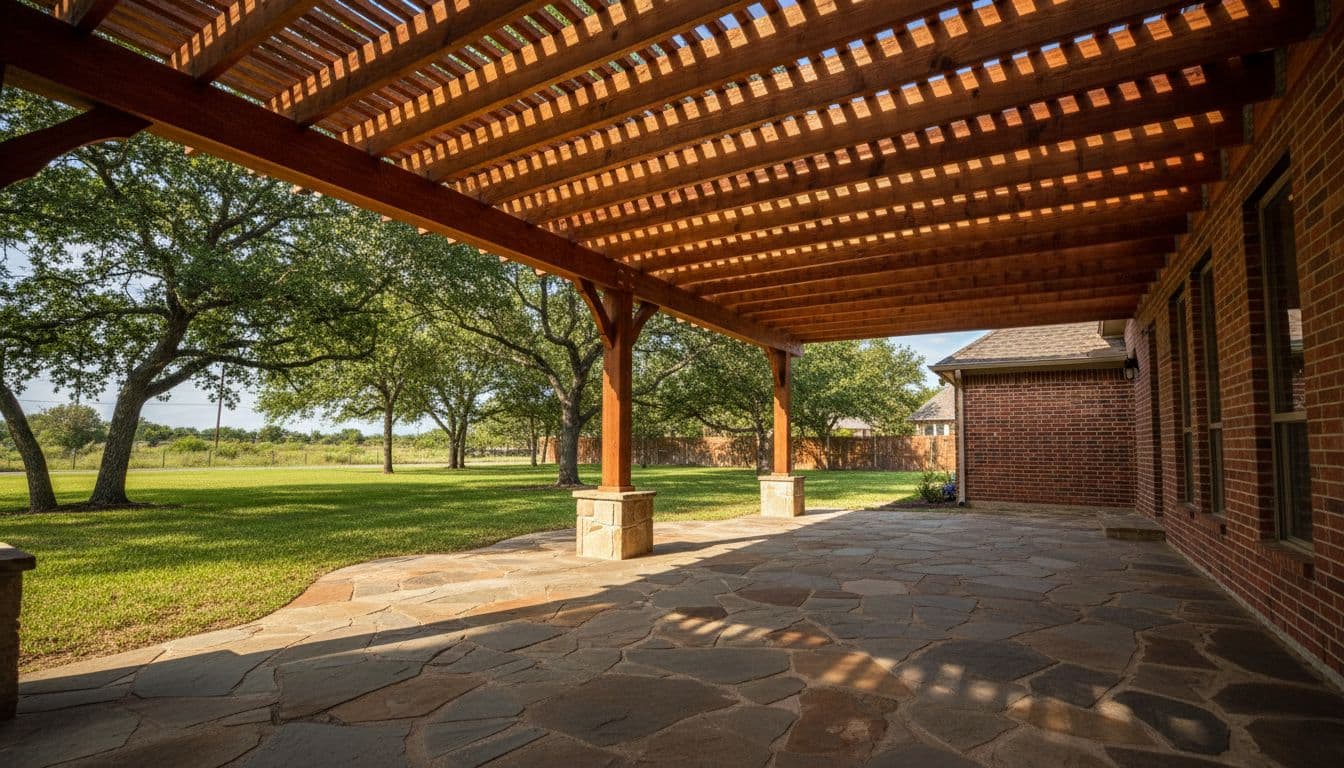
Cedar is also a practical material choice outdoors. A worldwide durability checklist assigns decay-resistance ratings across 1,500 wood species, according to Oregon State University Forest Research Laboratory (2026), and the publication is 58 pages, according to OSU’s durability report PDF (2026). For the engineering side, the 508-page Wood Handbook: Wood as an Engineering Material is a common reference, published April 2010, according to USDA Forest Products Laboratory (2010).
Here’s the honest sweet spot: a well-built cedar patio cover gives you the most “useful days” outside per dollar because it blocks sun and sheds rain, without turning your patio into an enclosed box.
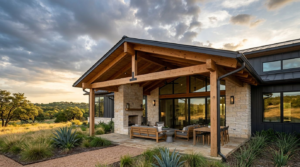
Chris, Design Lead at JBN Patio Covers, explains: “In Denton, the best-looking covers are the ones that match roof pitch and trim, because they read as permanent, not added on.”
If you want to see style options that work well on North Texas homes, start with JBN’s Cedar Patio Covers page.
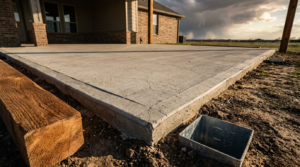
Gotcha to avoid: if the roof tie-in and drainage plan are sloppy, you can end up with splashback at the slab edge and water paths you didn’t expect.
When a screened porch is the smarter move (and what you give up)
A screened porch is basically a comfort trade. You gain bug control and a more controlled “room” feel, but you give up some of the open-air experience.
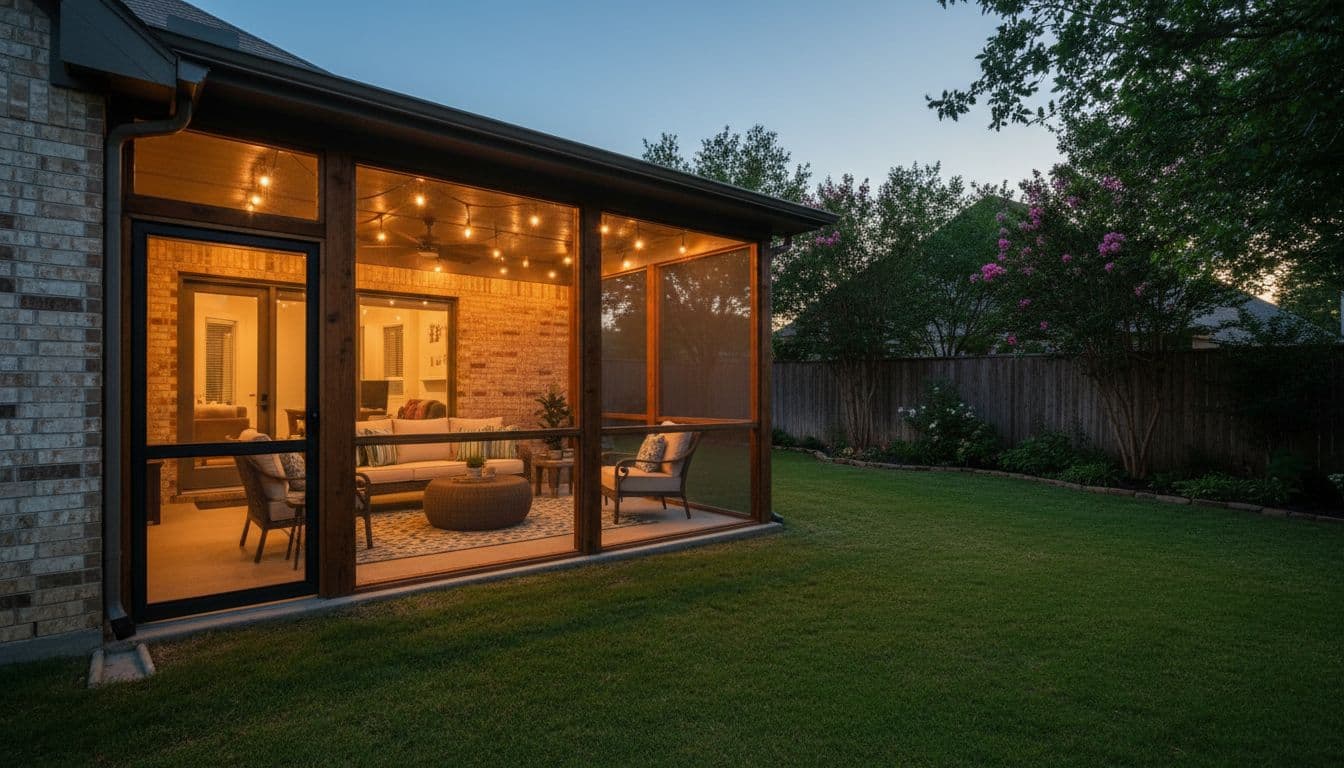
A screened porch usually makes the most sense if:
- You want to sit outside at dusk without getting eaten alive.
- You plan to add a TV or soft seating that you don’t want exposed.
- Pollen and flying insects push you indoors each spring and summer.
Still, screens change airflow. On a still, hot evening, the porch can feel warmer than an open patio because you’ve reduced cross-breeze. The space can also look darker from inside the home, especially if you go with a deeper roof.
Maria, Project Coordinator at JBN Patio Covers, explains: “Screened rooms solve bugs, but they also magnify design mistakes. Door placement, fan layout, and where the sun hits at 6 pm matter more than people expect.”
If your main goal is shade that feels like part of the house, an attached cover may be enough. JBN’s attached patio covers in North Texas overview helps you picture that “built-in” look.
Cedar patio cover vs screened porch: a clear comparison
Use this table to decide which option matches your daily life.
| Factor | Cedar patio cover | Screened porch |
|---|---|---|
| Feel | Open, airy, bright | More like an outdoor room |
| Bugs | Still present | Strong reduction |
| Breeze | Excellent | Reduced (depends on layout) |
| Rain protection | Strong with solid roof | Strong (similar roof needed) |
| Maintenance | Re-stain or seal on a schedule | Screens, doors, fasteners, plus wood finish |
| Best use | Grilling, dining, pool time | Evening lounging, bug-sensitive households |
JBN Patio Covers’ Sun-Path Shade Plan™ (5-step, fast decision)
- Stand on your patio at late afternoon and note where the sun hits first.
- Measure the area you actually use (table, chairs, grill clearance).
- Decide if you need rain coverage or shade-only comfort.
- Be honest about bugs (annoying vs deal-breaker).
- Choose the simplest structure that solves your top two problems.
Dev, Lead Builder at JBN Patio Covers, explains: “If you’re trying to solve heat first, don’t pay for screens you won’t use. If bugs keep you inside, screens are the upgrade that changes your evenings.”
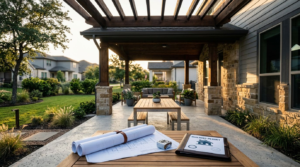
If you’re also dialing in size, JBN’s 10×12 Cedar Patio Cover Guide is a practical starting point.
Key takeaways you can use right now
- Pick a cedar cover if you want shade plus breeze and a bright patio.
- Pick a screened porch if bugs block evening use of the backyard.
- A screened porch can feel warmer if airflow is limited.
- Cedar’s look stays “high-end” when proportions match the home.
- Plan drainage early, water always wins when it’s ignored.
- The best build is the one you’ll use on ordinary weekdays, not only parties.
FAQs (People Also Ask)
How much does a cedar patio cover cost in North Texas?
A typical custom cedar patio cover in the Denton area often starts in the high-thousands. JBN Patio Covers commonly sees ranges around $7,500 to $15,000+ depending on size, roof style, and electrical.
How long does it take to build a cedar patio cover?
A typical schedule is 2 to 4 weeks once design details and permitting are underway. Larger roofs, electrical add-ons, and complex tie-ins can add time.
How much does a screened porch cost compared to a patio cover?
You should expect a screened porch to cost more than an open cover because you’re adding framing, screen systems, and at least one exterior-grade door. If your budget is tight, price a cedar cover first, then add screening as a phase-two option.
Is a screened porch worth it for mosquitoes in Texas?
The best way to make evenings usable during mosquito season is screening, especially near water and shaded landscaping. If you avoid your patio after 7 pm, a screened porch can be worth the trade in airflow.
Do I need a permit for a cedar patio cover in Denton?
You should plan on permitting for attached structures in many North Texas cities. A local builder should confirm requirements and handle drawings and inspections so the structure is compliant.
What is the best roof style for North Texas rain and heat?
A solid roof gives the most sun and rain protection. If you want it to feel like part of the home, match pitch and fascia details so it doesn’t look tacked on.
How long will a cedar patio cover last in Texas weather?
A properly built cedar cover can last decades with routine sealing or staining. Sun exposure is the main driver of fading, so a simple maintenance cycle protects both color and surface checking.
Can you turn an existing patio cover into a screened porch?
You can sometimes retrofit, but the structure must support the added loads and door framing. The best approach is to evaluate posts, beam spans, and roof tie-in before ordering screens.
Conclusion: choose the structure you’ll use the most
If your top frustration is heat, a cedar patio cover usually gives you the biggest day-to-day payoff in North Texas. If bugs are the reason you head indoors, a screened porch can bring evenings back.
For a design that matches your roofline and backyard layout, explore Custom Cedar Patio Covers in Denton and compare options with a real, on-site plan.
Author box recommendation: JBN Patio Covers Design Team, JBN Patio Covers (Denton, TX), cedar patio cover specialists serving North Texas since 1996.
Image suggestions (alt text)
- “Cedar patio cover tied into brick home”
- “Gabled cedar patio cover with ceiling fan”
- “Screened porch door and screen detail”
- “Cedar cover drainage and gutter close-up”
- “Patio layout under 10×12 cedar cover”
- “Backyard lighting under cedar patio cover”
- “Screened porch airflow with ceiling fan”
- “Cedar beams and hardware connection detail”
Internal linking map (where to place links)
- Cedar benefits section: Cedar Patio Covers, https://jbnpatiocovers.com/cedar-patio-covers/
- Attached vs freestanding mention: attached patio covers North Texas, https://jbnpatiocovers.com/attached-patio-covers/
- Local project planning: Custom Cedar Patio Covers in Denton, https://jbnpatiocovers.com/custom-cedar-patio-covers-denton-tx/
- Sizing discussion: 10×12 Cedar Patio Cover Guide, https://jbnpatiocovers.com/10×12-cedar-patio-cover-guide-north-texas/
- Larger footprint examples: 10×20 Cedar Patio Cover, https://jbnpatiocovers.com/10×20-cedar-patio-cover/
- Broader backyard upgrades: outdoor living solutions in Denton TX, https://jbnpatiocovers.com/outdoor-living-solutions-denton-tx/
- CTA near conclusion (option A): Custom Cedar Patio Covers in Denton, https://jbnpatiocovers.com/custom-cedar-patio-covers-denton-tx/
- CTA near conclusion (option B): Cedar Patio Covers, https://jbnpatiocovers.com/cedar-patio-covers/