Patio Cover Permit North Texas
Meta title: Patio Cover Permit Basics in North Texas (2026 Homeowner Guide)
Meta description: Learn what a patio cover permit typically requires in North Texas, what plans and inspections you’ll face, and the common code issues homeowners miss before building patio covers, pergolas, or covered patios.
Primary keyword: patio cover permit
Building a patio cover feels simple until the city asks for plans, setbacks, and an inspection schedule. That’s when a weekend project starts to look like a paperwork project.
If you want patio covers that last, protect your home, and don’t trigger a stop-work notice, you need the basics first. Permits and codes aren’t just red tape; they shape your design, cost, and timeline.
Here’s what most homeowners miss before they build, especially across North Texas.
What a patio cover permit usually covers in North Texas
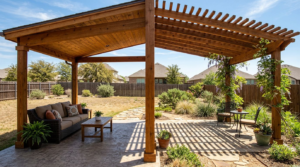
A patio cover permit is usually required when you add a roofed structure, whether it’s attached to your house or freestanding. In many cities, it doesn’t matter if it’s wood, aluminum, or a simple lean-to. If it has a roof and posts, it’s often treated like a small structure that must meet building rules.
In Denton, for example, the city spells out that new patio covers and shade structures require a permit, and they must remain one-story and used for outdoor living (not a storage room or garage). You can confirm current submittal expectations on the City of Denton patio cover permit page.
What surprises homeowners is how broad “permit scope” can be. The permit review may cover:
- Location on the lot (setbacks to property lines and easements)
- How it’s built (post sizing, beams, rafters, connectors, footings)
- How it attaches to the house (ledger connection and water management)
- Electrical (lights, ceiling fans, outlets, and sometimes a separate electrical permit)
- Drainage impacts (where roof runoff goes, and whether it affects neighbors)
Fees and inspections vary by city and county, and they change over time. As of early 2026, Denton commonly requires at least a pier or foundation inspection and a final inspection for patio covers. If you’re outside city limits in unincorporated areas, Denton County may add steps like a development permit before the building permit, plus engineered plans in more cases.
If you’re trying to stay close to “code language” when designing, Appendix H is a helpful reference point. See Texas residential code language for patio covers to understand the common definitions and allowed uses.
Code basics that affect your design (and your budget)
Codes don’t just say “build it strong.” They force decisions that change the look and price of your project.
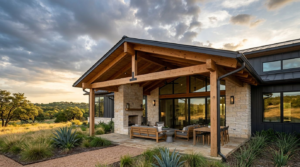
If you choose attached covered patios, the connection detail matters. A weak ledger connection, missing flashing, or poor water handling can create rot at the rim joist over time. That’s why many plan reviewers focus hard on attachment details. They want to see how loads transfer into the existing structure and how you’ll prevent leaks at the wall.
Wind uplift is another quiet cost driver in North Texas. A roof acts like a sail in a storm. That’s why inspectors care about brackets, fasteners, and post bases, even when the cover looks “light.” If you’re installing pergolas or a solid-roof structure, the fastening schedule and hardware choices can become a line item you didn’t expect.
Material choice also changes the paperwork. Many jurisdictions ask for more documentation when you use non-standard systems, or when the structure is large. Even with wood, you may need to show lumber species, grade, and spacing. With cedar patio covers, you’ll want clean drawings that specify member sizes and how the cedar is protected and finished. If you go with metal or vinyl systems, some cities ask for engineering.
Statewide workmanship standards can also influence how reviewers and inspectors interpret details. For additional context, review the Texas Minimum Construction Standards, which helps explain baseline expectations for safe, durable construction.
The practical takeaway: your “dream design” should be checked against setbacks, attachment rules, and an inspection plan before you buy materials.
The paperwork homeowners forget before building
Most permit delays aren’t because the project is risky. They happen because the submittal is incomplete or unclear.
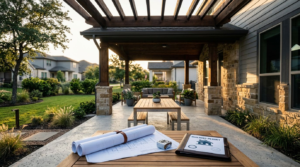
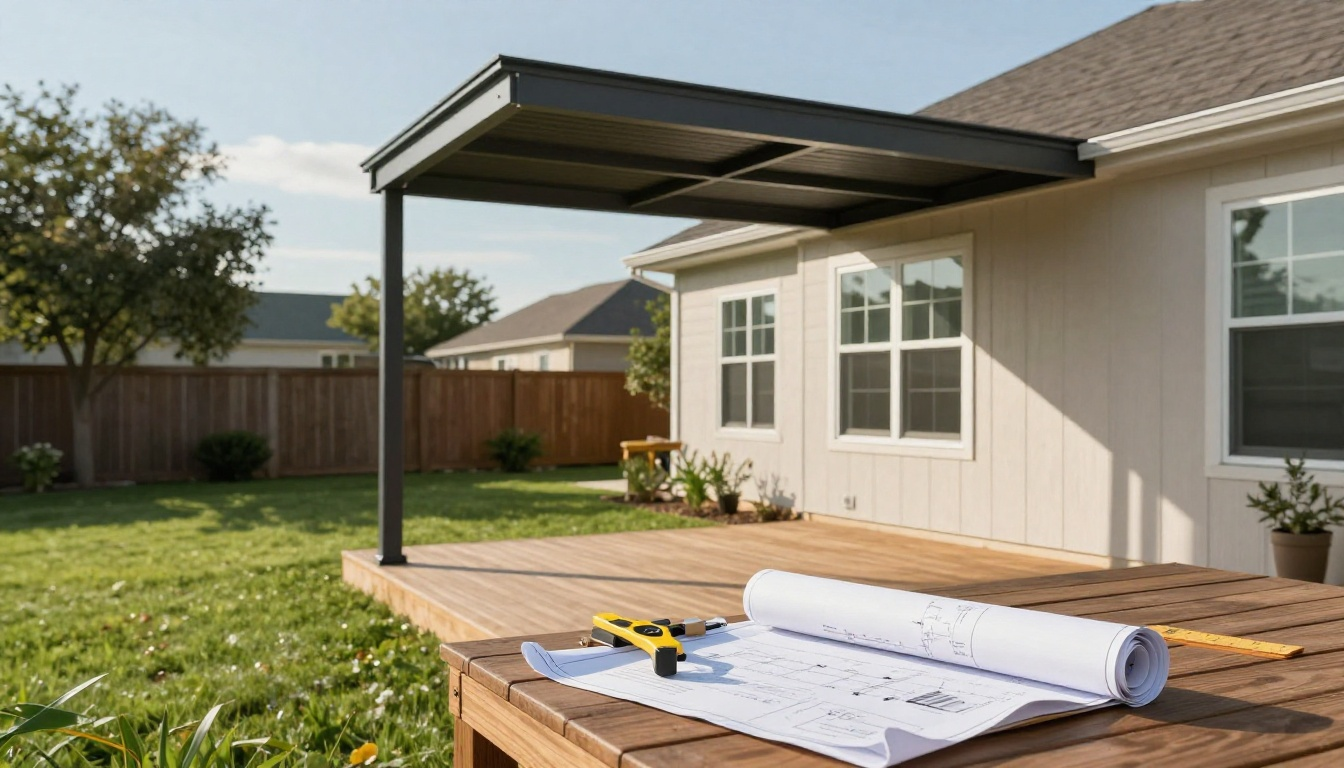
Before you start patio cover installation, make sure you can answer three plan-review questions fast: Where is it going, how is it built, and what utilities are involved? In many areas, you’ll need a site plan showing distances to property lines, an elevation view with height, framing details, and footing information. Add electrical notes if you want lighting, a fan, or outlets.
Here’s a simple set of items you’ll want ready:
- Survey or plot plan showing property lines and easements
- Site plan showing the patio cover footprint and setbacks
- Framing and attachment details (especially if attached to the home)
- Footing or pier plan with sizes and depth assumptions
- Electrical plan if you’re adding power
HOA rules also trip people up. The city may approve your permit, then the HOA flags the roofline, stain color, or placement. Get HOA review in parallel, not after.
This is also where choosing the right patio cover contractor matters. If you’re doing custom patio covers, or planning a patio cover replacement that changes size or roof type, you want a builder who can match the design to the permit packet, not improvise in the yard.
If you’re in patio covers Denton TX, patio covers Argyle TX, or nearby cities, you’re likely dealing with similar approval steps across patio covers North Texas. Argyle, Aubrey, Bartonville, Carrollton, Celina, Copper Canyon, Corinth, Cross Roads, Dallas, Denton, Double Oak, Flower Mound, Frisco, Grapevine, Hackberry, Hebron, Hickory Creek, Highland Village, Justin, Krugerville, Krum, Lake Dallas, Lakewood Village, Lewisville, Little Elm, Northlake, Oak Point, Paloma Creek, Pilot Point, Plano, Ponder, Prosper, Providence Village, Roanoke, Sanger, Savannah, Shady Shores, The Colony, Trophy Club, Westlake.
For local design ideas tied to real-world comfort and shade, see outdoor living solutions in Denton, TX, including options that pair well with permit-friendly layouts.
Quick Q&A homeowners ask before permit submittal
Do you always need a patio cover permit?
If it’s a roofed structure (attached or freestanding), you often do. A simple flat patio surface may not need one, but the moment you add posts and a roof, many cities treat it as a permitted structure.
What’s the most common reason permits get delayed?
Missing site plans with setbacks, vague framing details, and no attachment or footing information. If electrical is included, incomplete electrical notes are another common issue.
Will a pergola need the same permit as a solid patio cover?
Sometimes yes. Even an open-lattice pergola can be treated as a structure, especially when it’s large or attached to the house.
What inspections should you plan for?
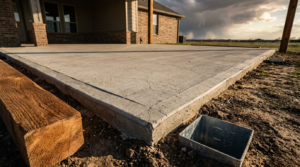
Common checkpoints include a pier or foundation inspection (before concrete is covered) and a final inspection. Larger builds can trigger additional inspections.
Conclusion: Build your cover once, not twice
A patio cover permit is less stressful when you treat it like part of the build, not a surprise at the end. If you plan for setbacks, attachment details, footings, and electrical early, you protect your budget and your schedule. When you’re ready to talk through JBN Patio Covers options for outdoor living, covered patios, pergolas, and custom patio covers, call 469-340-0839 and get the permit questions answered before lumber gets delivered.