Cedar Patio Covers North Texas
If your patio feels like a frying pan by mid-afternoon, you’re not alone. North Texas sun can turn a great backyard into an underused outdoor living space, a spot you avoid even when you want to relax outside.
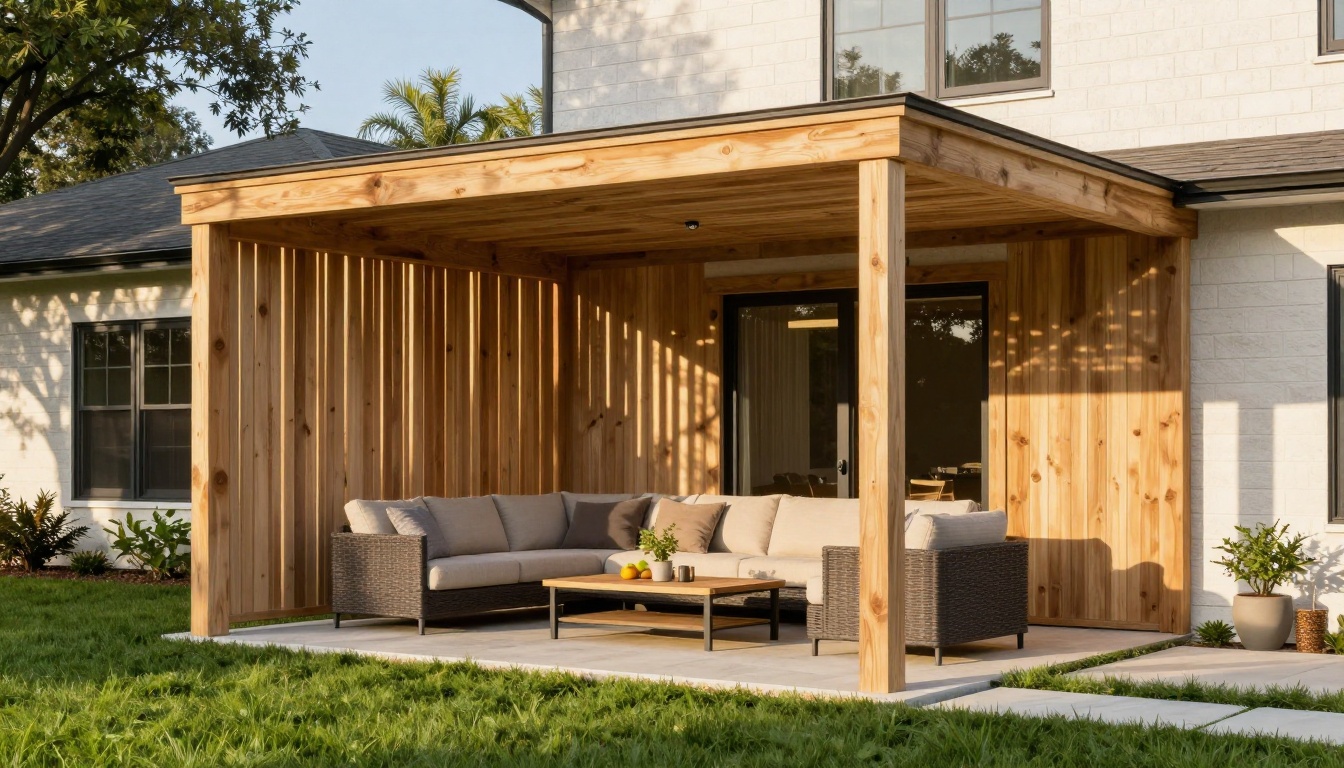
Cedar patio covers solve that problem in a way that looks warm and intentional, not like an add-on. You get real shade, better comfort, and a structure that can match your home instead of fighting it.
Why cedar patio covers work so well in North Texas
Western Red Cedar is popular for patio covers because it’s naturally suited for outdoor use. It holds up well in heat, handles humidity better than many woods, and it has a look that feels right in a backyard. When you step under cedar shade, the temperature drop feels immediate, like moving from direct sun to the cool side of a porch.
You’re also buying more than shade. Compared to Douglas Fir, another material option commonly used in North Texas construction, cedar brings a mix of performance and style:
- Natural resistance to rot and insects: Cedar contains oils that help it resist decay and create a long lasting structure. That matters when spring storms and summer heat keep materials under stress.
- Dimensional stability: No wood is immune to movement, but quality cedar tends to warp and twist less than cheaper lumber when it’s properly built and sealed.
- A finish that ages gracefully: Left unsealed, cedar will weather to a silver-gray due to exposure to UV rays. Stained and sealed, it keeps a richer tone longer. Either way, it doesn’t look “plastic,” which is why many homeowners prefer it over some manufactured options.
- Comfort you can feel: A solid roof system creates true shade, which is different from filtered shade.
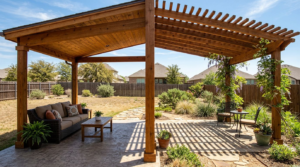
If you’re comparing covered patios vs pergolas, think of it like sunscreen vs an umbrella. A pergola offers partial relief and a bright open feel, while a full cover blocks more sun and protects you better from rain. If you want inspiration on how cedar structures can shape a backyard, see this overview of cedar pergolas in Texas.
Designing custom patio covers that look “built-in,” not bolted on
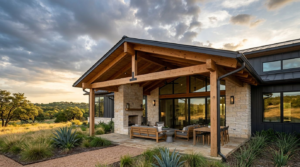
The best Patio Cover Designs don’t just sit on your house, they look like they belong there. That starts with Custom Designs that match roof lines, trim details, and how you actually use the space.
When you plan custom patio covers, focus on a few practical choices first:
Roof style and water control: A solid cover should move water away from where you walk and sit. This may include gutters, downspouts, and a pitch that makes sense for your yard. Poor drainage is one of the fastest ways to create long-term maintenance problems.
Post placement and headroom: Posts should feel intentional, not like they’re in the way of traffic. Consider Posts Size Options and Beam Size Options with Exposed Beams and Timber Framing for proportional strength and style. You want open paths from the back door to seating and grilling zones. Headroom matters too, especially if you plan ceiling fans or a Tongue and Groove Ceiling.
Lighting and power: Even a simple cover feels more useful when you can add Recessed Lighting, fans, or a TV. Plan it early so wiring is clean and safe.
Pairing with pergolas: Some yards do better with a mix, such as a solid roof near the home and a pergola extension for a garden-side seating area. If you’re considering that route, you can compare options on custom pergolas Denton TX.
The goal is simple: create shade where you need it, keep the structure proportional, and make it feel like a real part of your home.
Maintenance basics that keep cedar looking sharp
Cedar is not “no maintenance,” but it’s also not high-drama when you stay ahead of it. Most upkeep for your backyard comes down to keeping moisture and UV damage from taking over.
Here’s what usually matters most:
Clean it once or twice a year: Pollen, dust, and mildew can build up, especially after wet stretches. A gentle wash helps keep the surface from looking tired.
Stained and sealed on a schedule: Many homeowners reapply a natural cedar stain every 2 to 4 years, depending on sun exposure and the product used. If one side of your cover bakes all day, it will need attention sooner than a shaded side.
Inspect after storms: Check fasteners, look for small splits, and confirm water is flowing where it should. Tiny issues are easy fixes when you catch them early.
If you’re still deciding between a solid cover and other options, it helps to see what contractors mean by “covered patios” and how they’re built for comfort. This guide on custom covered patios in North Texas gives a clear picture of common features homeowners ask for.
Patio cover installation and patio cover replacement: what to expect
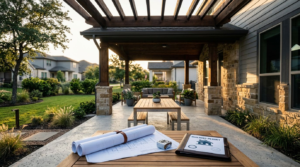
A good patio cover installation should feel organized, not chaotic. You want clear measurements, a design that fits your home, and a plan that respects wind, rain, and local requirements.
A typical process looks like this:
- Site measure and layout based on sun angles and how you use the patio.
- Design approval (size, roof type such as R-Panel, Standing Seam, Shingles, or Polycarbonate Top; attachment method like Skylift Attached, Framing Attached, or Free Standing; post locations, finishes, add-ons).
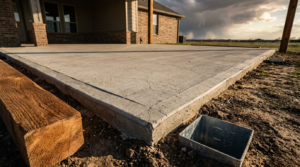
- Build and installation with proper anchoring and water management.
- Finish work, sealing or staining, and a final walkthrough.
If you already have a structure, patio cover replacement is often the smarter move when the frame is sagging, posts are rotting at the base, or water is draining back toward the home. Replacement also makes sense when the old cover was sized wrong, such as too shallow to shade seating, or too low to allow fans and airflow.
Choosing a patio cover contractor is less about the cheapest bid and more about confidence. Ask how they handle anchoring, water runoff, and material grade. If you want a local example of how cedar patio covers support real outdoor comfort with professional installation, start with outdoor living solutions in Denton.
For pricing and scheduling, you can call JBN Patio Covers at 469-340-0839 and talk through what fits your home.
Where you can get cedar patio covers built locally (without the cookie-cutter look)
You shouldn’t have to settle for one-size-fits-all patio covers. Local climate, HOA rules, and home styles (from modern style to traditional architecture) vary across the region, and your design should reflect that.
Whether you’re researching patio covers Denton TX, patio covers Argyle TX, or even searching the oddly specific phrase patio covers North Texas. Argyle, you’ll see the same needs come up: strong shade, storm-ready construction, and a refined look that fits brick and stone homes.
Demand for custom designs, including outdoor pavilions, spans across Argyle, Aubrey, Bartonville, Carrollton, Celina, Copper Canyon, Corinth, Cross Roads, Dallas, Denton, Double Oak, Flower Mound, Frisco, Grapevine, Hackberry, Hebron, Hickory Creek, Highland Village, Justin, Krugerville, Krum, Lake Dallas, Lakewood Village, Lewisville, Little Elm, Northlake, Oak Point, Paloma Creek, Pilot Point, Plano, Ponder, Prosper, Providence Village, Roanoke, Sanger, Savannah, Shady Shores, The Colony, Trophy Club, Westlake.
PAA style Q&A: cedar patio covers
How long do cedar patio covers last?
With quality Western Red Cedar lumber, correct drainage, and basic sealing, cedar patio covers commonly last for decades. Neglect and trapped moisture shorten life faster than sun exposure.
Do cedar patio covers need to be sealed?
Sealing isn’t required, but it’s recommended if you want to slow graying and reduce surface checking. If you like the silver look, you can leave it natural and focus on cleaning.
What’s the difference between patio covers and pergolas?
Patio covers often use concealed interior framing for a solid roof that delivers full shade and better rain protection. Pergolas feature an exposed rafter design with slats for partial shade and a brighter feel, which many homeowners pair with vines or shade fabric.
Can you add lights or a fan to a cedar cover?
Yes, as long as the structure is designed for it and wiring is installed safely. Plan electrical early so it’s clean and code-ready.
When should you replace an older patio cover?
Replace it when posts show rot, the roofline sags, fasteners pull loose, or water runs toward the house. If repairs keep stacking up, replacement is usually the better long-term choice.
Conclusion
Your outdoor space shouldn’t be seasonal. Cedar patio covers give you shade that feels natural, looks high-end, and create an outdoor living space amid North Texas heat. When you choose the right design and keep up with simple maintenance, your covered space gains a refined look and becomes the spot you use most, not just the spot you walk past. If you’re ready to plan a build or a replacement, call 469-340-0839 and get clear answers for your backyard.