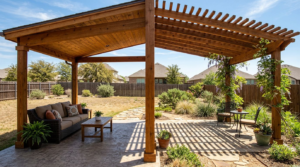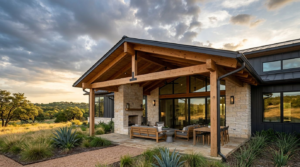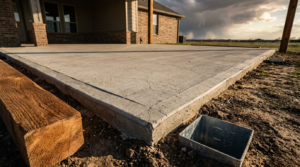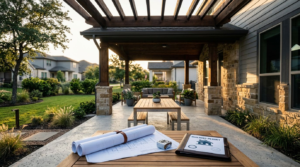
If you’re investing in a cedar patio cover, the hardware isn’t a tiny detail, it’s the part that quietly decides how the structure ages. Cedar can look better every year. The wrong fasteners can do the opposite.
Here’s the bottom line: stainless steel usually wins on long-term corrosion resistance and clean looks, while hot-dip galvanized often wins on value and solid performance in typical North Texas conditions. Your best choice depends on where the cover sits, how wet it stays, and what metals touch each other.
If you’re planning a custom build in Denton or nearby cities, this guide will help you choose cedar patio cover hardware that holds up to heat, wind, and hard rain.
What “patio cover hardware” really includes (and why cedar makes it tricky)
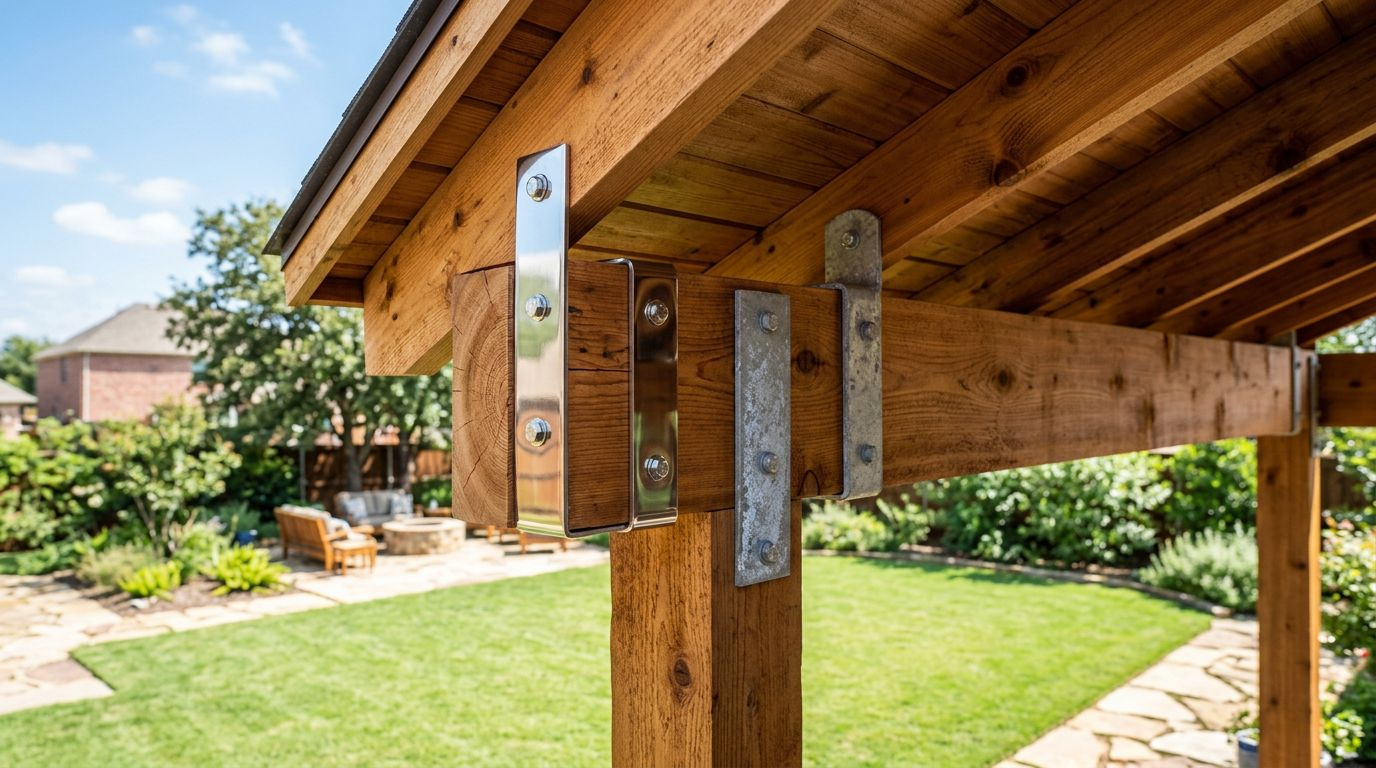
When people say “hardware,” they often picture a few screws. In a cedar patio cover, hardware is the skeleton’s connective tissue. It includes post bases, anchors into concrete, structural screws or lag bolts, angle brackets, hangers, straps, washers, and sometimes concealed connectors.
Cedar adds a twist because it’s used where you can see it. That means the hardware choice affects both structure and appearance. A shiny bolt head might look sharp on stained cedar, while a dull coating might blend in better on a rustic finish. Either way, you want the metal to resist corrosion because rust streaks on cedar are hard to ignore.
You also want predictable strength at key connections, such as the post-to-footing and beam-to-post joints. If you’re browsing design options for a build, start with custom cedar patio covers so you can picture where those critical connections typically land.
A cedar patio cover can fail slowly. Hardware corrosion often shows up as stains and swelling long before anything looks “unsafe.”
Stainless steel hardware for cedar patio covers: where it shines
Stainless steel is the “pay once, regret less” option in many outdoor builds. It resists rust because the alloy forms a protective surface layer, even after scratches. As a result, stainless is a strong fit when your patio cover gets frequent wetting, sprinklers hit the posts, or you want hardware that stays clean-looking against stained cedar.
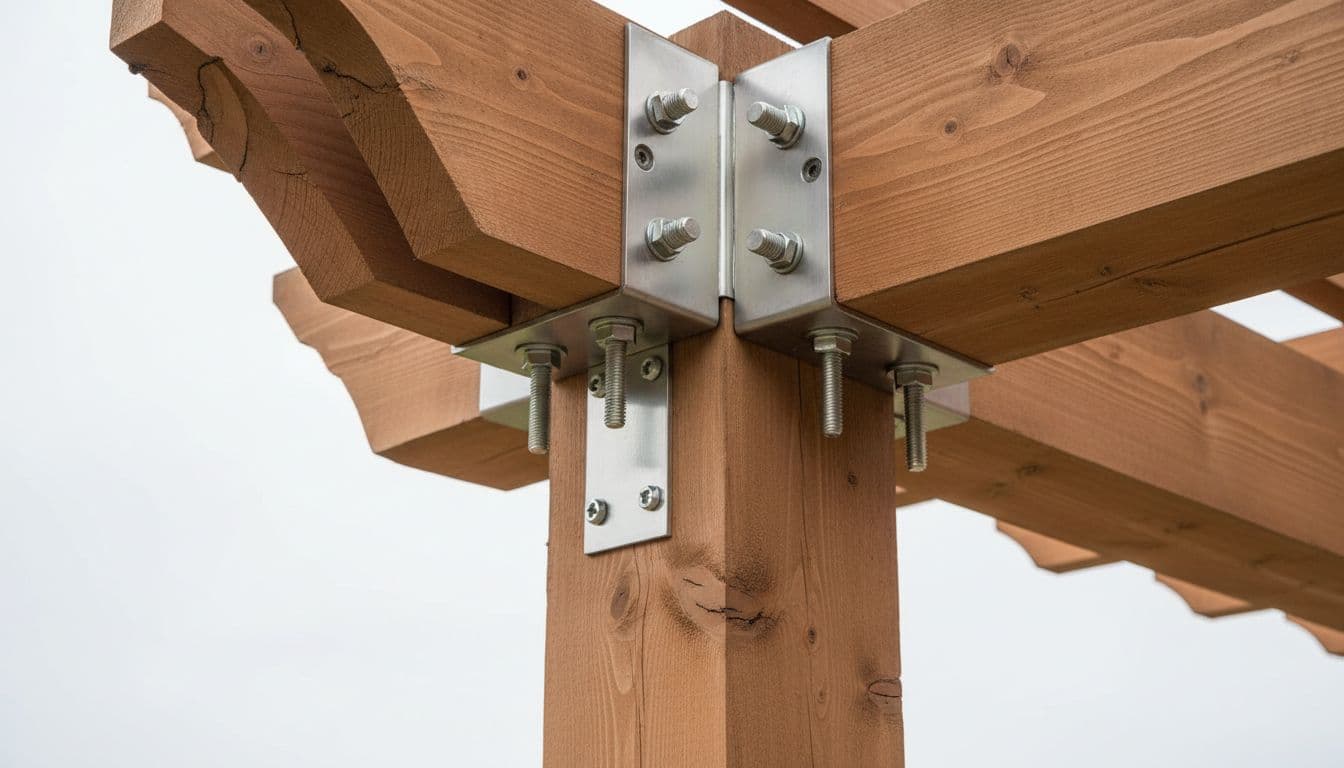
Stainless also helps when you care about the finish details. On higher-end cedar builds, exposed connectors and fastener heads are part of the look. If you’ve ever seen a beautiful cedar cover “freckled” with rusty screw heads, you already understand the appeal.
That said, stainless is not one simple product. You’ll see different grades, and pricing can jump fast. In North Texas, you’re not dealing with coastal salt air, but you still face heavy downpours, humidity swings, and pool chemicals in some yards. For a plain-language breakdown of tradeoffs, see galvanized steel vs stainless steel differences.
When stainless is usually worth it
- Your hardware will be exposed and visible.
- Water sits or drips at connections (think valleys, gutters, or beam ends).
- The cover is near a pool or frequent irrigation spray.
- You want the lowest maintenance and the least risk of staining.
Hot-dip galvanized hardware: the practical workhorse for North Texas
Hot-dip galvanized hardware is carbon steel coated in zinc. Think of it like a raincoat that takes the abuse first. Over time, the zinc layer wears instead of the steel rusting right away. That’s why hot-dip galvanized is common in outdoor framing, including patio covers, pergolas, and deck structures.
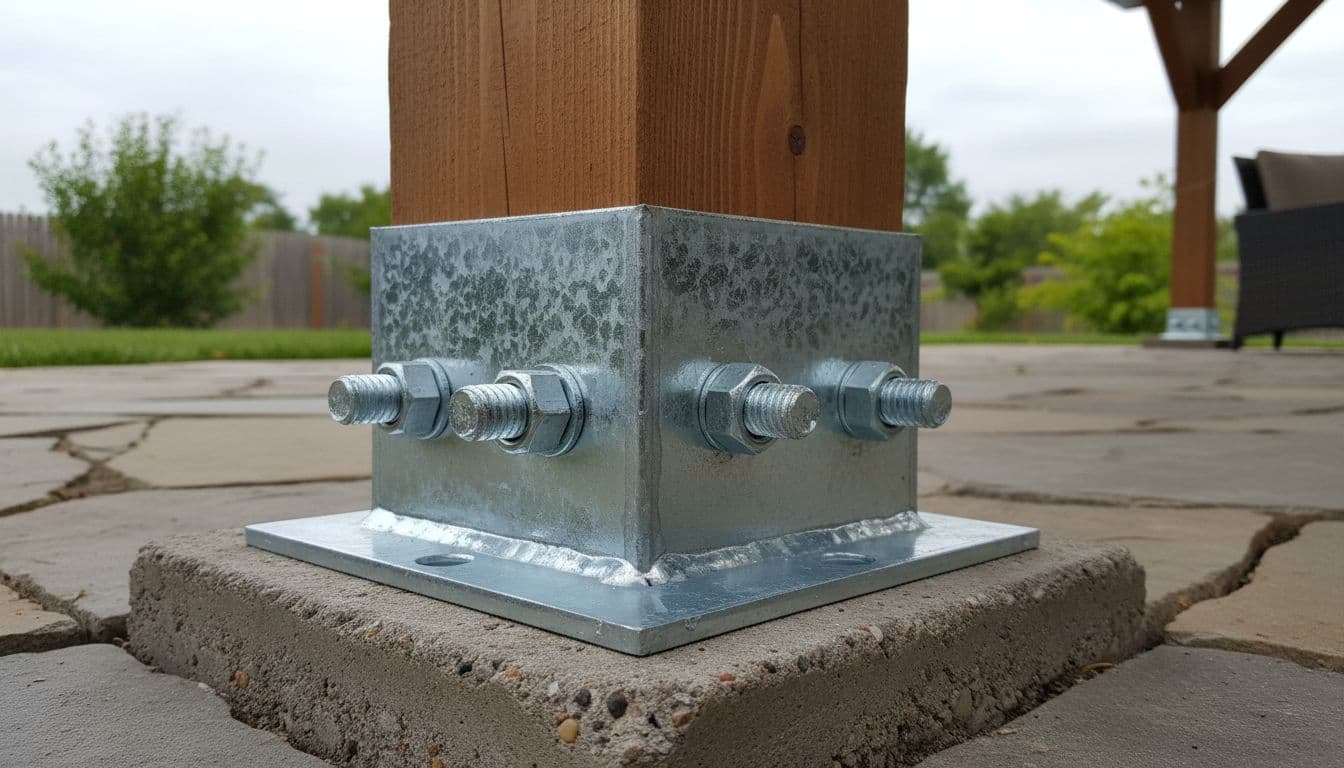
In Denton, Carrollton, and other inland DFW areas, hot-dip galvanized hardware often performs well when the build drains correctly and connections can dry out. It’s also widely available in structural-rated brackets and post bases, which matters because you don’t want to “mix and match” strength ratings just to chase a certain finish.
Where galvanized gets a bad reputation is usually from the wrong product choice, like thinner coatings or indoor-rated parts used outside. If you want a field-focused explanation of what fails and why, this overview of galvanized screws vs stainless for outdoor wood lays out common real-world problems.
When hot-dip galvanized is a smart pick
- Your connectors are mostly hidden by trim or beam layout.
- The patio cover stays fairly dry between storms.
- You want strong performance without paying stainless prices everywhere.
Stainless vs hot-dip galvanized: a quick comparison you can use
Use this table to match the material to your site conditions and expectations.
| Factor | Stainless steel | Hot-dip galvanized |
|---|---|---|
| Corrosion resistance | Excellent in persistent wet areas | Very good in most outdoor conditions |
| Best use cases | Exposed fasteners, wet zones, pools | General framing, common brackets, cost control |
| Appearance over time | Stays clean-looking | Can dull, may show wear at edges over years |
| Cost | Higher | Lower |
| Availability in structural connectors | Good, but not always as broad | Very broad and easy to source |
The takeaway: in many cedar patio covers, a blended approach works well, stainless where water and visibility matter most, galvanized where connectors are protected.
Choosing the best hardware for Texas weather (Denton, Carrollton, Double Oak, and beyond)
North Texas weather tests outdoor structures in a different way than colder regions. You get long UV seasons, fast temperature swings, spring hail, and sudden wind-driven rain. Because of that, the “best” cedar patio cover hardware is the hardware that still performs after years of soak-and-dry cycles.
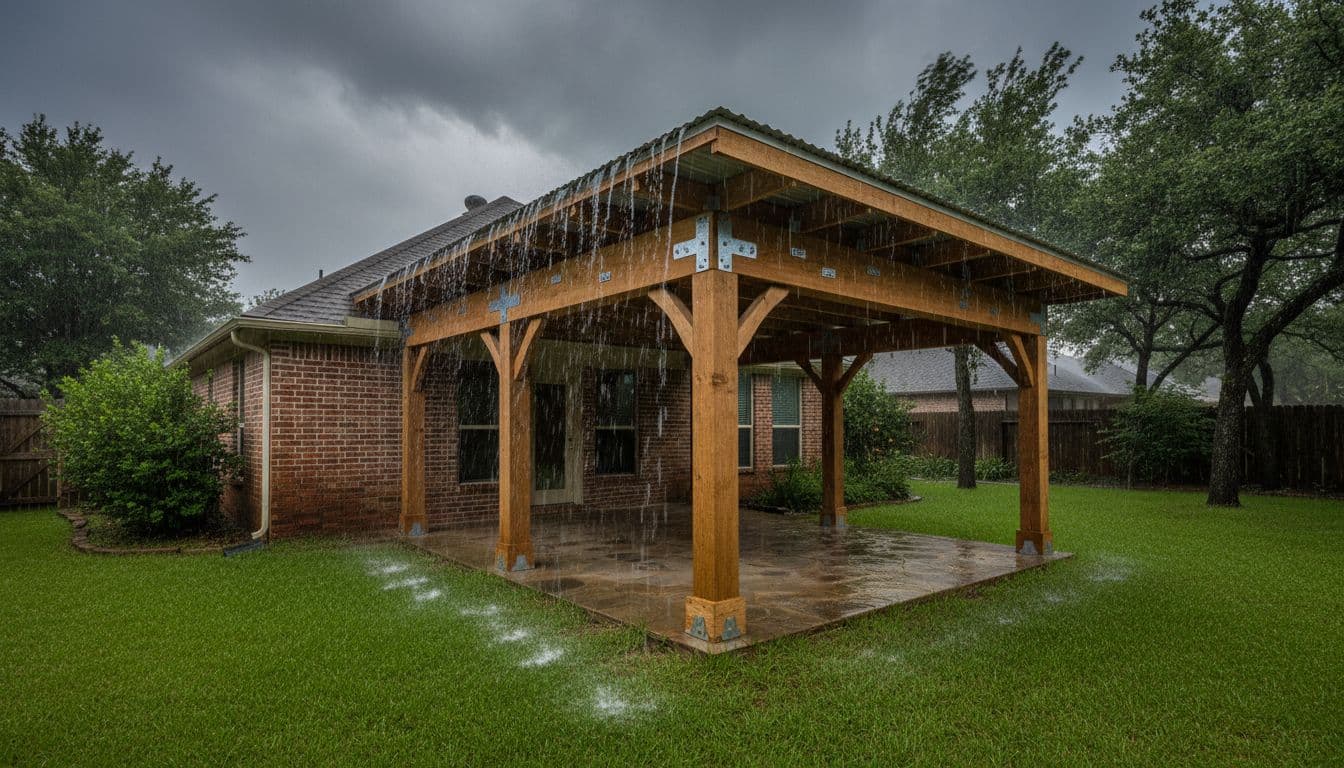
Start by looking at how the roof handles water. A steeper pitch and clean drip edges help connections dry faster. Next, consider how your patio cover fits the house. Attached builds need extra attention at ledger areas, flashing, and any hardware that sits near runoff.
If you’re planning a common footprint, a size guide like the 16×20 cedar patio cover can help you think through post locations and where the “wet spots” will be. For a city-specific look at design and build standards, you can also reference cedar patio covers in Carrollton TX.
Compatibility traps: mixing metals, wrong fasteners, and hidden corrosion
Most hardware regrets come from mismatched parts. The connection might feel tight on day one, then quietly degrade.
Watch for these common issues:
- Mixing metals in wet areas: Some metal combinations can speed up corrosion when moisture is present. Keep fasteners and connectors in the same family when you can.
- Using “general purpose” screws: Standard wood screws often don’t have the shear strength or coating needed for structural cedar framing.
- Ignoring water paths: The best metal won’t save a connection that stays soaked. Drainage and drying time matter.
- Choosing looks over rating: A connector needs the right structural rating for the load, not just the finish you prefer.
If you want a deeper, high-level explanation of how environments affect material choice, this guide on galvanized vs stainless for long-term projects frames the decision well.
Q&A: cedar patio cover hardware (PAA-friendly)
Should you use stainless steel screws in cedar?
Yes, stainless screws are a safe choice for cedar when corrosion resistance matters. They’re especially helpful for exposed fasteners, wet zones, and areas hit by sprinklers. If budget is tight, prioritize stainless at the most visible or frequently wet connections.
Is hot-dip galvanized hardware good enough for a patio cover in Texas?
Often, yes. In inland North Texas, hot-dip galvanized connectors and fasteners can perform very well when the design sheds water and the parts can dry out. The key is choosing true hot-dip galvanized hardware and avoiding indoor-rated substitutes.
Can you mix stainless fasteners with galvanized brackets?
You can, but it’s better to avoid mixing when the joint stays wet. If you must mix, keep the assembly dry and follow manufacturer guidance for the exact connector and fastener combination. Consistency reduces surprises later.
What hardware parts matter most on a cedar patio cover?
Post bases, beam-to-post connectors, ledger attachment hardware (for attached covers), and concrete anchors matter the most. Those are the points that carry loads and see the most moisture exposure.
Conclusion: buy hardware like you’re buying time
The right cedar patio cover hardware gives you years of quiet reliability. Stainless usually makes sense where water and visibility are constant, while hot-dip galvanized is a strong value in protected framing zones. If you want a local plan that fits your home and North Texas weather, call 469-340-0839 to schedule a consultation and get a clear hardware spec with your design.