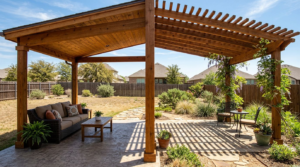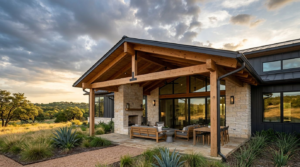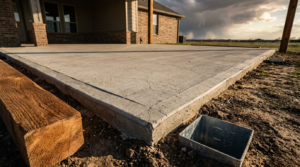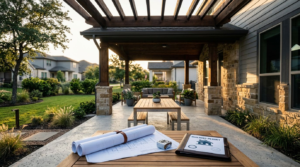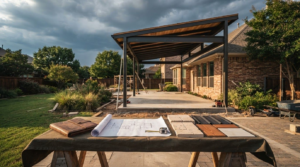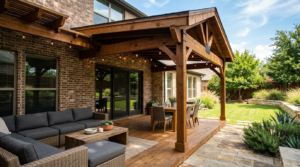
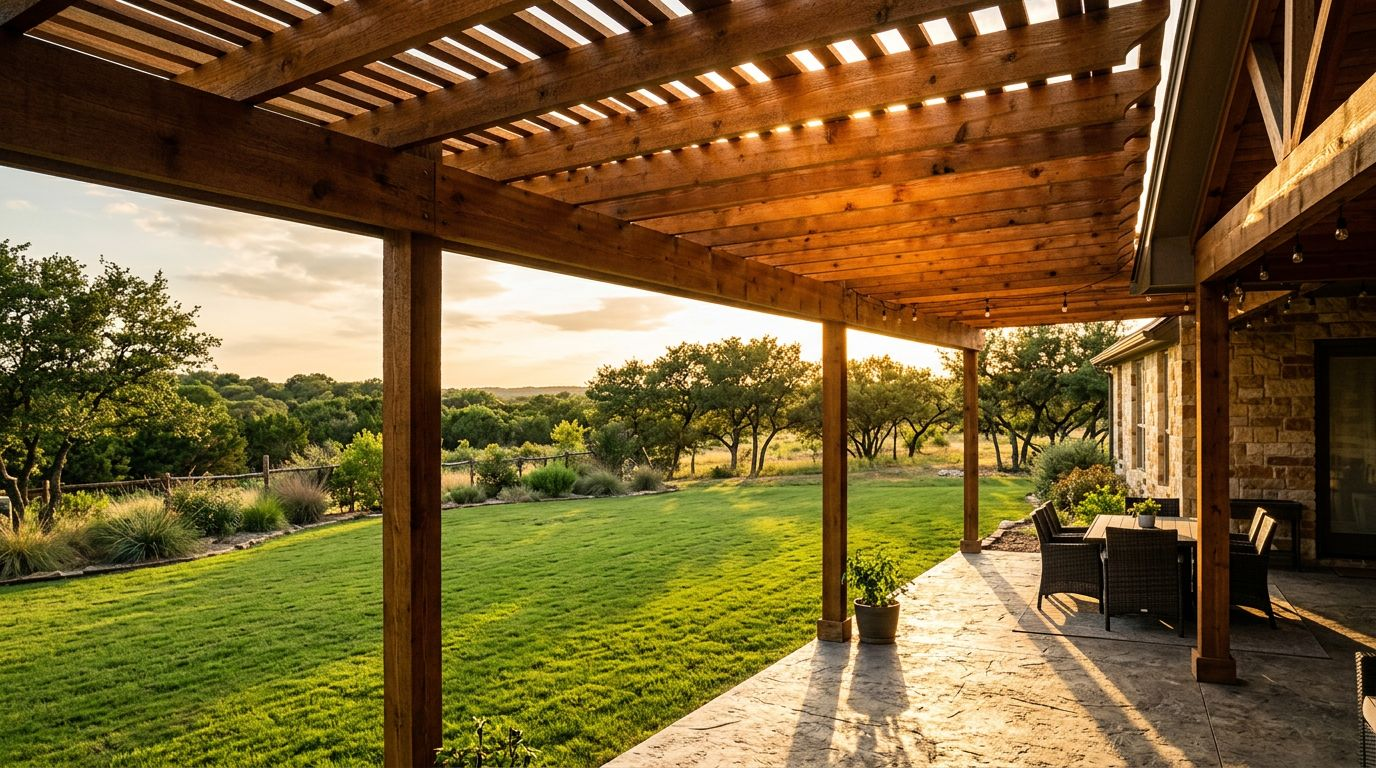
A bare patio can feel like wasted square footage, especially in North Texas heat. If you’re searching for custom cedar patio covers near you, you likely want more than shade, you want a backyard that works every day.
The right cover gives you comfort, weather protection, and a design that looks right with your home. If you’re ready to start planning, you can Get Your Free Patio Cover Quote and compare options with a local builder who knows the area.
Why cedar works so well for North Texas patios
North Texas weather is hard on outdoor structures. You deal with strong sun, sudden rain, wind, and long hot stretches that can make an open slab almost useless by mid-afternoon.
That’s why local homeowners often look for custom patio covers instead of off-the-shelf kits. A custom build can match your roofline, fit your slab, and create real shade where you need it most. As a result, your patio starts to feel like part of the house instead of leftover space behind it.
Cedar stands out for good reason. It has a warm, natural look, and it resists moisture and insects better than many other wood choices. That matters when you want wood patio covers that last and still look good after seasons of sun and storms.
A cedar structure also gives you design freedom. You can choose an attached roof for daily use, a freestanding cover for a pool or garden area, or a layout that leaves room for fans, lights, and a grill zone. In other words, you’re not limited to a generic rectangle.
For many homeowners, the goal isn’t only shade. You want outdoor living spaces that feel inviting on a weeknight, during a family cookout, or while you watch a summer storm roll in from under cover. Covered patios do that better than open patios because they make your yard more usable in real weather.
The same search intent shows up across the area. Homeowners comparing Denton TX patio covers, Corinth TX patio covers, Argyle TX patio covers, Flower Mound TX patio covers, and Highland Village TX patio covers usually want the same thing: a structure that looks right, blocks harsh sun, and holds up over time. The best North Texas patio covers do all three.
Good backyard shade solutions don’t look bolted on as an afterthought. They look like they belonged there from the start.
What good patio cover installation looks like
Patio cover installation starts long before the first post goes in. First, you need a layout that fits how you live outside.
If you eat dinner on the patio, the roof should cover the table without crowding the walkway. If you grill often, smoke flow and clearance matter. Meanwhile, if you want a fan or recessed lights, the framing needs to account for wiring and headroom from day one.
A strong design also respects the house. Roof pitch, beam size, post spacing, and trim details should work with the home’s lines, not fight them. When a patio cover builder gets those details right, the result feels clean and permanent.
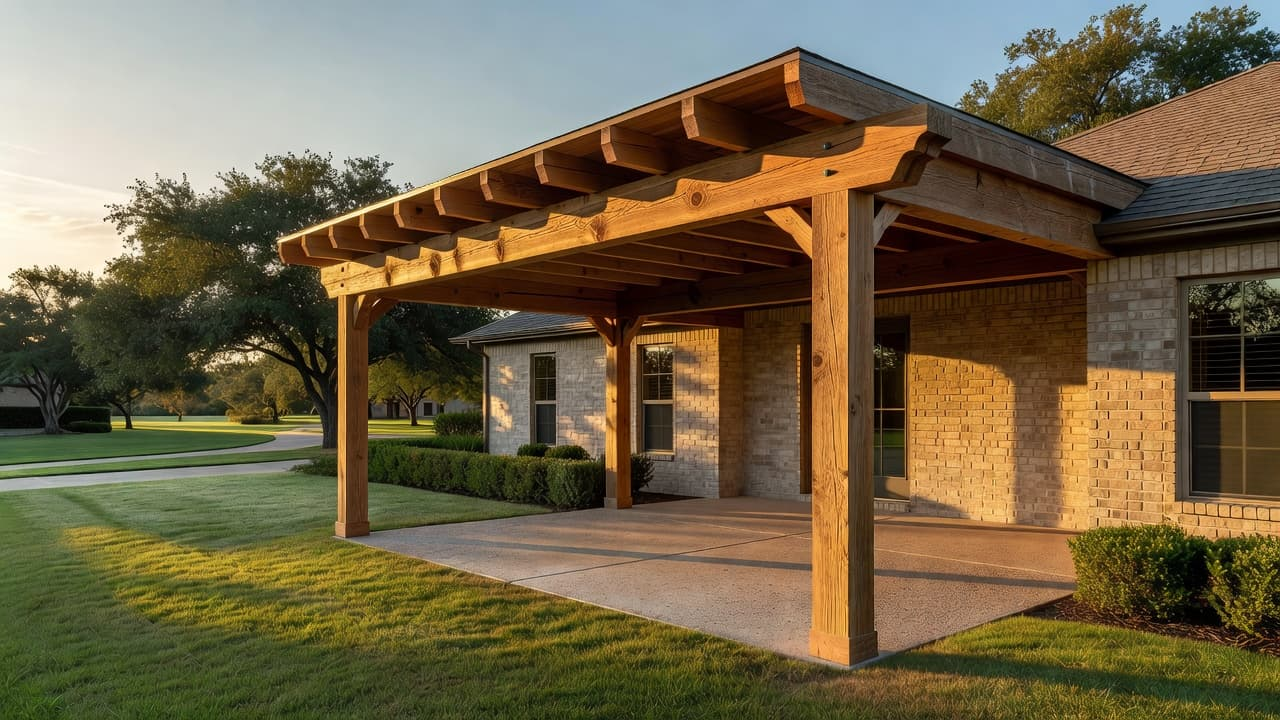
Drainage matters too. Water has to move away from the roof and away from the patio edge, especially during heavy rain. Because of that, an experienced patio cover company should talk with you about slope, tie-in points, and how the cover affects runoff near the house.
Material choices shape the final feel. A solid cedar roof creates dependable shade and better rain cover. An open-roof design changes the look and light level, but it won’t protect you the same way in a storm. If you want to see what a local build can look like, take a look at these custom cedar patio covers.
Details finish the job. Stain color, ceiling style, post wraps, fans, lighting, and trim all change how the space feels once the sawdust is gone. A good patio cover builder should walk you through those choices in plain language, not bury them in vague allowances.
That planning stage is where quality shows up. A rushed build might still look fine on day one, but weak planning tends to show later through awkward drainage, dark corners, poor airflow, or a roofline that never looked quite right.
Cedar vs aluminum, insulated roofs, and pergolas
Cedar isn’t your only option, but it often gives you the best mix of appearance and flexibility. Among wood patio covers, cedar is the material many homeowners prefer because it feels substantial and can be shaped to fit the house instead of forcing the house to fit the product.
Still, it’s smart to compare it with other common choices before you decide.

Photo by Curtis Adams
This quick comparison helps you sort the tradeoffs.
| Option | Best for | Main tradeoff | | | | | | Cedar patio covers | Custom design, natural warmth, strong home match | Need periodic care like stain or finish upkeep | | Aluminum patio covers | Lower maintenance and simpler profiles | Can feel less tailored to the house | | Insulated patio covers | Heat control and a more finished roof system | Different look than natural wood | | Pergolas | Filtered light and an open feel | Limited rain protection and less full shade |
Aluminum patio covers can make sense if low maintenance is your top concern. However, many homeowners want a structure with more character, especially on brick or stone homes where wood looks more natural.
Insulated patio covers are another option if heat reduction ranks high on your list. They can help create a cooler space below and often suit homeowners who want a cleaner ceiling finish. Even so, they don’t deliver the same visual warmth as cedar.
Pergolas sit in a different category. They add style and some relief from the sun, but they aren’t full weather covers. If you’re deciding between an open-top feature and a solid roof, this guide on patio cover or pergola for Texas weather can help you sort the difference.
If you want dependable shade and rain cover, a solid roof will usually serve you better than an open pergola.
For many homes, cedar lands in the sweet spot. You get the look of real wood, the freedom of a custom layout, and a roof that can turn a patio into one of the most useful parts of your property.
How to choose patio contractors near you without guessing
A near-me search can pull up a long list of patio contractors, but not all of them build the same way. Some focus on quick installs. Others treat the project like a permanent addition to your home. You want the second type.
Start with local experience. A patio cover company that works in Denton, Corinth, Argyle, Flower Mound, Highland Village, Lewisville, and nearby cities should understand local weather, common house styles, and the practical issues that come with outdoor construction in this part of Texas.
Then pay attention to how they answer questions. Clear answers usually point to a clear process.
A few questions can tell you a lot:
- Ask how they attach the cover to the home and manage water runoff.
- Request examples of completed projects that match your house style.
- Confirm what’s included in the quote, such as finish work, lighting prep, and cleanup.
- Find out who handles the build and who your point of contact will be.
A reliable patio cover builder should also talk through timeline, access to the yard, and what happens if the existing slab or layout needs adjustments. That doesn’t mean the process has to feel complicated. It means the builder has thought past the pretty picture.
If a contractor only talks about price, slow the conversation down. Low bids can leave out structural details, finish items, or design work that you’ll notice later.
If a builder can’t explain framing, drainage, and attachment in plain language, keep looking.
You’ll also want to look at consistency. Do their projects share clean lines, balanced proportions, and a finish that looks intentional? That’s often a better sign than flashy sales talk.
When you’re ready to talk through your own project, Call JBN Patio Covers Today. A direct conversation can tell you quickly whether the builder listens, asks smart questions, and understands what you want from the space.
Final thoughts
When you search for a cedar patio cover near you, the real goal isn’t only to find someone close by. You want a builder who understands your home, your weather, and the way you plan to use the space.
The best result comes from local fit, solid planning, and a design that feels built for your backyard. When those pieces come together, your patio stops being a hot slab behind the house and starts becoming one of the best-used spots on your property.