North Texas sun can turn a patio into space you avoid by noon. The right cover gives you shade, shelter, and more useful time outside.
When you hire a skilled custom patio cover builder, you aren’t buying a roof alone. You want structure, drainage, and a design that looks like it belonged there from the start. If you’re ready to price options, Get Your Free Patio Cover Quote.
The difference between a good project and an expensive headache often comes down to the builder behind it.
What a good patio cover builder notices first
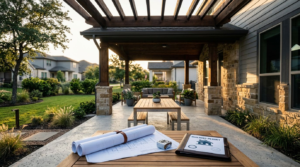
A good Patio Cover Builder starts with your house, not a catalog. You want someone who studies the sun path, slab depth, roofline, drainage path, and how you move through the yard.
That first walk matters because your goals shape the design. A dining area needs different shade than a grill pad or poolside lounge. Custom Patio Covers work best when they answer daily habits, not just photo inspiration.
The best Patio Contractors also think past the visible trim. They ask about fan wiring, lights, gutters, post spacing, and how the cover will tie into the home. If a Patio Cover Company can’t explain structure in plain language, keep looking.
Good Backyard Shade Solutions should also fit the house. Beam size, ceiling finish, pitch, and trim depth all affect whether the cover looks original or added later. In larger Outdoor Living Spaces, the builder may need to plan for an outdoor kitchen, TV wall, or a second seating zone.
You should also hear a real discussion about layout. Attached covers give you easy access from the kitchen or family room. Freestanding designs can protect a pool deck or open up better views across the yard. Covered Patios on narrow lots need different post locations than wide-open backyards.
A thoughtful builder will also ask when the patio gets its worst sun. West-facing slabs need different coverage than a morning patio on the east side of the house. That simple question affects depth, orientation, and where shade lands at the hours you actually use it.
Pay attention to how the builder handles trade-offs. If every answer sounds like the same structure with different stain colors, you are not getting real design help. You can see how local projects solve those details in this guide to custom cedar patio cover design. Across the region, homeowners keep expanding their yards because why patio covers matter in DFW often comes down to comfort and daily use.
Choose the cover style that matches your yard
No single cover works for every yard. Some homeowners need full rain cover for dining, smokers, and outdoor TVs. Others want filtered light and a lighter frame that keeps the sky open.
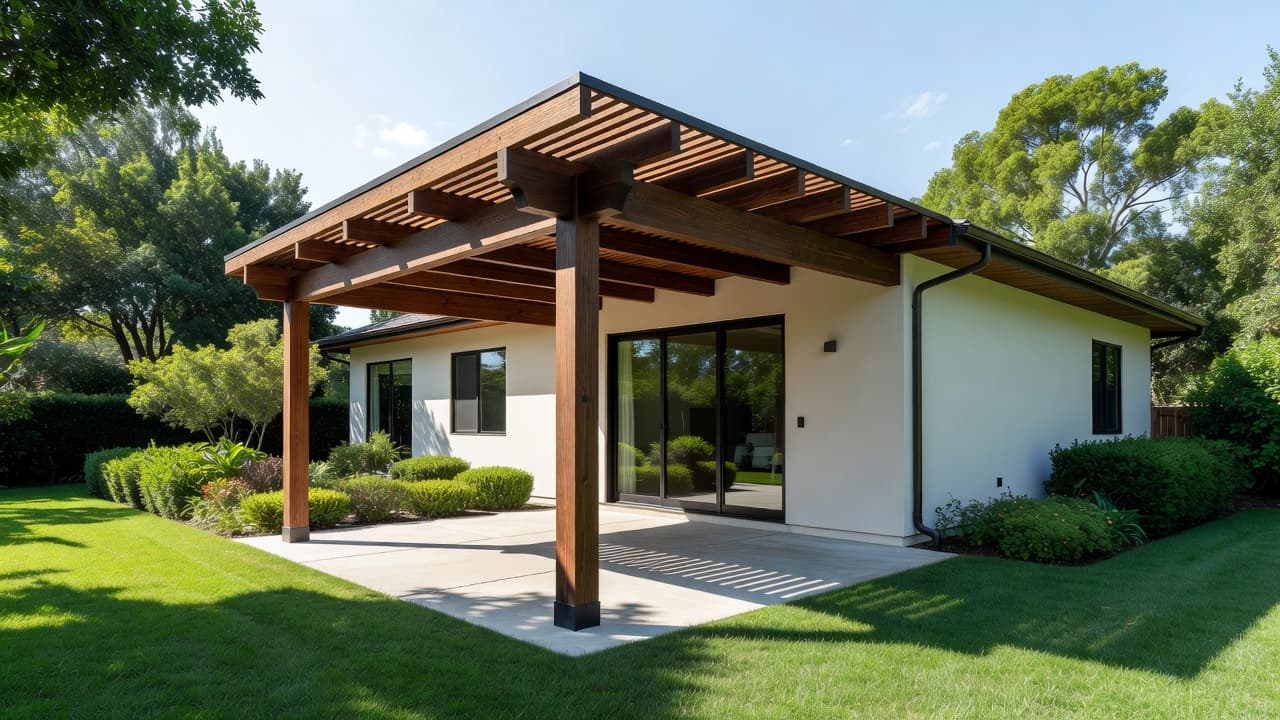
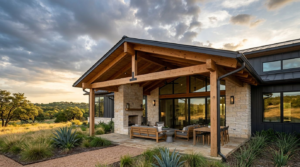
Wood Patio Covers bring warmth and can be sized to fit almost any roofline. Aluminum Patio Covers appeal if you want low upkeep and a more uniform finish. Insulated Patio Covers add a finished ceiling and can help cut radiant heat when the slab gets hot by mid-afternoon.
Material choice also changes sound, upkeep, and feel. Rain on metal can sound sharper. Wood can age beautifully when you keep up with stain or sealant. Insulated panels usually look cleaner from below, which matters when you see the ceiling from inside the house.
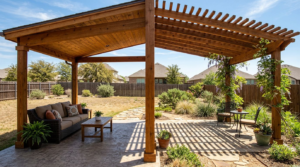
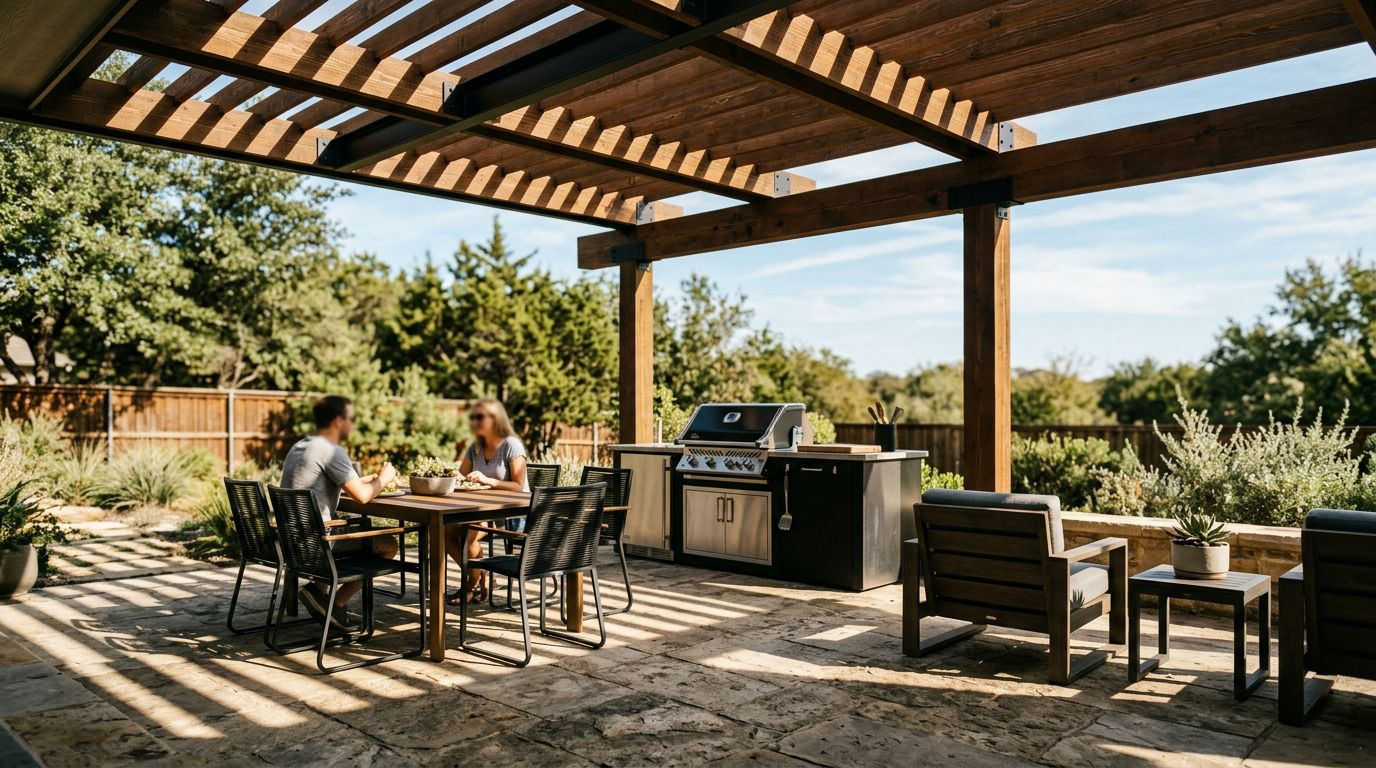
Pergolas fit a different goal. They define space and soften the yard, but they don’t shelter you like solid-roof Covered Patios. If your main aim is relaxed shade and a garden feel, they can be perfect.

Photo by Max Vakhtbovych
This quick comparison makes the trade-offs easier to see.
| Option | Good fit | Keep in mind |
|---|---|---|
| Wood Patio Covers | Homes that need warmth, stain options, and custom detailing | They need periodic sealing or staining |
| Aluminum Patio Covers | Low-upkeep projects with simple lines | The look can feel less natural if the design is plain |
| Insulated Patio Covers | Deep shade, finished ceilings, fans, and lighting | They usually cost more than open-roof styles |
| Pergolas | Seating areas that need filtered light and visual structure | They don’t block full rain or hard afternoon sun |
Most homeowners choose solid covers when comfort comes first. Pergolas make sense when style and partial shade matter more than weather protection.
Some yards benefit from both. A solid cover can shelter the dining space, while a pergola frames a second lounge near the garden. If you want more examples, these DFW patio cover ideas show how different structures change a backyard. That mix often creates better Outdoor Living Spaces than one oversized roof.
Installation details matter more than the brochure
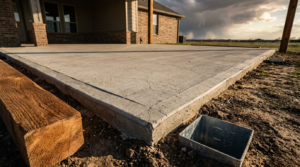
Patio Cover Installation is where good plans either hold up or fail. You may never see the footings, flashing, fasteners, or roof slope. Yet those parts decide how the structure performs after the first hard rain.
In North Texas, a patio cover usually fails at the joints first, not the trim.
That is why North Texas Patio Covers need more than attractive stain and nice post wraps. Attached covers need sound ledger attachment, correct waterproofing, and drainage that moves water away from the house. Freestanding covers still need stable footings, square framing, and rooflines that shed water cleanly.
If your cover ties into the house, study the roof to wall flashing details before you sign a contract. Water that slips behind siding or trim doesn’t stay small for long. It can stain drywall, rot fascia, and turn a shade project into a repair job.
Slope matters too. A roof that looks flat still needs a plan for runoff, gutters, and downspouts. This patio cover roof pitch guide explains why drainage choices matter so much in North Texas storms.
Low bids often trim away the parts that do not photograph well. Smaller footings, lighter beams, missing gutters, or vague flashing details can lower the number on paper. You pay later when posts shift or ceiling boards stain.
Some features need framing blocks or extra bracing. That includes heavier fans, heaters, and TV mounts. If those needs appear late, crews may cut into finished ceilings or change the plan mid-job.
You should also settle electrical and finish choices early. Fans, recessed lights, heaters, outlets, and ceiling boards all affect framing. Ask who handles permits and inspections, because clear answers early avoid conflict once digging starts.
Choose local patio contractors who know North Texas homes
Local knowledge matters more than many homeowners expect. A builder who works around Denton County knows how rooflines, lot depths, drainage patterns, and HOA rules can change a project. That knowledge matters before the first post goes in.
The work also changes by neighborhood. Denton TX Patio Covers often sit on lots with one set of spacing issues. Corinth TX Patio Covers can face different drainage or roof tie-in conditions. Argyle TX Patio Covers, Flower Mound TX Patio Covers, and Highland Village TX Patio Covers may also bring tighter design review. The same judgment helps in Lewisville and nearby communities.
Ask each contractor for recent jobs that match your home, not only wide beauty shots. You want close photos of post bases, beam connections, ceiling finishes, and how the roof meets the house. Homeowners who want long-lasting cedar can compare local examples from cedar patio cover builders in Denton.
You also want a clear scope. Good Patio Contractors spell out permits, footings, electrical, stains, gutters, cleanup, and change-order rules. A reliable Patio Cover Company should tell you who manages the crew and what the payment schedule looks like. It should also explain how weather delays affect timing.
References still matter. Ask past clients if the crew kept the site clean, stayed on schedule, and handled punch-list items without a fight. A beautiful project photo tells you less than a homeowner who has lived with the cover through a full summer.
That clarity matters because North Texas patio cover benefits reach beyond comfort. You get more usable space, better furniture protection, and stronger curb appeal. When you’re ready to talk through design, budget, and timing, Call JBN Patio Covers Today.
Your patio cover should feel like part of the house
A patio cover changes how often you use your backyard, but the builder decides how well it works. If the design fits the house and the installation handles water well, the structure will feel natural for years.
Choose the company that listens, shows local work, and explains the hidden details as clearly as the visible ones.
That is how you end up with a covered patio you use in July, in October, and during the next hard rain.