A Flower Mound backyard can be beautiful and still sit empty for much of the year. Blazing summer sun, sudden hail, strong wind, and rain can make an uncovered patio uncomfortable when you want to use it most.
With custom patio covers, you can add dependable shade, improve outdoor comfort, and create a better connection between your home and backyard. JBN Patio Covers builds cedar patio covers, pergolas, and outdoor living structures designed for North Texas homes.
The right design starts with your property, your home’s architecture, and the weather your structure must handle.
Key Takeaways
- Cedar patio covers provide shade, warmth, and a natural fit for North Texas homes.
- Your design should account for heat, UV exposure, hail, wind, drainage, and shifting clay soil.
- Solid covers, open pergolas, and hybrid structures support different outdoor activities.
- Professional patio roof installation improves appearance, drainage, and long-term performance.
- A local patio cover contractor can help you plan a structure that fits your home and budget.
Why Flower Mound Weather Matters
North Texas weather puts outdoor structures through repeated stress. Flower Mound summers often bring extended periods above 100°F, intense UV exposure, and large temperature swings. That heat can dry finishes, fade surfaces, and create movement as materials expand and contract.
Spring brings another concern: severe thunderstorms and hail. Hail season usually peaks between April and June, while strong storms can produce straight-line winds of 60 to 80 mph. A patio cover needs sound connections, properly selected fasteners, secure posts, and a roof system suited to local conditions.
Wind design also matters because an attached cover affects your home’s exterior. The structure must connect correctly to the wall, shed rain away from the foundation, and handle uplift during storms. North Texas homes also sit on expansive clay soils in many areas. Those soils swell when wet and shrink during dry weather, so drainage and post support deserve careful attention.
A good patio cover does more than block sunlight. It must direct water, manage wind, and remain properly connected as the ground and weather change.
You should also inspect the structure after major storms. Look for loose trim, cracked wood, damaged roofing, shifted posts, and water collecting near the slab. Early repairs cost less than allowing a small issue to weaken the structure.
Choose a Patio Cover That Fits Your Yard
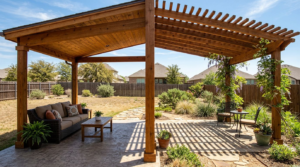
Your best option depends on how you use the space. A solid cedar cover provides the most consistent shade and stronger rain protection. It works well above an outdoor dining table, seating area, grill, or doors leading into the house.
Open structures provide a different type of comfort. Pergolas allow more airflow and filtered sunlight, which can suit a garden seating area or a space where you want to keep some sky visible. You can also add shade fabric or climbing plants later, depending on the design.
A hybrid plan can combine both. For example, you might place a solid cover beside the house and use a pergola near a fire pit or pool. That approach creates separate zones without making your backyard feel crowded.
JBN can help you compare:
- Attached patio covers that extend your home’s existing roofline
- Freestanding cedar structures for flexible yard placement
- Open-beam pergolas for partial shade and airflow
- Custom pergolas that define dining or seating areas
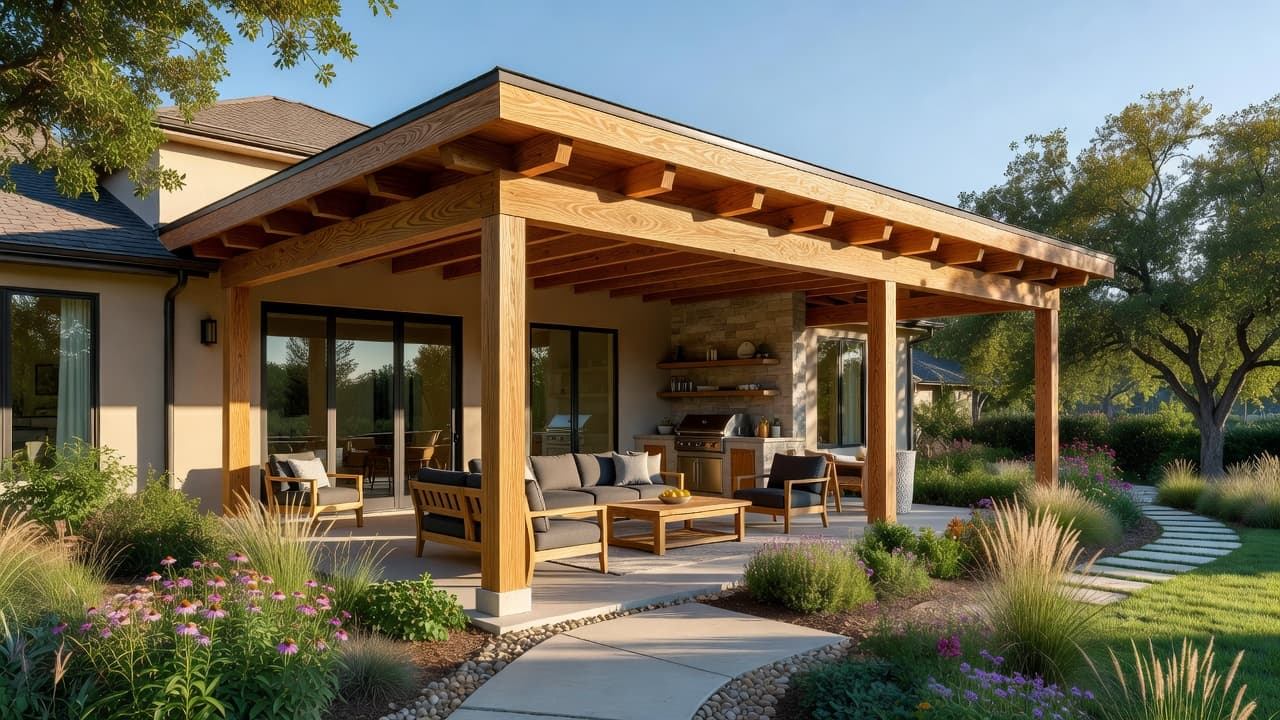
- Covered patios with room for lighting, fans, fireplaces, or outdoor kitchens
Your home’s roof pitch, window placement, exterior colors, and existing slab all affect the final design. A structure should look connected to the house rather than added as an afterthought. You can review examples of custom patio cover designs before discussing your own layout.
Why Cedar Works Well in North Texas
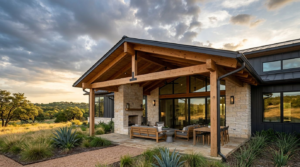
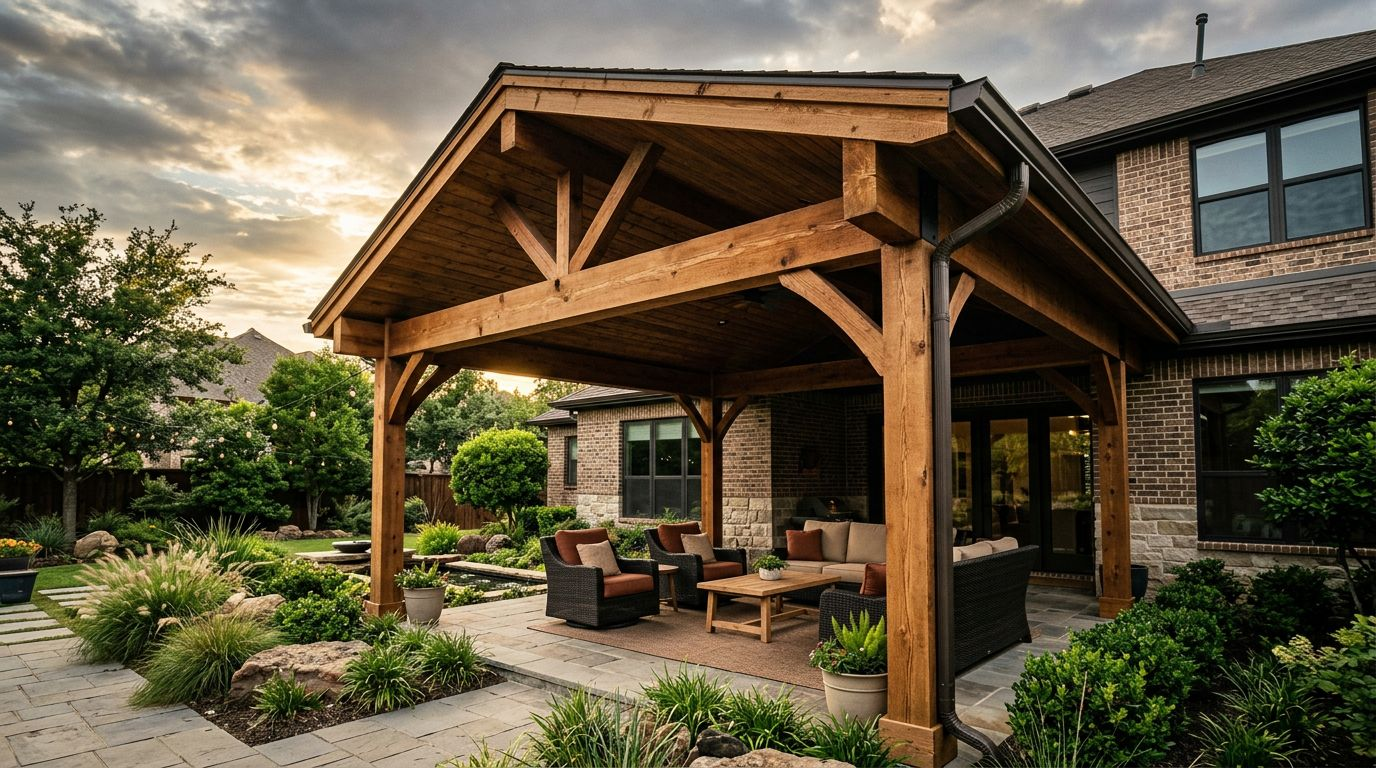
Cedar gives you a natural look that fits both traditional and modern homes. Its grain, warm color, and visible joinery add character that manufactured structures often lack. You can stain it to complement brick, stone, siding, or painted trim.
Cedar also has natural resistance to rot and insects. That doesn’t make it maintenance-free, but it gives you a strong starting material for outdoor construction. Regular cleaning and a suitable finish can help protect the wood from UV exposure and moisture.
You can learn more about cedar’s outdoor performance through this real cedar benefits resource. A Texas-specific cedar wood selection guide also discusses why cedar is commonly chosen for outdoor structures in hot climates.
The grade, size, treatment, and installation method still matter. Your patio cover should use sound lumber, strong connections, properly supported beams, and a finish suited to local conditions. Ask how the builder will handle exposed end cuts, posts near the ground, roof flashing, and water runoff.
Wood patio covers also offer more design flexibility than many standard kits. You can select beam sizes, rafter spacing, braces, trim details, and stain colors that suit your home. For a closer look at material options, explore JBN’s information on custom cedar patio covers.
Plan for Shade, Drainage, and Daily Use
Shade is the first reason most homeowners begin researching patio covers. However, the amount and position of shade affect how comfortable the space feels at different times of day. A cover that shades the seating area at noon may not block low afternoon sun coming from the west.
During your consultation, consider where you sit, dine, grill, watch television, and enter the house. Window placement matters too. A roof over a west-facing window can reduce direct solar heat near that room, which may help your cooling system work less during hot afternoons. The result depends on the home’s design, insulation, windows, and ventilation, so energy savings shouldn’t be guaranteed.
Drainage deserves equal attention. Water should move away from the house and avoid washing soil out around posts. Your contractor should review roof slope, gutters, downspouts, slab edges, and nearby landscaping before construction begins.
The structure also needs room for the features you plan to add. Covered outdoor living may include:
- An outdoor kitchen or built-in grill
- A fireplace or fire pit area
- Ceiling fans and low-voltage lighting
- Dining furniture and lounge seating
- Outdoor entertainment areas with a television or sound system
JBN builds more than a roof over a slab. You can review examples of outdoor living spaces to see how shade, cooking, seating, and entertainment can work together.
What to Expect From Design and Installation
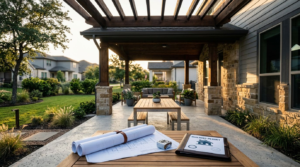
A professional patio cover contractor should begin with an on-site review. You need accurate measurements, a check of the existing structure, and a clear discussion about how you want to use the space. The contractor should also explain permits, attachment details, material choices, finish options, and the expected schedule.
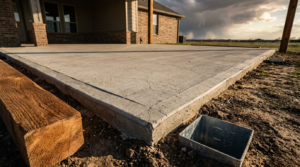
Ask for a written proposal that identifies the scope of work. It should address the structure, roofing, posts, trim, stain or paint, electrical work, drainage, cleanup, and any concrete changes. If you plan to add a fireplace, kitchen, or television, discuss those items before construction begins.
Pricing depends on size, roof style, cedar grade, attachment method, site access, foundation work, and added features. A simple open pergola costs less than a large covered patio with a roof, lighting, fireplace, and kitchen. Honest pricing means you understand what the estimate includes and which choices affect the total.
Professional patio roof installation also helps protect your home’s exterior. Incorrect flashing can allow water behind siding or trim. Poorly supported posts can shift as soil moves. Weak connections can create problems during high wind.
JBN Patio Covers is based in Denton and focuses on cedar patio covers, pergolas, and outdoor structures. You can learn more about the company through its local contractor background and review custom pergola options.
Local Service Across Denton County and North Texas
Your location affects access, soil conditions, neighborhood requirements, and the way weather reaches the property. JBN serves homeowners looking for North Texas patio covers in Denton, Flower Mound, Argyle, Corinth, Highland Village, and nearby communities.
That includes homeowners comparing Denton patio covers, Argyle patio covers, Flower Mound patio covers, Corinth patio covers, and Highland Village patio covers. Service also extends to Lewisville, Northlake, Lantana, Double Oak, Copper Canyon, Bartonville, Lake Dallas, Little Elm, Frisco, The Colony, Southlake, Grapevine, Keller, Roanoke, Trophy Club, Colleyville, Carrollton, and surrounding areas.
Local knowledge helps you plan for the details that matter in your neighborhood. A consultation can address backyard access, existing concrete, drainage, HOA requirements, and the architectural style of your home.
If you’re ready to discuss your project, Get Your Free Consultation with JBN Patio Covers. You can also Request Your Free Estimate after reviewing your space and priorities.
Conclusion
A well-designed cedar patio cover gives you shade when North Texas heat drives you indoors, while also creating room for meals, family time, and outdoor entertaining. The strongest design accounts for hail, wind, UV exposure, drainage, soil movement, and the way you use your backyard.
Choose a contractor who explains the construction details, provides honest pricing, and builds for long-term performance. When you’re ready, Contact JBN Patio Covers or Call Us Today at 469-340-0839 to schedule your free consultation.
Frequently Asked Questions
How much do custom patio covers cost in Flower Mound?
The price depends on size, roof style, cedar materials, site conditions, and added features. A written estimate gives you a more useful figure than a general online range.
Do cedar patio covers hold up in Texas heat?
Yes, cedar is well suited to outdoor use when you install and maintain it correctly. A quality finish, good drainage, and proper ventilation help protect it from heat, UV exposure, and moisture.
Will a patio cover protect my furniture from hail?
A roof can protect furniture from ordinary sun and rain, but severe hail can damage roofing, screens, furniture, and other exposed items. Your contractor should explain the roof and connection choices available for your project.
Do I need a permit for a patio cover in Flower Mound?
Permit requirements can depend on the structure’s size, attachment, roof design, and location. Ask your contractor to confirm the current requirements with the city before work begins.
Should you choose a solid cover or a pergola?
Choose a solid cover when you want stronger shade and rain protection. Choose a pergola when you prefer airflow, filtered light, and a more open appearance.
Can you attach a patio cover to your home?
Many patio covers can attach to a home’s exterior, but the wall, roofline, flashing, and foundation must support the design. A site inspection should come before any attachment decision.
Can a cedar pergola include lighting or fans?
Yes, you can plan for lighting and fans during construction. Electrical work should be coordinated early so wiring, switches, and mounting points fit the finished structure.
Do covered patios increase home value?
A well-built structure can improve curb appeal, usability, and buyer interest. However, no contractor can guarantee a specific return or increase in property value.
How does a patio cover help with energy use?
Shade can reduce direct sunlight on nearby windows and doors, which may lower heat entering the home during certain hours. Your actual results depend on window orientation, insulation, and the rest of the home’s design.
How often should you maintain cedar?
Inspect the structure at least twice each year and after severe storms. Clean debris, check connections and flashing, and refresh the finish when the wood begins to dry, fade, or absorb water.
Do you offer warranties?
Warranty coverage can vary by materials, workmanship, and project details. Ask for the warranty terms in writing before signing your agreement.
Can you add an outdoor kitchen later?
You can add some features later, but planning early is better. Gas, electrical, water, drainage, and structural support may need to be coordinated with the original build.
How long does patio cover installation take?
The timeline depends on design approval, permitting, material availability, weather, site access, and project size. Your contractor should provide a project schedule with the proposal.
Why hire a local patio cover builder?
A local builder understands North Texas heat, hail, wind, clay soil, and common city requirements. You also have a nearby team to contact for questions, maintenance, or future additions.
How do you get started with JBN Patio Covers?
Call 469-340-0839 or request a consultation through the JBN contact page. Discuss your goals, budget, property, and preferred cedar design during the first conversation.