Your patio cover will either feel like part of your home or like an expensive patch job. The difference often comes down to the contractor you hire.
Before you Get Your Free Patio Cover Quote, screen the builder the same way you’d screen a roofer or remodeler. You want permits, insurance, clear pricing, and work that fits North Texas weather.
Start with those basics, then look at design skill, material knowledge, and how the company treats you before construction begins.
Check licensing, insurance, and local permit know-how
Patio Contractors vary more than most homeowners expect. Some build structural covers every week. Others mostly install fences, decks, or simple shade kits and take patio work when it comes along.
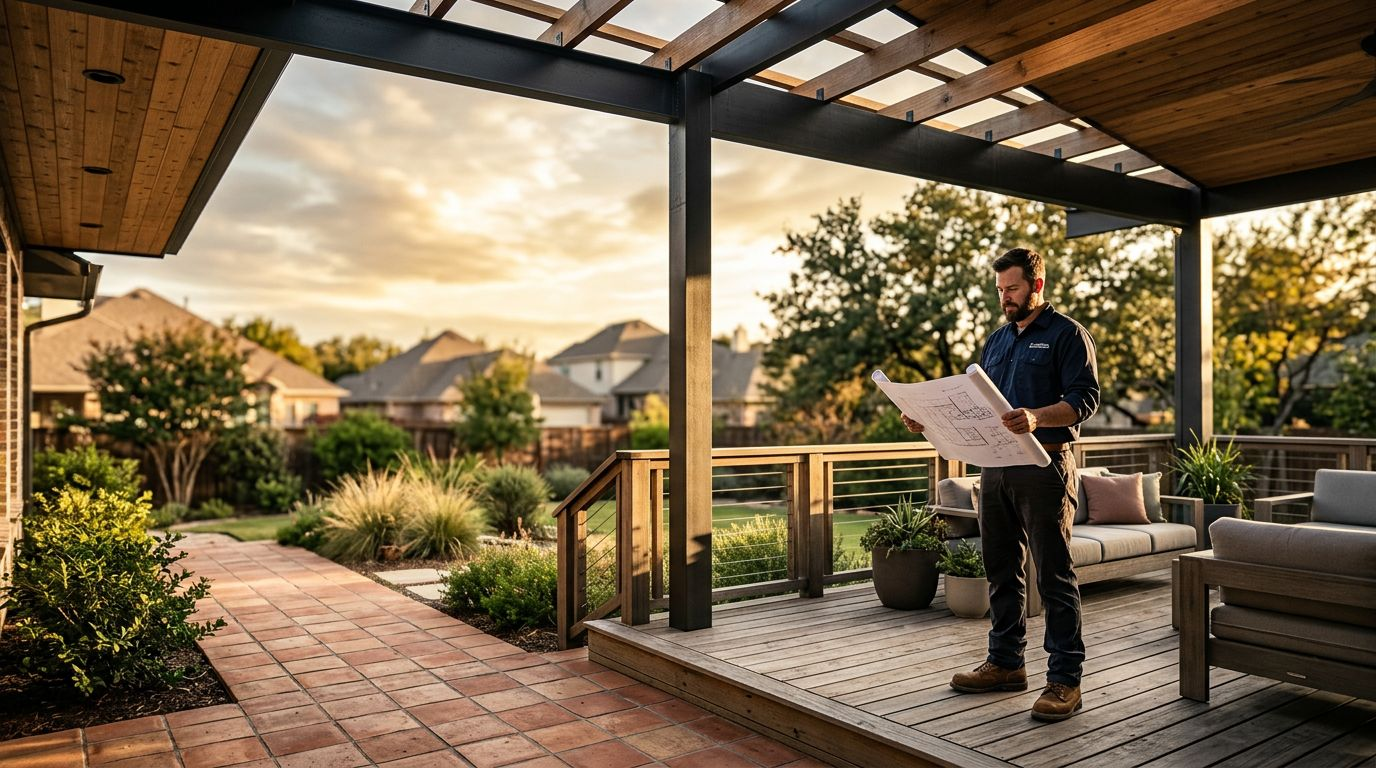
Start with the paperwork. Ask whether the builder is registered or licensed where required, carries general liability insurance, and has workers’ compensation coverage for the crew. Then ask who pulls the permit. In many North Texas cities, a patio or porch cover needs a building permit, and some metal covers may need engineering before approval.
A Patio Cover Company should answer those questions without hedging. You should get proof of coverage, a plain-language explanation of inspections, and a clear answer on HOA limits if your neighborhood has them. Ask whether subcontractors carry their own insurance or fall under the main policy. You don’t want that answer after an accident. Also ask who meets the inspector on site.
If the builder wants you to pull the permit, slow down. That can shift risk to you and may point to weak local experience.
A Patio Cover Builder also needs to understand local conditions. North Texas homes deal with strong sun, gusty storms, clay soil movement, and drainage problems after hard rain. A local company knows how footings, roof tie-ins, and post placement hold up here.
Denton TX Patio Covers, Corinth TX Patio Covers, Argyle TX Patio Covers, Flower Mound TX Patio Covers, and Highland Village TX Patio Covers may sound like search phrases. They all point to the same need. You want a contractor who knows city review offices, inspection schedules, and common code issues in your area, including Lewisville neighborhoods nearby.
North Texas Patio Covers show up all over search results. Still, real local work matters more than a polished ad. Project galleries for patio covers in North Texas give you a better read on rooflines, drainage, and backyard layouts that fit homes like yours.
Ask for proof the contractor can build your design
Patio Cover Installation looks simple from the yard. Underneath, it depends on beam sizing, roof connection details, footing depth, waterproofing, and clean finish work. That’s why photos alone are not enough.
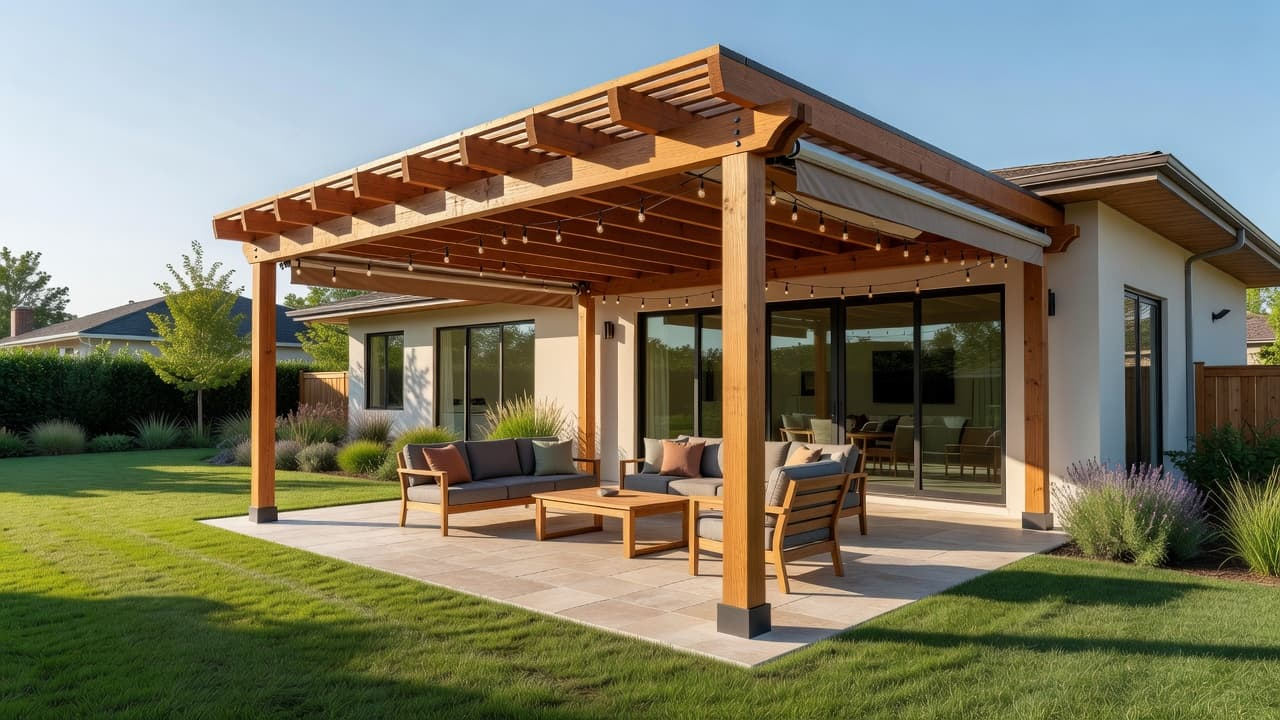
Custom Patio Covers should match the house, not look bolted on as an afterthought. Ask to see jobs that match your plan. An attached cover over the back door is different from a freestanding structure by a pool or garden.
Covered Patios with fans, lighting, or an outdoor kitchen need more planning than a basic shade roof. The contractor should talk through post placement, electrical rough-in, ceiling finish, and how water moves off the roof.
Aluminum Patio Covers can be a smart choice if you want low maintenance and crisp lines. Wood Patio Covers bring warmth and a natural look, but they need more care over time. Insulated Patio Covers can reduce heat gain and make the patio more usable in July and August. Pergolas add style and filtered shade, but they do not block rain like a solid roof.
Outdoor Living Spaces often grow in phases. Backyard Shade Solutions should leave room for future lighting, screens, kitchens, or seating walls. If a contractor only talks about today’s footprint, you may run into expensive changes later.
Some Patio Contractors handle broad exterior work, while others focus on patio roofs only. Either can work, but the right builder should explain why a material and layout fit your house, your budget, and how you spend time outside.
If you like wood, spend time reviewing finished custom cedar patio covers. Then ask how the posts are anchored, how the stain will age, and how the structure ties into the home. A reliable contractor should also share recent references and completed projects when homeowners allow it. Walking past a finished build tells you more than any glossy brochure.
Compare bids line by line, not just by price
The cheapest quote can cost the most if key items are missing. A patio cover bid should read like a map, not a guess.
Ask for an itemized estimate that shows labor, materials, permit fees, footing work, demolition if needed, electrical add-ons, stain or paint, timeline, payment schedule, and warranty. You also need a short list of exclusions. If cleanup, fan installation, or haul-off is missing, assume you may pay extra later. A good estimate should list brand names or at least product grade when that affects lifespan or appearance.
This quick check helps you tell a solid proposal from a risky one.
| A strong estimate shows | A red flag looks like |
|---|---|
| Permit responsibility and inspection steps | “Permit if needed” with no detail |
| Material type, thickness, or wood species | “Patio cover package” with no specs |
| Start date, build window, and payment schedule | Large deposit with vague timing |
| Warranty on labor and materials | Verbal promises only |
| Clear exclusions and change-order terms | Surprise fees after work starts |
The takeaway is simple. Compare scope before you compare totals. One contractor may include heavier posts, larger beams, better roof tie-ins, and full cleanup. Another may leave those items out and look cheaper on paper.
It also helps to get two or three estimates. When you lay bids side by side, patterns appear. You can tell who measured carefully, who asked smart questions, and who rushed the visit. If one bid says only “aluminum roof” and another lists panel thickness, finish, and attachment method, the second one is easier to trust.
Written guidance from other builders says much the same. This patio cover contractor guide also stresses insurance, references, and detailed written terms. Those basics matter no matter where you live.
Watch the deposit as closely as the total. A reasonable down payment is common because materials cost money. Still, be cautious if someone asks for most of the project price upfront. The contract should also say how changes are priced, who approves them, and what happens if weather delays the schedule.
Choose a team that communicates well before work starts
How a contractor handles the first meeting is a preview of the whole job. If communication is sloppy before you sign, it rarely improves after.
You should get a site visit, accurate measurements, and a real conversation about how you use the space. Do you need afternoon shade, rain cover, better airflow, or room for a TV and ceiling fan? A thoughtful builder asks because daily use matters more than square footage alone.
A good patio cover contractor will tell you who manages the project and whether crews are employees or subcontractors. You should also hear how long the work should take and how the crew protects your yard during construction. You should know who to call if a column shifts, a fan box needs adjustment, or a roof leak appears after completion. Ask how warranty calls are handled six months later, not only on the final walk-through day.
References matter here as much as design skill. Ask past clients whether the crew showed up on time, kept the site clean, and finished punch-list items without a fight. Good review scores help, but recent phone references help more.
If you’re choosing between Pergolas and larger builds with Covered Patios and Outdoor Living Spaces, look for a team that can explain the whole picture. That includes drainage, ceiling finish, lighting, and how the new structure meets your home’s architecture.
When you’re ready to talk through options, pricing, and timing, Call JBN Patio Covers Today. A quick conversation can tell you a lot about whether the company listens, answers clearly, and respects your budget.
Final thoughts
A new patio cover should add comfort, shade, and value, not repair bills and second guesses. The safest hire is usually the contractor who is clear, documented, and locally experienced, even if that bid is not the lowest.
If you remember one rule, make it this: trust proof over promises. That matters even more in North Texas, where heat and storms expose weak work fast. A builder who can show permits, insurance, local projects, and a tight contract gives you a much better chance at a patio cover you’ll enjoy for years.