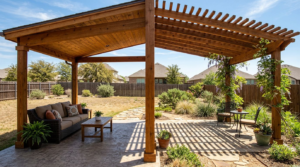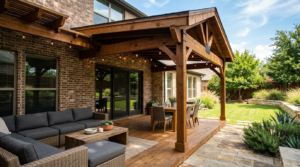
Want a new covered patio, but your HOA feels like a locked gate? You’re not alone. In North Texas, hoa patio cover approval usually depends less on luck and more on how complete your packet looks on day one.
For most North Texas neighborhoods, the fastest path to approval is simple: match your home’s style, show exact placement, include material and color details, and wait for written approval before building. Treat the submission like a permit set, not a rough sketch.
What your HOA is really checking
Your HOA isn’t only judging whether a patio cover looks nice. It’s asking whether the structure fits the neighborhood, protects property values, and avoids problems like drainage, shade spillover, or a roofline that looks bolted on later. Your first stop should be your CC&Rs and design guidelines. The Texas State Law Library guide to restrictive covenants gives you a clear starting point for Texas HOA rules.
Most North Texas review committees ask for the same basics. City checklists often mirror that level of detail, so they’re useful even before you submit to the HOA.
This quick table shows the overlap:
| What you submit | Why the HOA cares | Why the city cares |
|---|---|---|
| Site plan with setbacks | Fits the lot and neighborhood | Meets zoning rules |
| Elevation drawing | Matches house style | Confirms size and height |
| Material and color specs | Keeps a consistent look | Defines project scope |
| Roof pitch and attachment details | Avoids an add-on look | Checks structural tie-in |
The Plano patio cover permit checklist and the Prosper patio cover submittal guide show how complete a solid submittal should be.

If your design matches the home’s roof pitch, trim, and finish, you start in a stronger spot. That’s one reason the benefits of custom patio covers over prefab matter before you file.
Build a packet that gets to yes faster
Think of your application like a mortgage file. One missing page can slow the whole thing down.
Start with a scaled site plan. Show the house, the proposed cover, property lines, setbacks, and nearby features. Then add an elevation sketch or rendering that shows height, slope, fascia, and post placement. If your neighborhood is strict, include photos of the rear of your home and a sample of stain or paint.
A strong packet usually includes these items in this order:
- ARC or design review form with your lot and contact details
- Site plan with dimensions and distances from fences and structures
- Elevation drawings that show height, roof form, and attachment
- Material list for posts, beams, roofing, trim, and finish colors
- Contractor details if your HOA asks for insurance or permit info
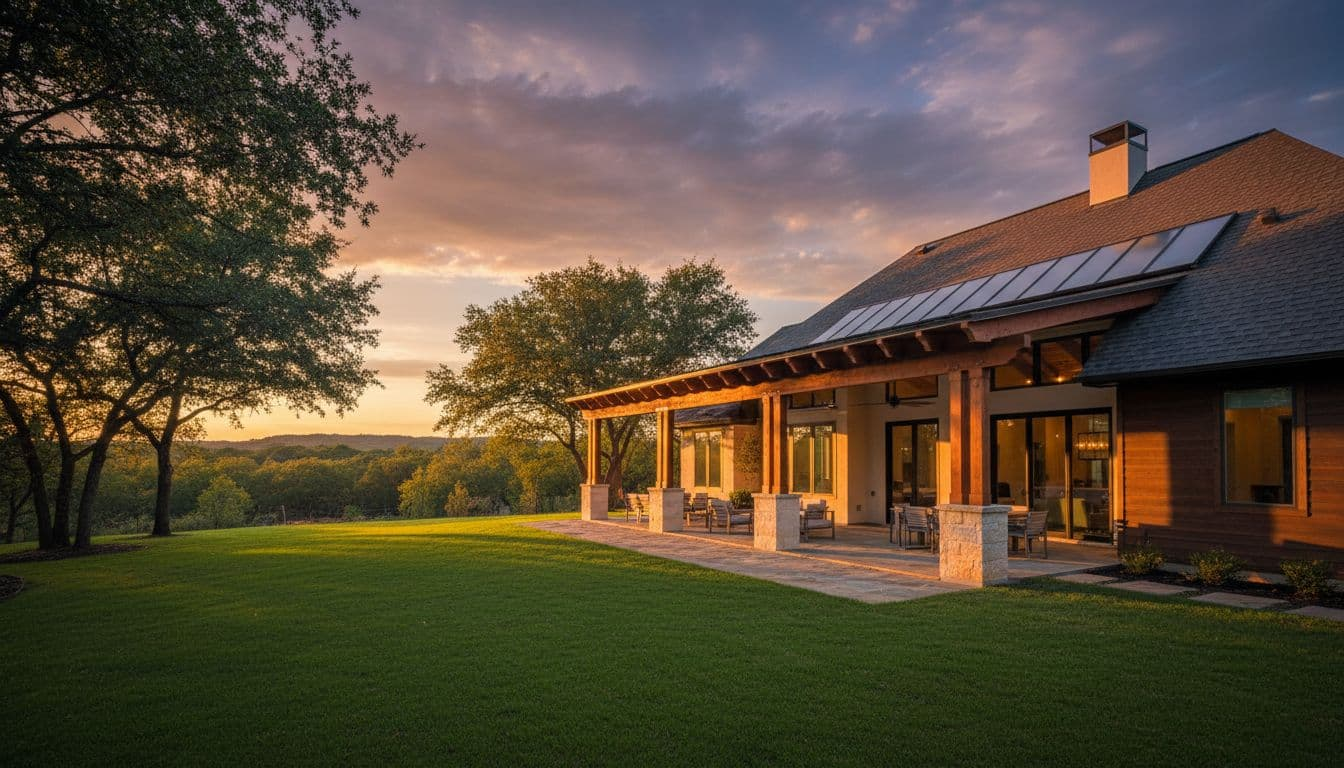
You also help your case when the design looks like it belongs to the house. A cheap kit can read like a patch. A custom cover, by contrast, can follow the existing roofline and trim. If you’re still weighing open shade against full coverage, this pergola vs patio cover North Texas guide can help you sort it out.
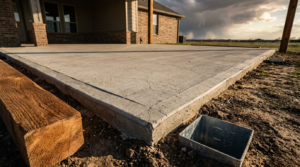
Never pour footings or order materials before you have written approval. Verbal approval is like chalk in the rain.
The mistakes that delay hoa patio cover approval
Most denials aren’t about the idea of a patio cover. They come from weak paperwork or a design that clashes with the house.
The first mistake is sending only a sketch. Review boards want dimensions, not guesswork. The second is ignoring drainage. If runoff lands at a shared fence line, neighbors may object. The third is choosing a roof pitch or finish that changes the rear elevation too sharply.
Local examples help, too. If you want a clearer feel for what a built-in cedar design looks like in this market, look at custom cedar patio covers Argyle TX. The closer your design feels to your home’s architecture, the less it reads like an afterthought.
Once the HOA signs off, you may still need a city permit. That is a separate step, and missing it can cost you weeks.
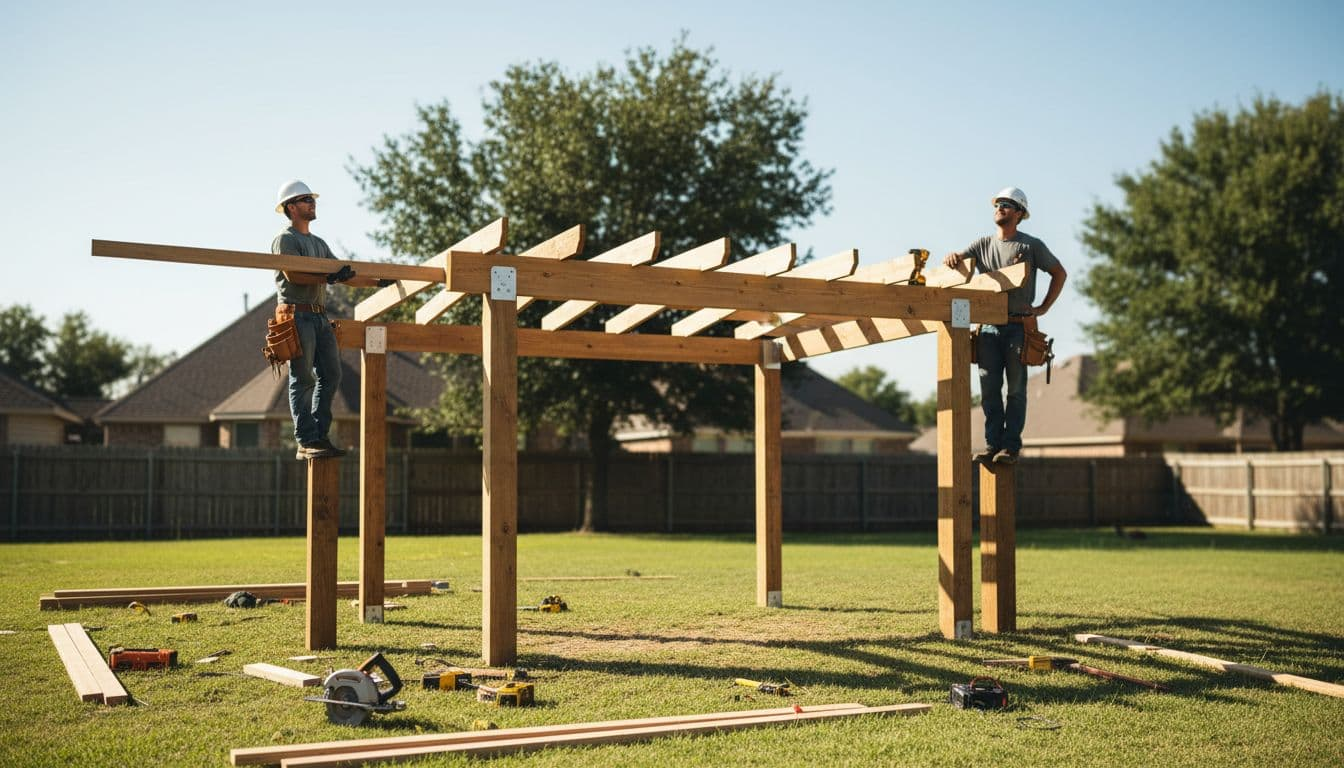
Quick answers you can use
Do you need HOA approval for a patio cover in North Texas?
Usually, yes. If the structure changes your exterior, most associations want written approval first.
How long does approval take?
It depends on meeting schedules and backlog. Many neighborhoods review requests over one or two board cycles.
Can your city permit replace HOA approval?
No. Your city and your HOA are separate gatekeepers, and you may need both.
Conclusion
A smooth hoa patio cover approval process comes down to a complete, home-matching submittal. When your drawings, materials, and placement all make sense, you give the board fewer reasons to pause. Build the case before you build the structure, and your backyard project moves with far less friction.