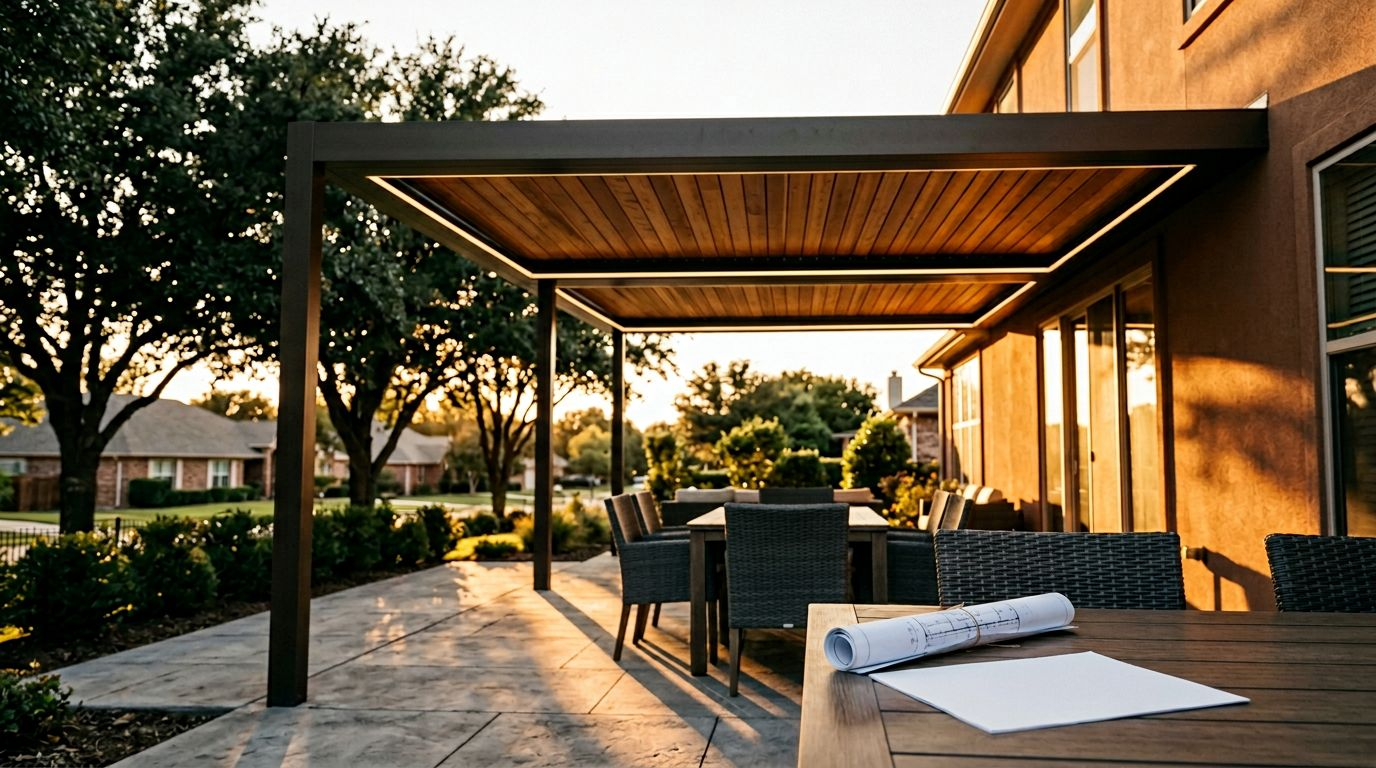
A beautiful patio cover can raise your home’s comfort and curb appeal, but your HOA can stop the project before the first post goes in. In North Texas, patio cover HOA approval usually depends on one thing: how complete your submission looks on day one.
Quick answer: Most North Texas HOAs want an ACC form, a site plan, elevations, material and color details, and sometimes a permit copy. Reviews often take 30 to 60 days, and city permits can add 1 to 8 more weeks, so early planning saves time.
That sounds like a lot, but it isn’t guesswork. Think of the process like handing in a clean blueprint instead of a rough sketch on a napkin.
Patio Cover HOA Approval Starts With the Right Packet
Most HOA boards aren’t judging your taste alone. They’re checking whether your patio cover fits the neighborhood, respects setbacks, and looks like it belongs with the house.
Start with your declaration, design guidelines, and application form. Then compare those with the Texas Residential Property Owners Protection Act, which shapes association procedures in Texas. It doesn’t replace your HOA rules, but it helps you understand the framework.
This short table shows what boards usually expect:
| Item | Why it matters | Common miss |
|---|---|---|
| Site plan | Shows location and setbacks | No dimensions from fence lines |
| Elevations | Shows height and roof style | Only one sketch submitted |
| Material details | Proves visual match | No stain, trim, or roofing notes |
| Photos | Adds context | No marked-up placement photo |
If you want a practical city example, the City of Allen patio cover plan review guidelines show the same basics many North Texas reviewers expect. In other words, a strong HOA packet and a strong permit packet often overlap.
Design Choices North Texas HOAs Usually Like
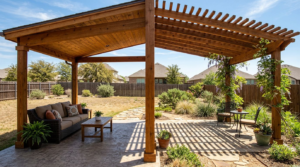
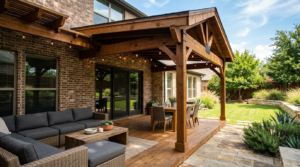
Most boards approve what feels familiar. That usually means matching roof pitch, fascia depth, trim style, shingles, and stain color. A patio cover should feel like part of the house, not a hat balanced on the back wall.
 Photo by Max Vakhtbovych
If you’re still deciding between structure types, this North Texas patio cover vs pergola guide helps you compare shade, rain protection, and curb appeal. If your home leans clean and simple, modern cedar patio covers show how straight lines can still blend with North Texas architecture.
Size matters too. Too small, and the cover looks like an afterthought. Too large, and it can crowd the rear elevation or block light into nearby rooms. Before you submit, sketch your furniture layout. That simple step helps you pick a footprint that works on paper and in real life.
How to Build an Application That Gets Fewer Revisions
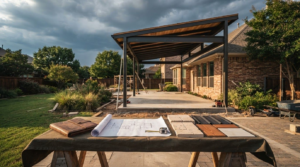
Treat your submittal like a permit package, not a mood board. Clear documents cut down on back-and-forth, and they show the board you took the rules seriously.
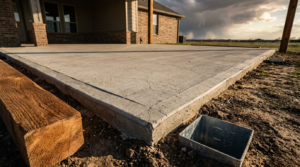
- Use a scaled site plan: Show the house, slab, proposed posts, roof projection, and distances to property lines.
- Add front and side views: Include height, beam depth, roof pitch, and drainage direction.
- Spell out materials: List cedar, stain color, roofing, trim, and any stone or paint tie-ins.
- Submit before buying materials: A surprise install almost never goes over well.

If your city needs a permit, line that up early too. The Dallas patio cover code appendix gives useful code context for structural and patio-cover rules. One well-prepared drawing set can often serve both the HOA and the city, which saves you time.
Why Applications Get Kicked Back
Most denials aren’t about the idea. They’re about missing detail.
The fastest way to slow approval is to make the reviewer guess.
Common trouble spots include vague sketches, no roof tie-in detail, missing color information, and no drainage plan. Another problem is ignoring setbacks or easements because “a neighbor did it.” That’s a risky shortcut. HOAs review your lot, not your neighbor’s memory.
You also want your builder and your paperwork to match. If the plan says one thing and the final build shows another, you could face a stop order, a correction request, or a removal demand.
Quick Questions Homeowners Ask
How long does patio cover HOA approval take?
A typical review takes 30 to 60 days. Meeting schedules matter, so missing one deadline can add several weeks.
Do you need city approval too?
Usually, yes, especially for attached structures. HOA approval and city permits are separate, and you often need both.
What if your HOA says no?
Ask for the reason in writing. Then revise the design, fill the gap, and resubmit with a cleaner packet.
Is a custom cedar design harder to approve?
Not if it matches the home well. In many neighborhoods, custom work passes more easily than cheap-looking, one-size-fits-all kits because it looks more consistent with the house.
A smooth approval process isn’t about luck. It’s about showing the board a patio cover that fits your home, your lot, and the rules. If you start early, submit complete drawings, and coordinate HOA and city reviews, your project has a much better path from idea to build.
IMAGE SUGGESTIONS
- Patio cover HOA approval design example in North Texas
- Homeowner reviewing HOA patio cover documents
- Cedar patio cover site plan and elevation drawings
INTERNAL LINKING MAP
- Compare structures in the design section with North Texas patio cover vs pergola guide
- Reference clean-line styles with modern cedar patio covers
- Add size planning support with 10×20 cedar patio cover cost guide 2026
- Mention larger layout planning with 16×20 cedar patio cover North Texas