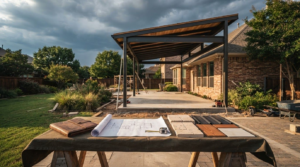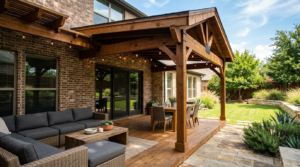
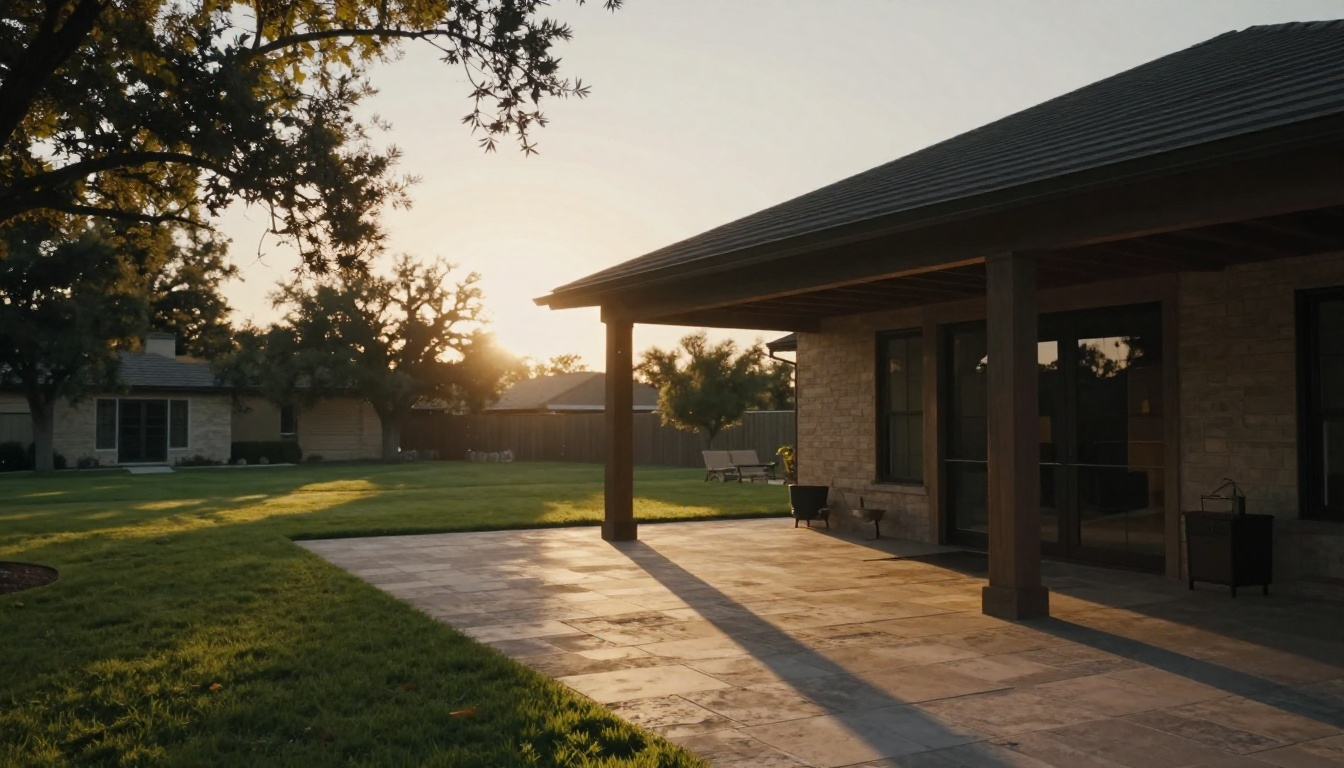
A west patio can feel pleasant at noon, then brutal by dinner. In North Texas, that late sun hits low, hard, and for hours. If you want your backyard to stay usable after work, your west-facing patio cover has to do more than look good.
For a North Texas yard, the best west-facing patio cover usually has real depth, a solid roof, and side protection for low sun. You also need strong cedar framing, good drainage, and a layout that shades people, not just concrete.
Why a west-facing patio cover needs more than overhead shade
The main problem is angle, not only heat. By late afternoon, the sun comes in from the side like a flashlight pointed at your patio. A shallow roof may cover the slab, yet your chairs still bake.
According to the NWS DFW annual normals, summer highs stay in the 90s for long stretches. The North Texas climatology pages also show why bright sun and storm-driven rain both matter in your design.
Start with depth, not just width
If your cover projects only 8 feet, the shade line can slide off your seating fast. In many North Texas yards, 10 feet is a starting point, while 12 feet or more feels far better on a west side.
That extra depth gives you a buffer. It helps when the sun drops lower, and it keeps the hottest light off your table, sofa, and back door.
If your cover ties into the house, look at attached patio cover ideas that keep the roofline clean while pushing shade farther into the patio.
The late-day issue on a west patio is usually side sun, not lack of roof overhead.
Add side shade when the sun stays low
A roof alone may not solve the 5 p.m. glare. That is why many west-facing layouts work best with a second layer, such as a drop shade, privacy wall, or screen-ready opening.
This quick comparison helps you match the design to your yard:
| Design choice | What it does well | Watch for | Best for |
|---|---|---|---|
| Solid roof only | Blocks top-down heat and light rain | Low sun can still sneak in | Mild west exposure |
| Pergola style | Keeps an open feel and airflow | Limited late-day protection | Looks-first projects |
| Solid roof plus screen | Blocks overhead and side sun | Costs more and needs planning | Harsh west exposure |
The takeaway is simple. West-facing patios usually need both top shade and side control.
North Texas design details that decide comfort and lifespan
A patio cover in this region has to handle heat, wind, and sudden rain. Good looks matter, but the bones matter more. If the framing is weak or the water path is sloppy, the pretty parts won’t save it.
Choose materials that fit Texas weather
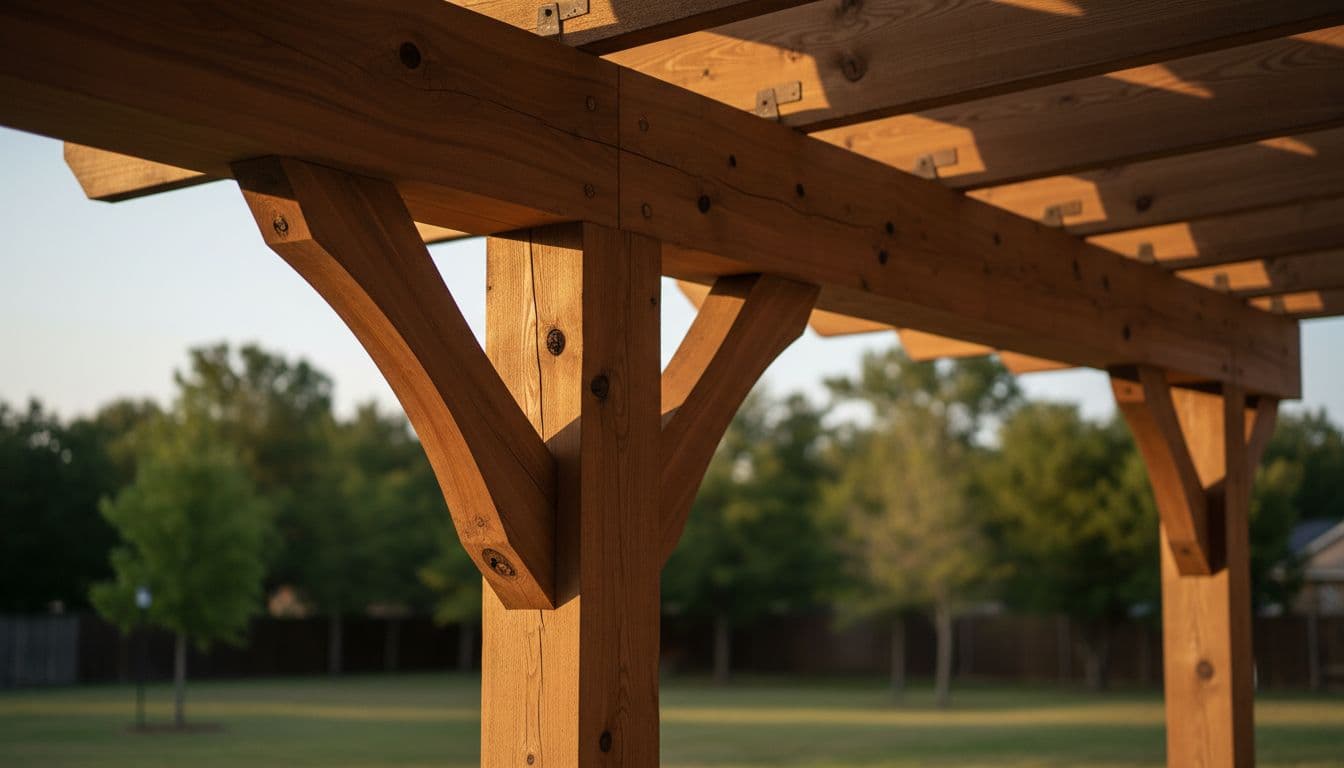
Cedar is a smart pick because it looks warm, holds up well outside, and fits both traditional and newer homes. It also works well for custom proportions, which matters when you need a deeper west-facing patio cover that still looks balanced.
Still, wood choice is only half the story. Your posts, beam size, connectors, and footings all affect how the structure feels in a storm. That is one reason many homeowners prefer custom vs prefab patio covers in Texas, especially when the yard gets hard afternoon sun and open wind exposure.
Plan water first, then finish details
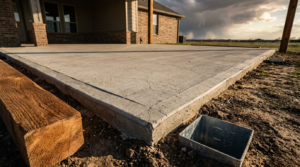
Rain can hit from the side in North Texas, so drainage needs a real plan. Your cover should move water away from the house, away from the slab edge, and away from footings.
That means roof pitch, flashing, gutters, and post bases should all work together. Think of it like boots in a storm. Nice leather helps, but if the sole leaks, you still get soaked.
If you are comparing sizes, a practical layout like this 12×16 cedar patio cover design guide can help you picture how depth, post spacing, and daily use fit together.
Size the patio cover around how you live at 6 p.m.
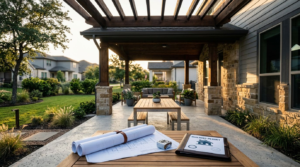
It is easy to size a cover around furniture. It is smarter to size it around people. You need room to pull out chairs, walk behind them, open doors, and keep the grill out of the traffic path.
Keep the usable zone in the shade
For dining, leave about 3 feet for movement behind chairs when space allows. For lounging, avoid placing the front beam so close that the shade stops short of your feet by early evening.
You should also think about what happens in August, not just April. A fan helps, but it works best when the roof is high enough for air movement and deep enough to keep the main seating area out of direct sun.
Match the cover to your house, not a stock kit
The best patio covers look like they belong there. That comes from matching pitch, post placement, trim lines, and the way the cover meets the home.
If you want a tailored plan, a local North Texas patio cover builder can help you line up shade, drainage, and style instead of forcing your yard into a standard kit.
Conclusion
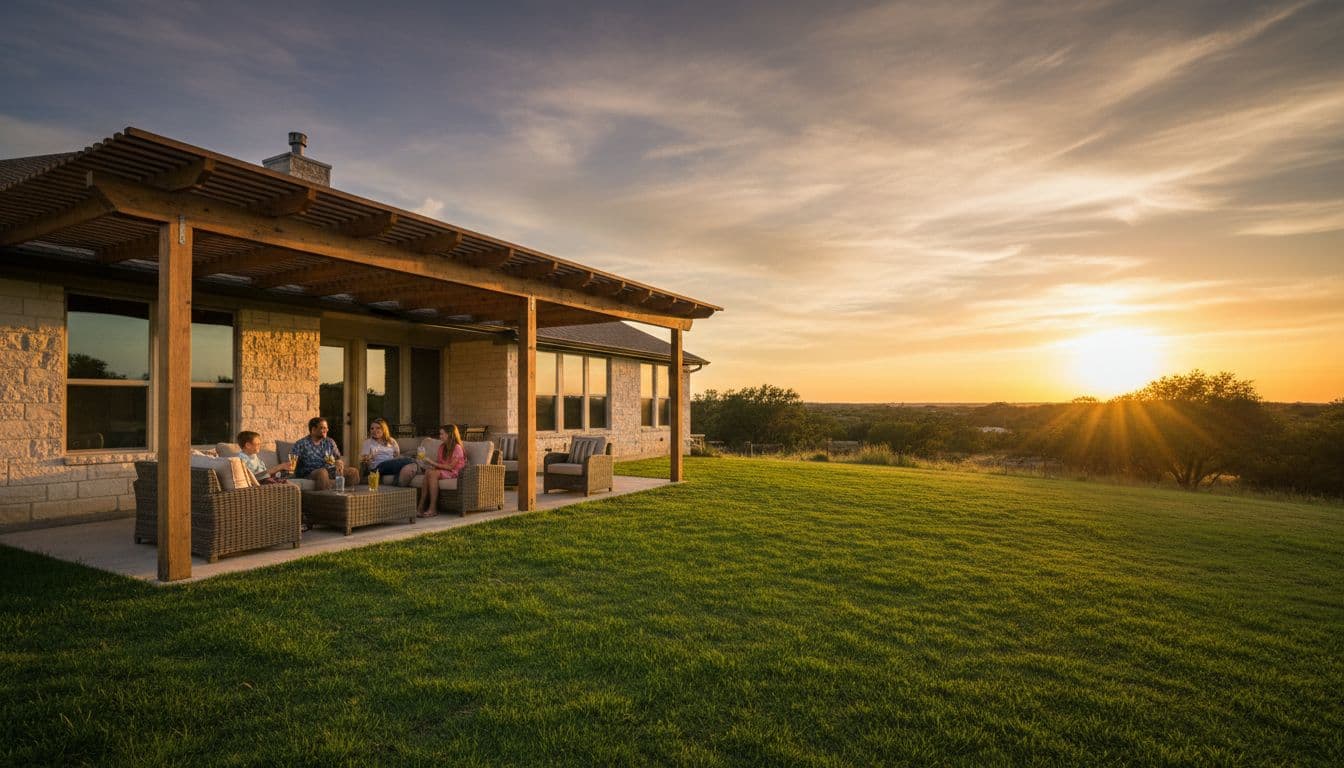
A west-facing patio is the toughest seat in the yard, but it can become the best one. If you give your patio cover enough depth, add side shade, and plan for water and wind, you can turn harsh evening sun into real outdoor living. The best result feels cooler, looks natural, and works long after the sun starts dropping. If you are planning a west-facing patio cover in North Texas, start with how you want to use the space at 6 p.m., not how it looks at noon.
Image Suggestions
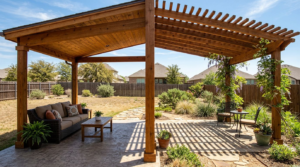
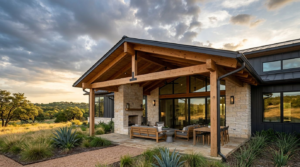
- Inline image: west-facing cedar patio cover at late afternoon sunset
- Inline image: cedar beam and post close-up for material quality
Internal Linking Map
- In the depth section, link to attached patio cover ideas
- In the materials section, link to custom vs prefab patio covers in Texas
- In the layout section, link to 12×16 cedar patio cover design guide