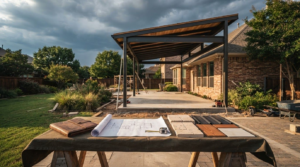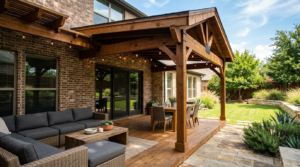

One missing insurance policy can turn a simple patio job into your problem. When you check a patio contractor’s license and insurance before signing, you protect your home, your budget, and anyone working in your yard.
That matters whether you’re pricing Custom Patio Covers, Pergolas, or full Covered Patios in North Texas. If you’re ready to compare bids after you know what to ask, Get Your Free Patio Cover Quote. Start with the rules that apply where you live.
What “licensed and insured” means in Texas
Texas doesn’t issue one statewide general contractor license for every patio project. So for Patio Cover Installation, you usually need to verify city registration, permits, and any state-licensed trades tied to the job.
In Denton, Corinth, Argyle, Flower Mound, Highland Village, Lewisville, and nearby towns, local rules can change. A contractor who can work in one city may still need separate registration or permit approval in another. Ask your building department if the company is allowed to work there and who will pull the permit.
The project type matters too. Aluminum Patio Covers, Wood Patio Covers, Insulated Patio Covers, and Pergolas may look straightforward, but attached roofs, electrical work, fans, outlets, and drainage can trigger added review. If a bid includes lighting, heaters, or plumbing for Outdoor Living Spaces, the trade contractor must hold the right Texas license.
If you’re comparing Denton TX Patio Covers, Corinth TX Patio Covers, Argyle TX Patio Covers, Flower Mound TX Patio Covers, or Highland Village TX Patio Covers, don’t assume the paperwork is the same. Many North Texas Patio Covers companies show similar photos online, yet local permit rules and registration standards can differ. If you’re still planning, this guide to understanding patio cover permits and costs gives you a useful local baseline. You can also use a Texas contractor license search as a cross-check, but your city permit office is still the better source for local approval.
The paperwork you should see before work starts
A reputable Patio Cover Company won’t treat your questions like an insult. Ask for the full business name, city registration or license number, a certificate of general liability insurance, and proof of workers’ compensation, or a clear written explanation of employee coverage.

Then match every name on every document. The company on the contract should match the company on the insurance certificate and the permit application. If a Patio Cover Builder uses subcontractors, ask whether those crews are covered under the main policy or carry their own insurance.
If the name on the insurance certificate doesn’t match the contract, pause the job until it does.
Don’t stop at looking. Call the insurance carrier listed on the certificate and ask if the policy is active, what dates it covers, and whether it applies to residential construction. For electrical add-ons, you can verify the trade license through the TDLR license search.
You should also ask who pulls the permit, who orders inspections, and whether engineered plans are part of the job. A builder who installs Covered Patios and other Outdoor Living Spaces should answer each point clearly. If you’d rather talk through those details with a local team before you commit, Call JBN Patio Covers Today.
Red flags that should make you slow down
Some Patio Contractors wave away paperwork because they want the deposit fast. Be careful if someone asks for cash only, pushes a large upfront payment, refuses to give a business address, or tells you permits “only slow things down.” If you’re comparing bids, this guide on how to choose a patio cover contractor helps you look past price.
These common lines usually point to a bigger problem:
| What you hear | What it may mean |
|---|---|
| “Insurance is in the truck” | They don’t have current proof ready |
| “You pull the permit” | They may not be registered locally |
| “We’ll add lights later” | Unlicensed trade work may be coming |
| “Same price if we skip paperwork” | You’re being asked to carry the risk |
The pattern matters more than one awkward answer. When a builder avoids direct answers, the risk shifts to you.
The same warning applies no matter what you’re buying. Whether the bid is for simple Backyard Shade Solutions, detailed Wood Patio Covers, or large Insulated Patio Covers attached to your home, good paperwork is part of good construction. If a contractor asks you to pull the permit as the homeowner, find out why. Sometimes owners do that by choice, but it can also mean the company isn’t registered or doesn’t want its name tied to inspections.
What a trustworthy builder sounds like
A solid Patio Cover Builder gives short, direct answers. You should hear, “Yes, we’re registered in your city,” “Yes, our insurance is current,” and “Yes, we’ll explain who handles permits and inspections.” A dependable Patio Cover Company makes the boring paperwork easy to verify.
Good builders also talk about structure, not only appearance. If you want freestanding Pergolas, attached Custom Patio Covers, or shade over everyday gathering areas, they should explain post spacing, roof tie-ins, drainage, and how the design fits your home. That matters because a beautiful sketch doesn’t mean much if water runs toward your foundation.
If you’re still comparing options for Wood Patio Covers and related upgrades, these custom cedar patio cover designs show how smart Patio Cover Installation should match the house, not fight it.
Final thoughts
A patio cover should give you shade, not liability. Before work starts, ask for city registration, proof of insurance, permit responsibility, and any trade licenses tied to fans, lights, or plumbing.
Good contractors won’t dodge those questions. They’ll hand you the proof, because protecting your home is part of the job.